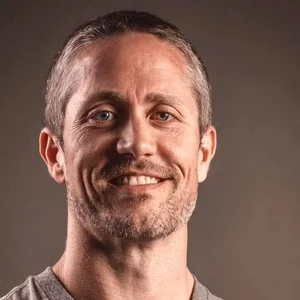
Why Your Metabolism Is Stuck at 50% and How to Fix It Without Biohacks (Jenn Trepeck) | Ep 430
Get Fitness Lab (20% off for listeners), the #1 coaching app that adapts to YOUR recovery, YOUR schedule, and YOUR body. Build muscle, lose fat, and get stronger with daily personalized guidance. Now with Apple Health integration.
--
Are biohacks keeping you stuck instead of helping you lose fat and build muscle? Why does body recomp feel so hard even when you are doing all the “right” things?
Body recomp, build muscle, and lose fat come up constantly on fitness podcasts, but I keep seeing the same mistake. People chase cold plunges, red light therapy, peptides, and supplements while ignoring the basics of nutrition and fitness. I sat down with Jenn Trepeck, author of Uncomplicating Wellness and host of Salad with a Side of Fries, to flip that script.
We break down her concept of biostacking and why most people are operating at 50 to 60 percent capacity. We talk protein, fiber, hydration, sleep, stress, connection, and why metabolism only improves when the basics are in place. This conversation ties directly into Wits and Weights, evidence-based fitness, and evidence-based nutrition for sustainable weight loss, strength training, and long-term health.
Today, you’ll learn all about:
0:00 – Why biohacks fail most people
3:00 – Biohacking vs biostacking explained
6:00 – Metabolic health reality check
9:30 – Building a real foundation
13:30 – Nutrition basics that matter
18:00 – Movement and muscle building
24:00 – Stress, sleep, and recovery
31:00 – Connection and longevity
38:00 – Where to start practically
Episode resources:
Jenn's Book: Uncomplicating Wellness: Ditch the Rules. Quiet the Noise. Reclaim Your Life.
Website: asaladwithasideoffries.com
Podcast: Salad With a Side of Fries
Facebook: @Saladwithasideoffriespodcast
Instagram: @saladwithasideoffriespod
YouTube: @jenntrepeck
The wellness world loves shiny fixes. Cold plunges, peptides, and red light therapy promise an easy jump to better health, but most people are still stuck at half capacity, tired, hungry, and wondering why nothing changes. The truth is simple: optimization only works on top of a strong base. Before reaching for a 10% improvement, you need habits that lift you to 80 or 90%. That’s the power of biostacking—layering simple, accessible practices so your body actually responds to nutrition and training. Think sleep before supplements, protein before peptides, and real stress relief before yet another wearable. When the foundation is solid, any “hack” finally has something to amplify.
Start by reframing health as a spectrum from negative to positive, not a binary on or off. Many people sit near zero—no diagnosis, but low energy, poor sleep, high stress, and inconsistent habits. Move right on the spectrum by focusing on seven biostacks: food, fuel, movement, hydration, sleep, stress management, connection, and mindset. You don’t need to overhaul your life; you need small, strategic changes that compound. A protein-forward breakfast (30 to 40 grams), fiber at every meal, and smart hydration with minerals shift blood sugar, cravings, and energy quickly. A consistent bedtime builds resilience, while a simple wind-down routine lowers cortisol. Stack habits where possible: group training can hit movement, stress relief, and community in one hour.
Resistance training is non-negotiable for healthspan, metabolism, and fat loss. But it doesn’t have to mean barbells on day one. Bodyweight, bands, machines, or even “drink water, do squats” throughout the day can build muscle and confidence. Muscle is expensive tissue—it requires effort to gain and effort to keep—but it pays you back through higher metabolic rate, better glucose control, stronger bones, and independence as you age. Pair strength work with adequate protein and micronutrients, and your body starts to feel and look different. Add walking for recovery and glycemic control, and you’ve covered most of what flashy devices try to shortcut.
Mindset quietly drives every result. All-or-nothing thinking keeps you stuck, so trade perfection for capacity. Build plans for your most hectic day, then scale up when life allows. Run weekly experiments: delay caffeine until after breakfast, increase protein across meals, or set a bedtime alarm. Notice how you feel, then iterate. This approach turns “rules” into feedback, moving you away from guilt and back toward agency. You become the expert on your body, not the algorithm or the latest trend. As capacity grows, stress lowers, sleep deepens, recovery improves, and you finally have room for thoughtful optimization that actually matters.
Connection might be the most underrated biostack. We’re wired to thrive with people. Hugs, laughter, and shared effort drive down stress chemistry and lift mood through oxytocin and dopamine. If your social world is thin, start small: a weekly class, a group walk, or a call with a friend. Curate your digital feed to spark joy and learning instead of comparison. If crowds drain you, choose one person who fills your cup. A 20-second hug can lower stress; a consistent group can change your life. Stack this with movement or recovery rituals and you’ll feel momentum quickly.
Once the foundation is in place, optimization finally makes sense. Lab testing, wearables, or cold exposure can add a layer of refinement, but they’re not substitutes for sleep, strength, protein, and purpose. Biostacking is the roadmap: simple, human, and sustainable. Start with the habit you resist the most, make it easy, and keep your floor high. In weeks, your energy and confidence rise; in months, your health markers follow. That’s real progress—quiet, durable, and yours.
Have you followed the podcast?
Get notified of new episodes. Listen on Apple, Spotify, or all other platforms.
Then hit “Follow” and you’re good to go!


-
Philip Pape: 0:01
If you've been chasing the latest biohacks, cold plunges, red light therapy, peptides, supplements, thinking they'll finally unlock fat loss and energy, but you're still struggling with body composition, still feeling stuck at 50 or 60% capacity, this episode is for you. My guest today is going to explain why most people don't need a 10% optimization. They need to build a foundation that makes optimization useful through biostacking instead of biohacking. You'll discover the seven biostack categories that help your body respond to training and nutrition. Why trying to biohack without these in place will keep you stuck in place. And practical tips for protein, fiber, hydration, micronutrients, and more that will start building your metabolism for easier fat loss and body recon. Welcome to Wits and Weights, the show that helps you build a strong, healthy physique using evidence, engineering, and efficiency. I'm your host, Philip Pape, and today we're gonna look at why the wellness industry has it all backward. Most people are chasing biohacks when they haven't even built their foundation. They're trying things like cold plunges and peptides, but not having protein at breakfast, or they're investing in red light therapy, but averaging five hours of sleep. My guest today is Jen Trepik, returning to the show for the second time. Jen is the author of the new book, Uncomplicating Wellness, and host of the Salad with a Side of Fries podcast. She spent over 20 years helping people cut through wellness noise to build those sustainable habits. She's here to teach us why most people are functioning at maybe 50% of their capacity because they're chasing biohacks when what they really need are what she calls biostacks. You're going to learn the seven biostacks that create conditions for your body to actually respond to what you eat and how you move, some strategies for nutrition and lifestyle, and how to diagnose whether you're ready for optimization or whether you need to build your foundation first. Jen, my friend, welcome back to Wits and Weights.
Jenn Trepeck: 2:08
Well, thank you so much. I'm so excited for this.
Philip Pape: 2:11
I'm excited too, because you know, we had you on not too long ago and collaborated, you know, on our two podcasts. And a lot of what you talk about is really important for people to hear over and over again because it is common that the shiny object syndrome is there, right? We have things like, yeah, ice baths, which you can put under biohacks, but I'm I'm not sure that many people are actually doing that. But you have things like fasting and special diets, you have all these interventions based on like wearables and genetic testing, and even supplements are in that, can be in that category. So for sure. I want to frame from your perspective, what do we mean by biohacking? Why is it not necessarily the place to start, but still so very appealing? And then we'll go from there.
Jenn Trepeck: 2:54
Yeah. So, and there's so many pieces in that, right? So when we talk about the biohack, I think it is like that shining object, the way you describe it of like, you know, the fad diet, the peptides, the, you know, red light therapy, the cold plunge, whatever it is. And by definition, a biohack is an incremental improvement. Like, we're talking like 10% improvement. So, and I say this with love, but when all the tech bros in their elite universe decide to dedicate every ounce of their being in life to longevity, and then they add a peptide, and then they add a cold plunge, you know, maybe they're starting at 90% because they've already done all of these things. So a 10%, like if we go 90 to 99%, I mean, that is unreal, right? But statistically, for the rest of us who have lives and other things going on, at our health is just one of the many things that require our attention every day. And we don't necessarily have a full staff of people making all of those decisions to create that environment, you know, like statistically, the average American is not metabolically well, right? If 12% of the US population is metabolically well, then odds are eight out of 10 of us are not. So if we're not metabolically well, does that put us at 30% health, 40% health? Right. And then if if that's where we're operating and we add a 10% improvement, well, we're not moving the needle. And we're not, maybe we notice the difference of the thing for a couple hours or a couple days, but we're not dramatically changing our health outcomes with an incremental improvement.
Philip Pape: 4:59
Yeah.
Jenn Trepeck: 5:00
Our objective is to, as you mentioned, the biostack to get us to that 80, 90% baseline, then we can add the biohack and go from 80 to 88 or 90 to 99 and notice that level of like unreal potential that we never even thought was possible.
Philip Pape: 5:23
Yeah. Unreal potential. Yeah, yeah. That, you know, and the reason, of course, is why do people chase these? You know, and I I off the top of my head, I could imagine a few big reasons. One being people don't want to put in the work, and I hate to say it, uh, some of these things are going for a shortcut, maybe not. But another could be, you know, misinformation. Another could be they tried the foundational things and it hasn't worked for them because maybe it's not the right approach. If you know you had to do um family feud and like the top five answers on the street of a hundred people, what would it be?
Jenn Trepeck: 5:52
For sure. So I think they are appealing because they are marketed to us as the magic pill.
Philip Pape: 6:00
The answer.
Jenn Trepeck: 6:01
Okay. The answer, the easy button. And we all want things to be easier. Like nobody wins for making this the hardest. We want the easy button. And that's sort of human nature, also. So I think that's one piece. I think another piece is the wellness world is really just today's diet culture. And so if we start to think about things from that perspective, then it becomes this piece of if we're not doing these things, we're failing. There's something wrong with us if we're not choosing these things or doing these things. So I think there's another piece at play there. I think you know, the name of the book is Uncomplicating Wellness, because I think this whole space has gotten so convoluted and it is so confusing that these seemingly simple, you know, one thing and that's it, is even more appealing because it cuts through the noise. It's like, wait a minute, I don't have to think about 20 things, I can just think about one. You know? So I think there's a lot of appeal in there because the marketing side says, I'm gonna sell you this and I'm gonna make you think that this is all you need.
Philip Pape: 7:26
You know, it's interesting. You said two things. One, you said wellness is today's diet industry, which is great. Because I the word wellness, yeah, it's kind of a trigger for me too, in that context, even though obviously it's in your book and there's a way to define it. But when you talk about it being one thing being attractive, there's an irony there, right? Because if I said to someone, hey, I want you to do one thing, it's lifting weights. Now, granted, that one thing has a lot loaded underneath it, but it is one thing. And even if I ignored all the other biospects and things we're gonna get into, I know for damn sure that that would make a massive improvement in their life versus any of the biohacks. Right. And it is one thing, and it is uncomplicating it too. And I know you're gonna get there. But if we did look at the biohacks that are available today, I know we mentioned things like cold plunges. I don't know why anybody's willingly going into ice baths as much as we think versus social media.
Jenn Trepeck: 8:16
Well, that's the so by that token too, the other thing that I think a lot is like SIBO and like random parasites. Like the internet will have you believe that every single person has worms eating their insides.
Philip Pape: 8:32
And coffee enemas, everything. Right. Right.
Jenn Trepeck: 8:37
But like it's so interesting because there is an irony to simplifying, and yet simplifying is saying we need all of these things. But there is a piece of understanding that it doesn't have to be a wealthy man's game. Like part of what I think has evolved in all of this is with our health insurance, with our medical system, with our food supply. It's like if you can't afford all of these other things, then you're screwed. And that's really not the case. So when we talk about the biostack, a lot of this is also stuff that is accessible to everyone across the board, no matter what. And it just becomes a function of our choices and our intention and the actions that we're taking.
Philip Pape: 9:33
Would you put certain things in the category of biohack, though, that some people might say are quote unquote legitimate and other some need more than others? For example, hormone replacement therapy. Is that yeah, where do you put something like that?
Jenn Trepeck: 9:44
Great question. And this is like the least satisfying answer, but it depends on the person, right? There you go. It depends on the person. Now, I would also say that there comes a point where we could do, and this is where I do almost put it more in a biohack piece, because we could give somebody all of these hormones, right? Exogenous hormones, but if their body is not in a place to be able to use them and eliminate what they don't need, it could be doing more damage than help. And so I put it in that other category because it doesn't take the place of the other pieces, if that makes sense.
Philip Pape: 10:33
Oh, it makes total sense. And, you know, I actually just thought of, I think you just did an episode similar to one that of mine coming out soon about focusing on micronutrients, because we often forget that forest for the trees. And it makes me think of that in that you can be perfect with your calories, but be totally nutrient deficient. And now you're you don't have the foundation for the calories to make much sense for you. Exactly. It's exact, even though the calories can be a wonderful thing to have in there at the right level. So then, okay, I want to talk about the biostacks, but when you talk about people not functioning up to that percentage, I know we're trying to simplify things, but like when people are at 50% capacity, what does that mean? Is that are people talking about how they feel, their energy? Are they talking about, you know, weight loss? Are they talking about their physique? Are they, you know, what is it that you see when you say 50%?
Jenn Trepeck: 11:18
Yeah. So I come back to thinking about health on a spectrum. Okay. So when I implement wellness programs in doctor's offices, we give them a poster and then it's also like on a handout that they can give their patients. And it's a scale that goes from minus 10 to plus 10. And it's where would you rank your health? And every person has their own framework for deciding what their number is. But the way that I typically talk about it is that our Western medical system is focused on the minus 10 to zero. Those disease processes, right? Zero is the absence of sickness, illness, and disease. Which is having the energy and capacity every single day to do all the things that I want to do in this life. And that to me is more than just not being diagnosed. And by that token, too, I did an episode this year called Everybody Is Pre-Diabetic Unless. Because if you're letting the world around us, the food supply, you know, restaurants, and I eat out more than most, you know, but like all with if we're letting all of these other systems dictate our choices, it's only a matter of time till we get that diagnosis. So technically, every single person eating the standard American diet, which I know is not your listener, you know, or my typical listener either, but it I think it provides a framework for basically saying, unless we're intentional about it, we're already pre-diabetic because the inherent outcome of this world that we're living in is that disease state. And when we get a diagnosis, it is based on the organ system that failed first. But any disease process is system-wide because you can't separate your heart from your liver. It just means that this organ failed before the other one. But everything in the body is connected. So if we're having blood sugar issues, it doesn't mean that our heart's fine, that our cholesterol is fine. If we have been diagnosed with, you know, kidney disease, it doesn't mean that the liver is fine, right? It's and so I think for me, understanding it in that spectrum and saying there's this disease side versus this wellness side, then we go even in the spectrum of wellness, where am I? And you've thought about energy. So I think one of the things that I recommend my clients do to assess their daily wellness is to look at their energy, their sleep, their stress, and their confidence. That's how on a daily basis I recommend people check in with their wellness to say, if I'm, you know, even just use like zero to five, right? Like if my sleep was a two or a three last night, my energy is obviously going to not be as great as it could be. Then I get to make choices in this day to adjust for that. Okay, you know what? Maybe the workout that I had originally planned to do isn't the one that's gonna serve me best right now. Maybe I need one that's a little less intense because I didn't sleep well, or whatever it is. And so I think it allows us to have autonomy and choice versus feeling like we're doomed, like we don't understand what's happening in our body. And I sort of think, you know, you're asking about this like 50% piece. There isn't a hard, fast rule for what that number is. It's more of like, are you working on the same team as your body? Do you understand what it's telling you? Are you frustrated by every craving? Or do you look at the craving and go, thanks, body? I hear you. Right? Like, do we know, are we in a dialogue and kind of working together? Or are we constantly fighting and feeling frustrated? And that's where I start to see people really move the needle and learn those pieces by putting the biostack in place.
Philip Pape: 16:02
Yeah, that's beautiful. Actually, the negative-positive spectrum resonates with me a lot because it's hard to frame for individuals how to think about this. You know, the percentage thing is like relative to your own standards at the moment, and you might be 80, you might be 25 in very different like life circumstances. You know, I did some training in positive psychology not long ago, and when I learned about positive psychology, it was a not an opposite to negative psychology, but a positive side of the spectrum. So, what I mean by that is psychology looks at the mental disease and how do we, you know, get rid of it and get you back to zero. Positive psychology is what how do we add meaning and purpose in our life? Health-wise is what you're talking about, the quick there. Like you're going to decline. And I imagine, you know, when you're born, you come out of the womb, maybe you're at eight, nine, or ten, maybe you have some issues as a baby, whatever. But let's say you're up there, and then through your teenage years, you know, you really get a lot of influence from your parents and lifestyle, maybe that number starts to tick down, or maybe it holds, depending. And then we all know that it's like, okay, the human lifespan is what it is, other than those tech bros that think they're gonna live to 120 without lifting weights. What? Uh and by the time you get in, let's say, your 30s and 40s, maybe you're trending toward that zero. And then this is a good frame to say, like, look, the muscle loss is gonna pick up and the degeneration is gonna pick up, the bunk bone loss, and that's gonna get you further and further into that. In it's inevitable unless you do something about it. Like you said, and that's where the autonomy, self-efficacy, self-regulation, all that comes in, and that's what we are about. So that's a great segue into the biostacks.
Jenn Trepeck: 17:32
Yes, okay. So there's really six pieces of this biostack, right? So we have food, fuel, nutrition, whatever you want to call it, movement, hydration, which is more than just water, sleep, stress management, and connection. All of those pieces, now we can talk about each one individually, but the piece that I also want to come back to in terms of what does this end up looking like and how can this six things be less complicated than the one, right? When we start to put this into practice, we can recognize that maybe one activity in our day ticks a whole bunch of boxes. So, for example, I do group fitness, so I get my movement, stress reduction, and community and connection all in that hour. But it's something that's built into my day and it's ticking a bunch of boxes. So sometimes it's even just our awareness of you know where we are with some of these things, and then just even recognizing that group fitness is also community and helps us with that, it puts it in another place mentally in our, you know, in our approach and that. So, you know, it doesn't have to mean that your full-time job becomes all of this stuff. And frankly, that would be the opposite of uncomplicating it, you know. So I always like to say too, I mean, maybe this is a spoiler, but this book is not a how-to. There are ideas and things that you can play with in every chapter, but it's more about a new lens through which we can then evaluate all of the things coming at us and start to make choices that we know work for us based on what we know to be true for our bodies and our lives and our reality versus you know, whatever's happening on social media. So we can go through each of these and Talk about some tips and ideas and things to play with there. And I also want to preface this by saying if anything we say does not ring true for you, ignore it because you are the expert in your body. And that's another piece of this. Like we outsource all of these decisions to the doctors, to the restaurant, to the food supply, to the influencer, to everybody who's telling us that they have the answer. And the beginning of the book is A, to find wellness for yourself. And B, you are the magic bullet that you are looking for elsewhere. You are the expert in your body. So no matter what we talk about, if you know that whatever it is doesn't work for you, don't do it.
Philip Pape: 20:49
Yeah. I think if, and if someone, if someone is reaching out for help, I imagine they're doing so for a reason to begin with, right? Or are we to say, no, it's not that, it's this. So you mentioned one powerful thing is the stacking your stack. I mean, I know you call it a biostack, but you also imply that you can knock two or three of these out with one type of activity that speaks to the time efficiency aspect, which is important for us because that's one of our finite resources. And also probably that it takes a stress off, right? Because now you're thinking, okay, what can I do that does check off some of my low-hanging fruit now? And maybe I can add more in later as I get into it. Real quick, because it's gonna bug me. I have an advanced copy that had seven of these. Did it become six in the final copy?
Jenn Trepeck: 21:32
No, it's become I thought it was just me. There's really two chapters on food.
Philip Pape: 21:37
Oh, okay. Food and fuel, but then there's also mindset in there. Yeah.
Jenn Trepeck: 21:41
Um, yeah, well, that's the BioStack over biohack kind of mindset piece. But yes. Okay, okay. Yes.
Philip Pape: 21:46
All right.
Jenn Trepeck: 21:46
Okay, just because of the intro, I say we'll make it seven. We're gonna make it seven and put the mindset piece in there for sure.
Philip Pape: 21:52
Okay, no problem, no problem. What yeah, it's it's all good. It's all good. I could have edited out if no changes look, whatever.
Jenn Trepeck: 21:58
Don't leave it all. There's seven. Do you want me to redo the seven?
Philip Pape: 22:02
No, no. I mean, you said it for uh yeah, you said food food, hydration, activity, sleep, stress, connection. And then we're saying mindset's also technically in there. And that's fine. Whatever. I don't think people get too hung up over it. Um, so where do we take it from that? Because I one thing that comes to mind is you said, look, your body's your own. The thing you need to do is probably best known to you. Yes. And so how do you find that gap? Like when I became a nutrition coach, step one was help a client figure out their red flags. And I wonder if some people are listening say, I'm not really sure. Like I do know the thing that I'm I feel deficient in, but I also know there's certain things that I don't do now that I think I should do or want to do. They just are so far from where I am today, and I'm willing to do that. You know what I'm saying? So where does someone start with that process? Yeah.
Jenn Trepeck: 22:46
So there's two pieces. One is as you go through each piece of it, you might go, oh, that's a tweak that I haven't played with yet. Let me see what happens if I do that. So we can find small things that maybe we haven't yet explored, even in a category that feels like we're already making progress. But the question of where do I start? I often recommend starting with the one where, like, when you heard it, you had a visceral reaction. You were like, oh, right? Like the one that you've probably been avoiding, the one that you were like, I know.
Philip Pape: 23:31
Right. The Bulgarian split squats of the seven. Yeah. Okay.
Jenn Trepeck: 23:36
And to start with that also doesn't have to mean completely uprooting your life to add that piece into the equation. And so that's where each one of these can be maybe just a tweak. Maybe it starts with just that awareness. Okay, now the sun is coming in through the window, and I look like I'm striped. Do you want me? I can tell me what you're doing. I'm good. All right.
Philip Pape: 24:06
This is cool. It's it's uh it's authentic, as they say.
Jenn Trepeck: 24:09
I mean, I have a screen I can put up, but um it's like zebra cat eye. It's cool.
Philip Pape: 24:16
It's all good, it's all good. It's fine with me. You do what you're comfortable with, I'm good.
Jenn Trepeck: 24:20
Okay. Um so you're gonna start with the one that I think gives us that visceral reaction, but starting with it also doesn't mean that it becomes our entire focus at the expense of the other pieces. And I think that's also maybe a challenge that tends to come up for people we think that like when we start to add one more thing in, it has to come at the expense of something else. And I would say if that's the approach, we need to find a different, we need a different tweak because we actually have a lot more capacity. And I'm like trying to get my eyeballs in the light. Um we we have more capacity than we realize, and adding these things in can increase that capacity. It's I think again, part of uncomplicating is figuring out the things that work for us in our real lives and creating the plan based on reality, not based on some textbook perfect day that only exists like once or twice ever in a year. So I also recommend like create your plan for the most hectic, chaotic, stressful day. And then on the days that aren't like that, we can up the ante a little, maybe do a little bit more. If we're making that more the baseline, we will always feel like we're falling short. We will feel like we're never making any progress. And that to the mindset piece actually does more harm than good.
Philip Pape: 26:09
Yeah. I was gonna ask about the baseline thing too, because there is people can get hung up on that perfectionist and completionist. I'm raising my hand. Same, zing. And and by the time this episode comes out, we would have done a challenge at the end of the year that was based on the sim similar principle of having like, this is your optimal, this is your minimal, and here's your bailout, by the way. And it's like there's different degrees, and some people need those extra tiers. So if you take your six or seven, you know, yeah, IO stacks, and it's gonna be an ongoing joke, Ken. I love it. Um, and and you take one of them, let's say food and fuel, because you obviously you talk about it all the time, so do I, and you talk about protein and fiber and then stacking on veggies, and then you have a couple more things in there. Like, would somebody basically look at that paragraph in your book and say, okay, what's the thing that I'm not really doing that I can just start tomorrow? And if their protein is abysmally low and you're saying get 40 grams of protein with breakfast, that could be like a huge jump for someone. Totally. So and I'm sure you talk about it elsewhere in the book. What would you say, hey, titrate it up or create some number that's lower than that? Like, don't take these as hard and fast rules necessarily, or is 40 grams like really you got to get there quickly?
Jenn Trepeck: 27:20
I see, again, it's like so unsatisfying. Like it depends on the person. Yeah. And you know, if you're the kind of person who's like, I need to work my way up, or if you're the person who's like, boom, the answer is this protein shake is how I'm gonna get the 40 grams first thing in the morning, and I'm gonna do it and call it a day. The other thing that I also suggest is do it for a week and notice how you feel and let that be what carries us through to the next week instead of creating our own hard and fast rules that then have us in a different version of on, off, good, bad, black, white. You know? So it might be the protein at breakfast. It might be the I'm gonna lay off the caffeine until I eat food. It might be, hey, I feel like I'm constantly craving sugar. Okay, great. We're gonna up the protein throughout the day. Or it might be that like I've always been challenged by nighttime eating. I feel like, you know, I'm fine. And then at night it's like that old Garfield cartoon where like he opens his mouth and like all the food comes in, you know? Great. Let's focus on what's happening in the first half of your day. Breakfast, snack, lunch, and then just notice what's happening with those nighttime eating cravings and things like that. And so we can decide what we want to play with. And I use the words play with very intentionally because I think we can, like I said, just get to this place where we've just created more or different rules for ourselves. And if we can look at it as experimenting and observing, it brings back the power to us and our autonomy to choose and to design our plan for health in a way that we feel competent works for us versus some prescription that somebody has handed you.
Philip Pape: 29:33
And that's important what you just said for the listener. Like Jen is saying you're not, you don't have a plan on day one that just does all of this, right? And neither is your book, like you said, a how-to. It isn't. It's here are a bunch of guidelines from what we know. Now you experiment, maybe do it one thing at a time, do it at an achievable level. That's for the worst case. And then that becomes your plan. And then you can build from there. And that that's gonna get you from your 50 or 60 percent to 80 or 90 percent pretty quickly. I would argue you don't have to get to 100, really. Like, I mean, that that's the cool thing about it. Most of us are operating far less than that.
Jenn Trepeck: 30:07
Well, and that's the thing too, is like, even when you get to that 80, 90 percent, you might be like, I'm good. I'm gonna live here. That means that we continue to do the things that got us there in order to stay there. But I think the beautiful thing about that too is it allows us to then hear what's coming at us, hear what the tech bros are doing, hear what somebody on social media is doing, and go, love that for you. I'm good. And be able to feel confident that we're good, that we don't need to add on every single thing that then comes at us on social.
Philip Pape: 30:47
Yeah, 100%. Um, I don't know how much we want to go into each biostack because honestly, there, if people listen to our podcasts, they know like they're getting it all. You know, the top level. I mean, you essentially listed them. Obviously, the act, the activity one is one we talk about a lot. And you did say in there in parentheses, muscle's expensive tissue, you have to work for it. How much of a message is there here that resistance training is important, right? Like, versus I definitely I see a lot of scapegoating or a lot of excuses made, or I'll have people, I had someone just join our group and say, like, look, I'm having issues, X, Y, Z. And one of the questions I always ask is, what does your training look like? Well, I'm not lifting weights, and I don't plan on lifting weights anytime soon. And I'm like, okay, well, where do I go from so resistance training has to exist?
Jenn Trepeck: 31:31
It doesn't have to look like lifting weights. And that's where, again, like we have these ideas of what things mean. Resistance training to me means build muscle. I don't care if you do that using your own body weight. I don't care if you use that, if you do that with, you know, a band. I don't care if you use it, do it, you know, with imaginary weights that are actually air, that you just pretend like you're holding something in your hand and think about it and create resistance in your muscle. Like, I don't care if you're using laundry detergent. Anything that's resistance can build muscle. And so what does it look like for you? One of my favorite things is what I call DWDS. Drink water, do squats. Right? So drink water, we're gonna drink more water, which means that we're gonna need to go to the bathroom more often. Every time you go to the bathroom, hold on to the sink and do 10 squats. Stand up and sit down from the toilet 10 times after you go. Talk about longevity. P. A squat is what is required to get up off the toilet in your ripe old age years. So if we want to live on our own, if we want to have independence, we have to be able to do a squat. If you want to get up off the toilet, so little things, right? But imagine, you know, 10 squats when you go pee, you don't have to change your clothes, you're not getting sweaty. Like it kind of happens in pockets of time that you don't even notice it's taking up time. And maybe over the course of the day, now you've done, you know, 50, 60 squats. Well, what does that look like over the course of a week or a month? And now all of a sudden, we're really building muscle and changing our metabolism at that, right? So muscle is expensive tissue because we have to work for it. And if we don't work for it, it doesn't just magically appear. And if we don't continue to work for it, we can lose it because, you know, for a variety of reasons, aging, you know, typical weight loss approaches, all that kind of stuff can lead to muscle wasting and whatever. But you can decide what that looks like. It doesn't have to look like the thing that you don't want to do.
Philip Pape: 34:02
That's a good mic drop there on that one. Because that that is 100% true. There's a lot of conflation with, okay, I I know I I need to do resistance training, or you know, and I say lifting weights colloquially, and I know what you're saying because where you start, and eventually I feel like most people end up having to lift weights eventually, but I get it. Where you start.
Jenn Trepeck: 34:21
Well, a client said to me the other day, she was like, So what's your opinion? Like, I joined the gym, I'm going with my husband. So, like the machines or free weights. And I just replied, yes. Yes.
Philip Pape: 34:36
It's true. Start there. And but in and you said, you know, not doing the thing you hate. That's something to unravel too, because we can kind of tie it to the mindset piece where you allude to the different ways we frame, you know, reframe all or nothing thinking, beating yourself up, etc. So when someone has a thought like that in their head for any of these things, like, well, Jen said on one hand, the thing that you're kind of resistance to maybe is one of the things you need to look into doing. And I said Bulgarian split squats, right? As a joke. Yeah. And then on the other hand, don't do the thing you hate. How do those reconcile?
Jenn Trepeck: 35:11
I really do. I'm just I love this. Yeah, I love this. The thing that we have resistance to is more of the thing that, like, of those bios, right? Of those pieces, it's like, I know, right? It's the thing I'm resisting doing because I just don't feel like it. It's not really where I want to put my energy versus, and by the way, even choosing any of those things, once we're in there, does not mean doing the thing that makes you miserable. Like, we don't want to be miserable. And so I there's a difference between saying, okay, I know I need to make sleep a priority, and saying, I love television, but I'm never gonna watch television ever again because I need to make sleep a priority. Like, what? That was a mental leap of it like doesn't have to exist. And so that's where I think those things can reconcile because we can say I know that something is missing. How I add that in is doing it in a way that I will enjoy, or at least not loathe at the beginning.
Philip Pape: 36:30
Yeah, and you just the premise that something requires something, immediately ask yourself if it's false right out the gate. Right. Like, and and and you may not know that because it your worldview is such that I hate squats because I hate squats because I hate squats. Like, I don't know any different because I have one thought of what that means. Right.
Jenn Trepeck: 36:49
So, okay, think about it as getting up off the toilet.
Philip Pape: 36:52
Or you may not even have to do squats per se. I guess what I'm saying is like if somebody says, like, have you considered you know resistance training? And somebody's like, No, I don't do that because I hate the gym. No, I don't do that because X. It's like uh an immediate block that just it sets the frame for the whole thing, like with your example you just said. Anyway, guys, I had surgery three days ago.
Jenn Trepeck: 37:11
So mean, you are amazing. I'm so impressed.
Philip Pape: 37:16
Uh my exercise now is pendulums, which is letting my arm hang down and swinging it around for like three degrees. Um, because that's amazing. Anyway, so okay, I like all of this. So obviously, mindset threads through all of this. And then connection was one more piece of your biostack I thought is really cool. Uh, talk to us about that because it is really powerful. Connection is, I believe, the number one uh factor in happiness, for example, like evidence-based happiness, you know, in studies even have sound found that connection is number one. Exactly. So when you say, you know, hug your kid or we're biologically wired for connection. Maybe a lot of people need to do that today with social media.
Jenn Trepeck: 37:57
We all need to do it.
Philip Pape: 37:58
Being so isolated, yeah.
Jenn Trepeck: 38:00
It's um so the title of this chapter is called Just Hug a Person. Like, I don't care, just hug somebody. What that does, talk about like killing two birds with one stone, what a hug can do for our stress is unbelievable. Like I was even doing research on holding hands. The physiology of holding hands signals to our body that this person is taking our stress, they are sharing the burden of that stress, and it lowers our own physiological stress response. How unbelievably simple. Like we can make all of this so complicated, and all of this, like the whole biostack, comes back to what is foundationally human, and part of that is connection. When we look at the blue zones, when we look at longevity, blue zones, by the way, being the places in the world where people live the longest but have the longest health span also, connection, community, and purpose are pieces of that that I think we overlook a lot. You know, it's age is revered. The older generations live in the house, they are part of the child care, they have purpose and connection, they are so valued in the community that we lose that from such an early age. You know, if we think about how often kids laugh versus how often we laugh as adults, unless we intentionally seek out things that make us laugh.
Philip Pape: 39:59
You know.
Jenn Trepeck: 40:00
So the physiology of what happens when we hug someone, you know, the dopamine, the oxytocin, like all of these hormones and neurotransmitters that send happiness and health and healing and joy are missing. And then we think that something's wrong with us. And it's like we just need to come back together, like spend some time away from our phones. And you know, the phones are an interesting thing because social media can give us the feeling of connection with certain people, but it's about and can give us that laughter. Like I laugh out loud a lot when I am scrolling my feed. But to some degree, like I've curated my feed to create that. And so you can also reset your feed. Every app, you can Google, but every single one of the social media apps has a way to reset your feed. So if it is sending you messages that are keeping you frustrated or feeling like you're always chasing, or feeling like you're not good enough, or whatever it is, reset it. Start over. Seek out a couple of accounts that get you some of those things and then build on that. And you know, the hug thing that I love about that too is like you can hug a pillow, you can hug a stuffed animal. And it's frankly even the same as hugging another person. I also always say like consensually hug a person, right? But you know more is more when it comes to that. And so get a stuffed animal, get a pillow, make it part of your routine, smile at yourself in the mirror, fake laugh until it becomes a real laugh. Like these things that seem so silly are so fundamentally human and transform our health more than we could possibly imagine.
Philip Pape: 42:11
I have a lot of thoughts. Uh sorry. No, no, thinking of like the old ladies who aggressively hug you without asking. And it's like, I'm I'm cool with it because you know it's a generational thing. But I hear what you're saying. Uh I saw a Facebook ad or Facebook commercial the other time. I I showed my kids. I'm like, do you think this makes sense to you? And it was people getting together in real life situations, but it was an ad for how Facebook does that. I'm like, this doesn't make any sense to me, you know, because Facebook isn't like known for getting people together in person necessarily. Right. But yeah, I I think this is such an important one that we lose. And I know everybody, everybody's so stressed. And speaking of the stacking, right? Like stress is a big part here to this, but I also know everybody's different in their level of social introversion and whatnot. And we'll maybe use that as an excuse or not. But like I like seeing family and I I'm with my own immediate family every day because we homeschool our kids, which is awesome. We we love that. But if I'm with groups of people for too long, you know that drains me, right? So you have to know where you are. But then if I don't see people for a long time, that's a problem too, right? Right. So how like in today's social media world and everything else, what do you think of online communities? Like, where does that tick a box in this area? Look at me, I'm the completionist. Tick a box. You know what I'm saying? How does that create connection? Do we know like um psychologically and physically, does that, is that not quite good enough, right, compared to physical social connection?
Jenn Trepeck: 43:43
It's a yes and.
Philip Pape: 43:44
Yeah.
Jenn Trepeck: 43:45
You know, there is a difference because our physiology starts to match the physiology of people that we are in proximity to. That doesn't happen as well when there's a screen in between. So there can be a piece of connection. Like I think about um people who live further, you know, maybe more rural communities or people who are further away from other people or whatever, and especially kids feeling isolated, or you know, like being able to find a chat room. Now I sound really old, but like but being able to find people like them somewhere. So that does help in some scenarios, and it doesn't necessarily help as much with those physiological changes from being around other people. But I think that's part of why I like hugging a stuffed animal or hugging a pillow or just hugging yourself because we can get some of that physiological change. Like the holding hands thing doesn't seem to work if you hold your own hand, but the hug does. And so as with all of this, it comes back to know thyself, right? Like there is that fine line between too much peopling and not enough. And it's also just like your arm exercises, a pendulum swing. A pendulum doesn't stand straight either. We are always in this bob and weave back and forth, noticing and adjusting. That's living in the gray area. And I think that applies to all of this connection stuff too, of knowing I need to recharge, I need some quiet time, or I need to recharge, I need time with this person. And today that might look different than what it looks like tomorrow. And it's all a yes and versus what we typically get of a plan or a rule, and it's on, off, good, bad, black, white. You know, it's just not so binary, and that's okay.
Philip Pape: 46:28
Yeah. Lots of things about Jen with with these. No, no, there is, right? Like that's why we do these podcasts and and try to reach people over lots and lots and lots of hours of conversation, because we have to build what you call capacity. And I guess that's a good kind of to wrap it, wrap it up in a bow here. You are talking about capacity, baseline, having a foundation, you know, and not creating, I think you mentioned not creating dependency either in the book, if I recall. Um, what does this all mean at the end of the day? Like somebody listening who's looking for some hope, looking for some motivation, wants to take that next step. Obviously, we're going to recommend your book to them. You kind of already mentioned where to start. It's just figuring out what you know you need to do, right? So what you know you need to do. But what's next for somebody who really wants to live a long, healthy life, have that health span, have that mind span, and build that capacity.
Jenn Trepeck: 47:21
Yeah. I think it's even taking a step back because what we didn't talk about is a lot of the first half of the book, which is how we got here. And I think it's important for us to recognize of course, this is where we ended up because look at what's happening around us and all the things that are in play, and recognizing that our current beliefs and approach came from somewhere. They served us up to a certain point. They may not be serving us anymore. And if we're in a place of saying, I'm looking for something else, I'm not where I want to be, then we can open up and say, What's something that I want to play with? What do I know is already missing? How can I figure out how to add that in to my life in a way that serves me versus takes away from all of the other things that I want to do? And how can I also do this in a way that helps keeping me coming back to what I know to be true for me versus following what everybody else tells us is the prescription and working on the same team as your body, because part of what's also in here that we didn't talk about is sort of the signs, right? The ways our body is communicating us to us and with us that most of us are probably ignoring. And so then we can start to tune back in and create our own plan. And so, like I sort of say to people, like before you buy any other book to figure out your plan for 2026, or you write whatever you're gonna do for this new year, read this one to help it create the evaluation process for all of the things that you may choose to do.
Philip Pape: 49:20
That makes a lot of sense. And in I'll I'll call it an inside out approach instead of an outside in. Like outside in is calories and macros and lifting weights. You need to do this and you do that, do that, and uh inside out being how are you feeling and what's driving you to not sleep as well. And you know, the social connection, all the pieces um from where where we got. And I know in your book you cover that at a, I'll say a macrocosm, right? Like the big world, how we got here, but also the individual, how we've gotten prescriptive. And I know social media is trying to sell an outcome, right? That is marketing one-on-one. You're trying to sell a result. When to get to that result could be a very, very serpentine, interesting and enlightening process for you as an individual. It doesn't have to be complicated, as Jen is saying here. It's just you've got to start from that evaluation point. So I really like that of starting from looking inside where you are, setting the foundation before you then experiment one step at a time. And that experimentation eventually turns into your plan, not your. Here's my new year's plan, let's go do it. Exactly. Exactly.
Jenn Trepeck: 50:23
And I also think, like, in evaluating all that stuff, like, because when somebody says that to me, I admittedly like just kind of roll my eyes. So it, but like what's here helps guide you through that internal conversation so that we can actually evaluate it for ourselves and be like, wait a minute, when did I start thinking that the only thing that mattered was the scale?
Philip Pape: 50:46
It's true. It's true. And and you, I'm sure you got this from talking to lots of people. Like if you, you know, yeah, after working with lots of people myself, I talked to somebody recently who, you know, still makes me realize what I don't know, right? And and she said something to the effect of um, you didn't ask me about whether I'm training for other sports with this series of questions here. This is about something else, another thing I'm working on. Yeah. And um, and I'm like, well, you're right, but like it's because 90% of people that didn't matter, but for the 10% like you, it did, and so that this is what we mean, right? I think when you say um evaluating yourself one by one and where you need to be. Anyway, I'm rambling again. I'm not on payments, but I'm totally on. It's been a weird week. Okay. Um I'm totally with you. Good, good, good, good. All right, Jen, you're awesome. I love it. I know we're just scratching the surface. I had the pleasure, guys, of getting an advanced copy of Uncomplicating Wellness. It's a really good read. I'll say it's like a quick-ish read, but it's just the right length to get you what you need and get you some steps to go. And of course, you know you can reach out to Jen uh with questions, and we're gonna tell you how to do that. So, Jen, where can people go? We're gonna include a link to the book. Is it best to go through your website or Amazon or what either wherever you like to purchase?
Jenn Trepeck: 52:00
So, like my website has a bunch of options there, but Amazon, Barnes and Noble, bookshop.org. Sure. If you're in Canada, I think it used to be called chapters, now it's called Indigo or something like that. But wherever makes you happy, go for it. You can just search uncomplicating wellness. My website is a salad with a side of fries.com. And podcast is Salad with a side of fries. So wherever you're listening now, pop over. We have a couple episodes with Philip. So it's awesome. Love being here, love chatting with you. Thank you. I hope everybody finds this helpful this new year as you're thinking through what does 2026 look like for you?
Philip Pape: 52:44
What does it look like for you? Uncomplicating wellness. That's what we're trying to do. Jen, thank you so much for everything you do. Go check out Salad with a side of fries. And we'll catch you next time. Thank you again, Jen, for coming on the show.
Jenn Trepeck: 52:54
Thank you, Philip.