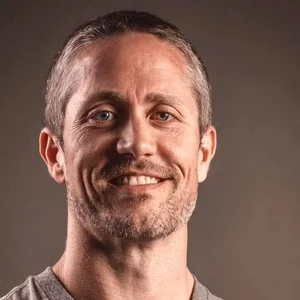
Why This 73-Year-Old Will Never Stop Strength Training (David Frost)
Are you getting weaker because of age, or because you started “training your age”? And how hard can you still push before recovery starts working against you?
David Frost is 73, a retired Navy captain, adjunct professor, endurance athlete, and writer on load management and recovery. He joins me to challenge the idea that getting older means automatically dialing back your training.
We cover sarcopenia, muscle building, connective-tissue recovery, sleep, full-body strength training, HRV, heart-rate recovery, and why comparing yourself to your younger self can sabotage progress. David also shares the coronary calcium wake-up call that changed how he balances hard training with longevity.
You’ll learn how to use readiness, recovery, and evidence-based training to keep lifting weights safely while protecting your long-term health.
Join Eat More Lift Heavy to build muscle, lose 10-20 lbs of fat, and learn what works for your body, 1 week at a time. Eat more and lift heavy with confidence.
Timestamps:
0:00 – Why aging doesn't mean backing off
5:26 – Sarcopenia and the recovery equation
13:08 – Starting strength training at sixty
21:08 – Building a longer strong span
23:32 – David's coronary calcium wake-up call
32:47 – Whole-body training and recovery timing
36:34 – Using HRV without overtrusting wearables
41:19 – Walking, sleep, and better recovery
Episode resources:
Website: wellpastforty.org
Instagram: @davidemersonfrost
-
Why aging doesn't mean backing off
Philip Pape 0:00
If you're over 40 and you've been dialing things back using lighter weights, fewer hard training days, because that's what everybody says you're supposed to do at your age, right? Then this episode is for you. My guest today is 73, and he is going the other direction. He recently rode 95,000 meters in a single day. He is an expert in load management and recovery for all of us older folks just trying to look and feel better. On today's episode, you'll learn what changes in your capacity with age versus what doesn't, how to decide if you've recovered enough to go hard again, and the one thing you should always schedule in your calendar just as seriously as your workouts. Welcome to Wits and Weight, the show that puts a popular piece of fitness advice under the microscope, finds the hidden reason it doesn't work, and gives you the deceptively simple fix that does. I'm your host, Philip Pape, and today we're talking about that moment where you decide you might need to back off. Maybe your shoulders start taking, maybe a session left you sore for a few days, or maybe you're just getting older and people are saying, hey, take it easy. You know, this is just what happens when you age. We shouldn't be lifting or working so hard at it. So maybe you reduce your volume, maybe you work out less, go a little lighter, and it feels like the right thing to do for longevity. Well, my guest today is David Frost, and he is 73, and he is not backing off any of it. Uh, this past June, his team set a Concept 2 rower ultra tandem record for 100 kilometers, where David rode for over four hours or 59 kilometers of the almost eight-hour grueling. Oh, it sounds like a grueling experience. He is a Naval Academy grad, a retired Navy captain, adjunct professor, and he writes for a lot of different organizations, including NFPT, personal trainer, and the American College of Sports Medicine, on many topics such as load management and recovery for people training, especially as we age. He also found out in his 70s that his coronary arteries looked a lot older than the rest of his body. And that was a catalyst for why he thinks about this the way that he does. So today we're gonna get into what really does change about movement and training in your body as you get older, over 40, 50, 60, what David himself can and can't do now that he maybe could do when he was 60, how he decides how he's recovered sufficiently to go hard again, and how you can do that. And then where things like walking, easy movement fit into his week that still has heavy lifting in it. David, welcome to Wits & Weights.
David Frost 2:38
Golly, thanks so much. I I have a limerick, Philip, if you want, but it for the worst part, but no, but we probably want to get into the weights, don't we? But uh Yeah, yeah.
Philip Pape 2:48
You know, they're both part of the package. So that's part of it.
David Frost 2:50
There was a guy age 73, you know, who liked hypertrophy and he doesn't like sarcopenia. Anyway, that's the limerick, and but I'd love to get into this uh extraordinary topic. So onward.
Philip Pape 3:03
No, no, on sure. Yeah, and a lot of my listeners are are really concerned about this. They're they're they're over 40, 50 or older, and they've been told a lot of mixed messages in the industry, or maybe they've dealt with things like injuries and surgeries and medical concerns over the years. And maybe they're told to back off, go later. They've got friends who are like, what are you doing? You're trying to get bulky and build muscles? Like, what are you what are you doing? Right. And I've seen this change with the generations as well, too. But you are, you know, you're seven in your 70s, you've done all this active stuff that you're still doing. Make no excuses for it. And you're also very Aerudite that I can tell, an intelligent guy that thinks about this stuff. So are you a genetic freak of nature? Or is there something to how you train and move that we can all learn from?
David Frost 3:47
Yeah, I am not a freak of nature. With a Tour de France that just completed or the World Cup, I did study the amazing capacity of some freaks in nature, like this Slovenian, mispronounced Pagakar's name, but Tadek. Now, Todek's 25, he is a freak of nature. He can sustain 330 watts for hour after hour on the bike. Now he's pushing through air. My sport is pushing a boat through water. It is different, and that is extraordinary. And one of the things at any age, but as we get older, Philip, one of the things I remind myself is that I don't have to chase yesterday. I just want to, in my own psyche, I want to be better than most of my peers. So I don't have to be better than Tadak Pagakar. I'm sorry I mispronounced his name, or Mabapi, that wonderful striker for France. I just want to be the best that I can be by doing as we learn, and the rules are changing. I know that you and I could talk about that forever about physiology, cardiovascular health, and those things. But recovery is certainly one of the things that I can give my practical observations about what works for me in the world of resistance training or RT, whether it's dynamic, endured, explosive, or peak, strength training. What are we doing? What are the weakest links? We have to remember we're not chasing yesterday and we're not going to do the power lift that we did 20 years ago without getting hurt, if you can do it. So injury avoidance is one of the felicities of age that folks my age tend to embrace and not use this as an excuse, but just acknowledge the art of the possible.
Sarcopenia and the recovery equation
David Frost 5:26
I certainly cannot row as hard or as fast as I did as a 22-year-old. And yet we have a wonderful program called Masters Rowing, where you generally row against people your age. So that's that's the level. So as we get older, we don't have to apologize. We just race against people our age. We don't have to race against everybody. So, or lift it, lift comparing yourself to everybody. And I think that is critical. But in this world as a resistance training, I know we're going to hopefully talk a lot about recovery, but one of the things I really want to talk about is intervention. But if you look at sarcopenia, the bell curve of sarcopenia for the general population, it starts to tail off right about at age 40.
Philip Pape 6:11
Let's define that for the listener. Loss of muscle and function, there's a very specific definition, right?
David Frost 6:16
So the rule of thumb is different for everybody, but the loss of flesh, literally, sarcopenia is a loss of flesh, at about 1% a year after the age of 30. About every athlete is different. And of course, how you change that trajectory, I guarantee that every one of us is going to have less muscle mass when we die than when we were in our 20s. I guarantee it. But what we want to do is change that trajectory of the loss of muscle mass, sarcopenia, loss of flesh. So at age 40, a reality is our bodies are changing and we should adapt to that change and still embrace it and make the most of it, not chase yesterday or or lift yesterday. Because if you're at a very high level, it's just a fact of life that it's going to tail off. But how fast, but how we deal with it, the intervention is the key. And part of that intervention certainly is effective recovery, to not get injured, to understand as much as we can about our hormones, how they support us instead of drag us down. And of course, with technology, we have many, many measures that we could do with, you know, blood testing and those kinds of things. But nothing like a self-scan to kind of get a feel, Phillip, for when you're ready to go heavy again. You know, it however there is that caveat that your muscles may be ready, but your connective tissue may not be ready.
Philip Pape 7:41
Yeah, yeah, yeah. This is this is what I want to ask you about, actually, is is when we talk about recovery, it is implied that we're recovering from something. So you have, if we split up the population into a few big groups, right? We have the group who's never lifted, who's never really been active, who's been sedentary their whole life, probably the majority of the population, let's be honest. And if they start lifting when they're 40 or 50 or 60, we need to understand what that looks like and what happens and what they're able to handle from a biological fitness perspective. And we talk about stress, recovery, adaptation. There's that population. Then there's the population who maybe has always been lifting and active, and they have their own issues with longevity, maybe because they used to go super hard and now they don't as much. And then you have kind of in the middle, the guys like me, I would say I'm 45. I started when I was 40. So I was still like reasonably young, but I hadn't really done much of it. And now I'm into it, and so I'm kind of in that middle ground. Can we use heuristics on those, you know, in that way and maybe examine the recovery?
David Frost 8:41
Yeah. I think it's a wonderful breakout, that triad. It's often great to separate the universe into three groups. And by the way, in the matter of resistance training, I argue, at least from the statistics of power lifting, male or female, you do about the same per body weight if you're fit. So hats off to the ladies to not concede anything to the guys. Their ability to power lift is at about the same magnitude and percentage versus body weight for the key power lifts, the deadlift squad and bench press. Hats off to them. You know, for sure. That's why there's male and females on the cover of the book because I admire the Scythian women. The Scythian women were the real life Amazons and they were tough ladies, you know, riding on horseback and beating up guys and stuff. Women have always been strong and strong as a new skinny. I diverged, but I did want to mention that here.
Philip Pape 9:34
It is important because we we do often talk about the fact that their women's ability to build muscle is at the same rate as men. And really, the only difference is biologically they're you know smaller in stature and have a little more body fat and started later, you know, with the the the test, you know, had less testosterone during puberty. But other than that, the delta in terms of strength and size, like you said, is equivalent. So yeah, go potential's there.
David Frost 9:59
Oh, it's it's extraordinary in admiration. And hey, if a lady can beat me in a marathon run, God bless her, that means she's better than I am. You know, that's you know, I have no problem with that. But for the matter of resistance training, back to our intervention, and and part of that is technology, but what we do in 40s, I mean, you got a lot going on, right? Very busy life. You may have dependence, you may have work responsibilities and so on. You probably almost everyone that I know, including myself, in that decade, the fifth decade of life, compromise is one of the worst things to compromise, and that's sleep. And we know when does the muscle recovery and growth happen? Not when we're working out, it's when we're sleeping, right? When and those phases of sleep are so critical. So if there was one intervention that I would love to highlight from my experiences of these, you know, my eighth decade of circling, you know, the sun, it is never, never, never compromise sleep. It won't help you in any way, shape, or form. So the key word in my mind is intervention and intervening with a look at what can work for you within your lifestyle. And a very busy professional that has to commute, that can't work from home, has time constraints. And yet, one of the wonderful things about resistance training is how you can see results so much quicker than in stamina, to to have a market increase and ramp up in stamina to do the Tour de France or whatever takes years. But you can ramp up in strength in a few months, even up to the age of 80, because then it's not tapping masks, it's just tapping, you know, the intervention of training your nerves and muscles how to do what they were designed to do. And I don't want people to wait till they're 80s, but I don't want them to say it's too late either. Hey, today is better than tomorrow. Maybe not as good as yesterday, but today is the key. Intervention starts with moving. There's a quote by an esteemed uh medical doctor who's also very good at kinesiology, who shared moving heavy stuff is pretty darn good medicine. And who doesn't like natural medicine? Or conversely, who likes polypharmacy and popping a lot of pills to try to make up for what we should be able to do, like our forebearers did when they were chasing the antelope or you know, running from the saber-toothed tiger or whatever. So, intervention, I think, is a key noun and how we intervene day by day in successful little habits to uh make a difference is so very critical. But part of that intervention is saying, do I want to stay up and watch the San Diego Pod race maybe make the playoffs or go to bed? Hopefully, most people will say, why don't they use technology, tape it, and record it. Yeah. Yeah. So intervention is a key one. And recovery is one of the best interventions that I argue busy professionals in any decade uh should try to refocus.
Philip Pape 13:01
Okay. So you mentioned a few really good themes there that are, I'll say more about the principles than the methods, right?
Starting strength training at sixty
Philip Pape 13:08
Never compromising sleep, working within your lifestyle, which, you know, is a huge part of even the when we look at the literature of success is adherence and sustainability of whatever you choose to do. Given all of that, let's start with somebody who's never really been that active, because that's again the probably the majority, and maybe they're 60 or 65 listening to this today. What should be top of their priority list for consideration here?
David Frost 13:32
Yeah. So let's call her decent deb. I use decent deb, not to pick on any devs, but to highlight decent deb. Then we can talk about good George and great.
Philip Pape 13:40
I like avatars.
David Frost 13:42
Yeah. So decent deb, 60 years old, maybe post-menopausal and ready to say, I don't like my bingo arms or bat wings. I want to look better, I want to feel better, my knees hurt, my hips hurt. Is some of that related to muscle and body weight? The answer is probably yes. Unless somebody's an ectomorph, they can't put on a pound. Postmenopausal woman generally put on weight and start to slow down. So, how does a resistance training regimen help decent Deb and her cohort? The answer is, I mean, we could start from the cardiovascular part, but let's just start about moving joints. We know, and oh, by the way, she may also have some arthritis coming in, some autoimmune thing coming because that's life. We're living longer than our forebears. We're not living better because we don't move. So, what could she do? We don't want her to go to the gym and see what somebody half her age is doing, unless she wants to remember what she might have done 30 years ago. We want her to find a place where she is comfortable, where she can start to move multiple joints in things that support her activities of daily life. There are a number of not very exciting things to check. Can I get up up from the floor without using my hands? How many times can I do sit to rise? What's the first thing a doctor will do with an older client? Let's see how you get up and down from a chair in the doctor's office because you're using multiple joints and checking the balance and the stability as well. So hopefully she on her own or using Dr. Google or YouTube or talking to a buddy or finding a group can figure out how do I move my joints that in ways that support my activities of daily life. If I'm a grandma, I want to be able to get on the floor, I want to be able to get the suitcase out of the coach section of the those kinds of things. Which the benefits are, we all know the benefits the bursa, the connective tissue, and waking up those sarcomeres to do what they were designed to do. And the answer is just start. The simple tests are not simple, simple yet hard. The simple tests are what the doctors use, like sit to rise, and that's a good place to start because you're using your glutes, your upper and lower legs, and a little bit of balance. So I would say, how many just start working? How many sit to rises can I do in a period of time? That's number one. Number two, if she's an aggressive decent debt, hey Dave, what are some functional tests for men and women to do? One is grip strength. There's a very, I think a very strong correlation between grip strength and longevity. If Debbie's interested in correlation, she's going to work on grip strength, not only to open the peanut butter jar, but also because clinicians say that helps, that's a determinant for longevity. So, what are ways to increase your grip strength? Well, get a little grip strength device, you know, an analog device. We don't always have to be digital, right? And then I encourage men and women, unless they have severe shoulder problems, to get excited about dead hanging for grip strength, for shoulder mobility, for lengthening the spine and training the muscle between your ears to hang on, right?
Philip Pape 16:57
That's a good one. That's a good one. I've had two shoulder surgeries and I can attest to that.
David Frost 17:01
Yeah. And hey, if it's just one shoulder, do a hang on one arm or modify on an angle. But the idea of using gravity to make sure you don't shrink. I mean, we're going to shrink, shrink as our discs shrink a little, but let's use our skeletal muscles to do what they're designed to do to support the skeleton. And again, the mind is a huge part of the dead hang. So grip strength, dead hang, and another one I encourage everyone to do, unless they can't walk, is to do a farmer's walk with heavy weights. And it doesn't have to be ridiculous. It just and it could be unbalanced, it could be, you know, racked up or whatever, but the ability to move stuff across distance is key for the next 30, 40, 50 years. So that's where I'd ask decent deb to start. And the third thing is a combo of a hang if your shoulders allow or modify it in the best way you can. And then carrying heavy stuff. We were designed to walk, jog, and sometimes run. You know, Bruce Springs said, born to run. No, I think we were born to walk and jog more than run. But carrying heavy stuff as you walk is important too.
Philip Pape 18:14
Two things on the grip strength, because I've heard conflicting opinions as well as evidence on this. And that is that it is correlational and that the root cause of individuals who have higher grip strength tends to be that they're generally stronger, fitter, healthier, et cetera. And like if you just work your grip to the exclusion of those other things, that's not really going to help you that much. So I want to be careful about it. And then there's also, I didn't hear you mention the deadlift, but maybe that's just because that's like the next level or two in Decent Dev's journey when it comes to gripships.
David Frost 18:44
I would, hey, there's a reason why the deadlift is the royal deadweight lift. It's always been there, whether it's a stone or the tire or the tree trunk or you know, those uh wonderful cases of the very young men pulling a car off somebody, you know, because they're very strong and because they bypass their safety circuits in a moment of life saving. But the royal lift, I call it the you know, the kingly or the queenly lift, there's nothing like it. In my sport, for probably 30 years, we honored the squat, probably the back squat. And then, of course, people started to migrate to a front squat. But for probably half of my life, we've talked about the squat as the preferred exercise for rowers. And a deadlift doesn't mean she has to tackle heavy, heavy weights. However, correlation, and I believe there's merit, that she, unless she has some kind of physical ailment, should be able one RM to do three-quarters of her body weight, one RM. So she's 140 pounds, she should be able to do one RM 105 and and celebrate it. You know, that's lifting heavy stuff and you know, honoring it. Her system should be able to do it unless there's an ailment, you know, a severe knee injury, or she just can't, you know, hinge. So the deadlift is extraordinarily wonderful. I mean, why is it the heaviest lift? Because you use lots of muscles and and you know, I cannot imagine 1,106 pounds. I mean, I can look at it and say that's a half a ton, but the horsepower that that Game of Thrones guy generated to set the world record, extraordinary.
Philip Pape 20:21
Laura. But we don't have to be extraordinary.
David Frost 20:23
We just have to be better. No. We just have to be better than ordinary. And three-quarters of body weight is a good starting point for decent deb.
Philip Pape 20:30
Yeah, and that goes back to the original thought of like we're comparing ourselves to our peers and even ourselves, right? Like we're not trying to compete with people a different age or even athletes in our group. If you take a normal curve of the human population, you just want to get more on that right side of the curve, which doesn't take a lot given how the curve is shaped right now for the population, right?
David Frost 20:52
You know, that's that that's very true, but it's also a little bit sad, isn't it? That it is that is a Gaussian and a experiential, we can do better. Because, you know, people like me don't I don't have the platform that I'd like to tell people
Building a longer strong span
David Frost 21:08
how important moving heavy stuff is for longevity. I call it strong span, and that relates to health span. Extraordinary. The your body's ability to embrace the blood pressure escalation for a heavy lift is very good for your system. Once you know that your aorta and your system can handle that blood pressure increase, that transient is an imposed demand that we need to embrace and celebrate.
Philip Pape 21:33
That's a perfect segue because I like first of all, strong span. That's a nice word. So I've heard in my time doing this podcast, I've heard health span, lifespan, brain span, and now strong span. And I guess it's all just just spanning and extending our longevity in one way or the other. But you mentioned the aorta, the heart. I know you've you've had heart issues in the past and that affected your. And I want you to share that personal story, but also like what is the connection between these acute stressors like. Like blood pressure during a lifting session, like you said, have be having the readiness for it too, because that's part of avoiding injury and helping recovery. And longevity and health. Like not just that, but feel free to get into resting heart rate, conditioning in general. You know, we can get into glucose, like whatever you want to get into that are related to strength training.
David Frost 22:18
Thank you, Philip. What a marvelous topic. And you know, in my well, 30 years ago, I didn't stop to reflect on my aorta or my lipoprotein A values. And the 30 years ago, we didn't know about lipoprotein A, which is an inflammatory marker, which is my kryptonite, by the way, and I could jump to that. But when we want to create inflammation, don't we, with exercise, acute episodic inflammation, because the cytokines, not the flood, not the COVID flood, but the interleukins and the cytokines need that micro-tear to get better. And it's not just muscle, by the way. I've learned more and more how important the collagen repair is and how much longer it takes for the collagen to repair and the fascia than it does for the muscle. So back to a comment we talked about earlier with the recovery, your muscles may feel great, but is there a problem with your fascia or your connective tissue that could lead to injury if you jump back too hard too fast too soon? So let's talk about the pump. I mean, you you want to think of a hydraulic system, you're not going to get an elevator up to the top of a very high skyscraper if you don't have good hydraulics. So there are some interventions
David's coronary calcium wake-up call
David Frost 23:32
that I would encourage people to do, and there's a cost, and that's not our sick care system, all that. But if you don't have the hydraulics to safely do the things that you might want to do, like lift heavy weights, uh, you know, a very serious deadlift or a squat or bench press or a whatever. So part of the innovation, I believe, is to learn about yourself and understand your limits. So you alluded to my epiphany at the age of 71. This is after we had a very good spring regatta, won some medals. Great. So I go to practice a week later, and I have a strange feeling in my chest. And I go, This is, you know, five o'clock in the morning on Mission Bay in San Diego. I go, I've never felt this before. If I sense something, maybe I should say something. So never been to a cardiologist before, but luckily my primary care doctor has uh set me up with a very nice cardiologist and he do all the normal stuff. And I get an ultrasound, finding out that my hydraulic system as a pump is pretty darn good. It's so yay, you know, the couple valves have a little stenosis because of age or whatever. But my echocardiogram is a mess because I have a low resting heart rate, which is, you know, you don't want it too low, but you don't want it sky high either. What's important is heart rate recovery and heart rate variability, as we know. But so, so at the age of 71, the cardiologist says, Oh, you know, ultrasound looks good, your basic blood looks good. And I said, There's something else going on. I need a root cause. I'm a systems guy, I need a root cause. And I got a second opinion because I didn't feel that I there had to be something else. So I had a very detailed uh blood panel for lipids that included APOS B, lipoprotein A, CR, CRP, and I think there was another microlipid. And lo and behold, I find out at the age of 71 that I was born with a very inflammatory marker called lipoprotein A, for which there is no current pill for injection. But what they find out is not just LDL, there's a whole more discrete level of things that can cause your arteries to get glop in them. So, you know, and if you're so the good news is for me that I have a real propensity to have calcium form in my coronary arteries and other I had peripheral scans and nothing here, which is good. But did you your listeners may not know that you can have occlusion of 85% and your brain is still okay? So you can have 85% closure in your carotids, and the doctors aren't all that concerned. Well, I'm concerned. I don't I don't want 15% bloat flow to my brain, but you know it's a it's a marker of our system. So the doc goes on a whim, let's do a coronary artery calcification scan, very quick CT scan of your coronary arteries.
Philip Pape 26:31
That's the calcium score, right? That you can get for like a hundred bucks. Yeah, okay.
David Frost 26:34
Yeah, and and that thank you, because if you hear it costs thousands, it doesn't. Now, one that you get for a hundred bucks, there may not be, you know, because it's convenient and you there might be a slight chance of a false negative or a false positive or whatever, yet it's still a data point because coronary artery calcification is a proxy for heart disease. So here I am talking to you about heart disease. I don't feel like I have heart disease, but I do. Disease disease means you're not normal. And I have the coronary artery calcification of a 92-year-old. So when the doctor texts me, Philip, and he says, Don't be alarmed, but you've got the coronary arteries of a 92-year-old, I text him back and I said, Why should I be alarmed?
Philip Pape 27:16
Yeah, yeah, I am alarmed. Thank you.
David Frost 27:18
But what else are we going to do about it? So he said, I want you to stabilize. So for a guy that never took prescription drugs, I started a very modest statin and a baby aspirin for, you know, the hopes to make sure there apparently the aspirin helps to stabilize the calcium that's already there. So I have more calcium than I should. A score of zero on an Agastin scale is normal, normal. Yep. So mine was 1740, which is the none two-year-old, which suggests that I may have a heart incident in the next decade by itself. But it's a proxy, you know, and heart health and overall health, as we know, is a very complex, interrelated thing. I will find out, and I'll come back and talk to you in 10 years and find out if I'm alive or dead. But, you know, but what it did, that wake-up call for me was to find the root cause. I had to understand was it my pretty extreme exercise as an endurance athlete, marathoner and ultra brower. How much of it was that? And there are many, many studies that show that we know that exercise increases inflammation. We want it, but we don't want too much. Goldilocks. We want just enough, not too much, not too little. But I think I had too much for a long period of time. The rule of thumb for endurance, not resistance training, but the rule of thumb now for endurance trainings to spend much more time at lower intensity, what they call zone two, conversational, up to 80% of the time. 80%. In my college years, it was more 50-50, 60-40. So we were doing a lot more hard and more interval than we did now, than we accept now as a way to have the good fight in cardiovascular health for the long haul because of the inflammation causing. So there are many studies of aging endurance athlete with high calcification.
Philip Pape 29:13
That's interesting because we we talk about the lack of recovery and maybe the burnout and the injury, but you're saying there's even this long-term health, critical health concern with the arteries with this as well. And I guess the same kind of thought process applies to lifting, but it's a lot, I guess, a lot harder to get burned out in the same sense with lifting weights than with endurance, if you will. So so having said that, what did what did you change? Uh was it just that? Was it just the level of intensity in your versus recovery ratio that you just mentioned?
David Frost 29:44
Yeah, great question. So now I'm facing not just performance, I'm facing life, possibly life challenging or life-threatening. And the doctor said, listen to your body. So he he insisted I spent more thought about perceived exertion, not heart rate or lactic levels or whatever. How do you feel? What is your RPE, perceived exertion, and how does that set up your med hours, the metabolic equivalent task hours per week? And I I appreciate him for encouraging me to listen to my body more. I was kind of I'm kind of headstrong, I guess, but in my younger day, it was like harder, faster, more, you know, man up. And now we're learning that, you know, the real growth happens in recovery and things take longer as we get older. So that RPE was a great wake-up call that I focus on more. I still do all the same things, but I do more of some things. I do more isometrics now than I did in my younger day. A wall sit, you know, there is some it's conflicting evidence as to whether a static hold using the big muscles of your quads and gloops helps testosterone. It's conflicting, but it's interesting. And hey, if my thighs start to quiver in a in a wall sit or a deep squat position, probably means they're under tension and good things are happening.
Philip Pape 31:08
You know, the literature is uh is still out on length and partials versus short length and and range of motion in general. My takeaway is it's it's all good. So have a well-rounded program in your cupboard, you know, like don't jolt just limit yourself to one or the other. Well, going back to RPE, just to clarify for the listener, you're talking about the endurance definition of RPE that then got sort of stolen into the lifting world RP, which is a totally different thing. Because RPE in the lifting world, we generally want it to be a little bit higher because we're not training close to failure as much as some people are. Just clarify that for the listener when you talk about RPE.
David Frost 31:44
Yes, and and my apologies because I'm kind of a hybrid where my sport does involve strength and power, but it's also endurance. So I I kind of I kind of get them. But listening to your body for a lift too, if you is it a niggle or is it an injury? And are you gonna push through and do something stupid? Or are you gonna say, well, you know, it's like a if you're a skier or your listeners are skiers, when do most of the accidents happen on that one last run that you shouldn't have taken, right? So it's okay, you know, it's okay to say, I'm gonna skip a rep or I'm gonna, hey, that set isn't gonna work today because something today, I just don't get the feel that today's the day to, you know, to man up or girl up, you know, for lady listeners.
Philip Pape 32:27
Yeah. So on that, let me ask you about volume, frequency, and effort. But what I'm concerned about with this question is people are always asking, how many days a week should I train? How many hard sets should I do? Right. And and the evidence gives us some kind of guardrails on this. But from an age perspective, when you're 60 or 70 and you've got concerns about
Whole-body training and recovery timing
Philip Pape 32:47
recovery, about connective tissue, about not getting too fatigued in one set, like you're implying, where does it make sense to train six days a week for 20 minutes as opposed to three? So does it make sense to have, you know, two hour long sessions three days a week to get the rest in between, or are you hurting yourselves because now you're getting the potential for injury and fatigue in those sessions, right? Like what's your general thought on that for the average person?
David Frost 33:12
Yeah. And if time is an elephant element, Philip, I like to do whole body, I don't do leg day or upper body day. I try to do everything because my sport is a whole body sport and life is a whole body thing. Now, there are reasons to separate it, and perhaps you can get more volume in a week if you do separate. But so having said that, for my resistance training, I find that I get sore with my whole body work and it takes me two days to recover. In fact, the second day after, so Tuesday, Wednesday, Thursday, rowing days, stretching days, low intensity days, Friday, try to hit it again as a general rule, unless I have a big competition coming up for rowing. So I'm sorry on the second day than the first day. So for me, two a week is what I need. My measure, my my number one measure, by the way, is my wife. If I'm overtrained before the aura ring or the fitness watch, or I know it, my wife says, You're a little snippety. Why don't you take a nap or back off? You know, so that's an analog feedback that says maybe I went too hard.
Philip Pape 34:28
Oh no, it's very objective, completely factual feedback if it's your wife. Come on, man.
David Frost 34:33
So having said that, I like to do whole body, not split upper body, lower body, legs, arms, whatever. The key is did I get sore enough to celebrate with sleep, rest, water, protein, the micro tears and the recovery to be ready to go two days later. So what is that? Well, if I've just been in a phase, let me give it if I can back up and give a case study. Last fall I did a charity bike ride, averaged 65 miles a day for a week. Hot, humid Florida, Georgia bike riding. I didn't have a lot of strength training in that time. So in about two weeks, we start to lose some of our priority, about two weeks, our prior capacity. So sometimes my periodization looks a little crazier than just a dedicated resistance training person, because I'm a hybrid person. So having said all that, let's just say I do three three major lower body lifts and three major upper body lifts on Tuesday. I feel a little tight on Wednesday, on Thursday, I'm pretty sore still. And yet, hopefully, you know, a warm bath, epsom salts, hydration, protein, I'm good to go on Friday. But listening to my body is key for that. Has that changed? I think, as a rule of thumb, maybe mid-40s, some people might benefit more from twice a week than going to the extreme of lifting every day, unless you're isolating and doing different body segments for that. So the the key is what works and where do you not burn out? I earlier I wanted to share the immersion part of sometimes mixing it up is really cool so that you don't say, oh God, I got another lift day, you know, that kind of thing. So being immersed, being excited, trying some variations, let's go back to your deadlift. I I encourage, particularly for, well, right now I have more women clients than I do guys for weightlifting, but I encourage them if they're doing hypertrophy
Using HRV without overtrusting wearables
David Frost 36:34
and three sets of eight to twelve, assuming that that's the model that works best. I'll encourage them to do a sumo, a traditional Olympic deadlift, and then a Jefferson deadlift to, you know, to work the little bit of the anti-rotation. And by doing that, they're thinking and hopefully a little bit more immersed in their exercise. Maybe music too, by the way, because many people say they live better with music.
Philip Pape 36:58
Yeah, the immersion piece. So I'm all about intentionality, you know, listening to your body and how that then connects to things like technology, because you dropped a few hints about things like HRV, for example. And we have now have, you know, these rings and we have watches, and it's pretty cool. You can definitely overweight the technology or or misinterpret it, but like what are the top couple of ways that you would use technology to enhance this process?
David Frost 37:23
Yeah, the wife was one, that great analog objective. You're you're snippety. You need to take a you know, a taper day. Uh, I was encouraged to a guy named Dan Clark, who was uh he played briefly in the NFL during the strike season, but then he was also on a TV show. So big guy who also had some heart problems, by the way, which he dealt with. But anyway, he was the one that told me the NBA was using an aura ring to monitor body's response and to find out if you had COVID or not. Uh during during the year when the championships were in Orlando in a bubble. That was five or six years ago. So I've been wearing this ring and I and trade names are I'm sure there are other good rings out there, but I've been kind of using the aura ORA, which is going public, by the way, pretty soon, just as an aside. And I found tremendous value in this. The ladies find extra value for monthly cycles and things. This predicted shingles before I got shingles. Temperature, respiration, resilience, and the other factors. It's algorithm was good enough to tell me before I broke out in a traditional shingles that I had something wrong. It also told me something was wrong by temperature, respiration, sleep patterns that I had COVID before I had COVID on vacation in high school.
Philip Pape 38:38
Because it knows your baseline, right? And it's seeing a diversion from that. Yeah.
David Frost 38:41
It's the temporal nature that we should celebrate. There's a great quote, and I'd love to claim it was me. They can't do the work for you, Philip. You know, they're great to monitor. A month ago in the, I think it was the Wall Street Journal, a lady tried this, a whoop, this, that, you know, like six different devices and tried to figure out what best was. She said, depends. What are your goals? What's your cost point? So there is a cost with these digital and devices and so on. They cannot do the work for you. And yet, I think for not maybe for decent Debbie, she can, and I shouldn't I would encourage decent Debbie to learn how to monitor her pulse the old-fashioned way. But if you get to a good or great, great George, the feedback does help for the trends that you mentioned. Heart rate variability, your body's ability to chill, where the parasympathetic is butting heads with a sympathetic. And it's kind of ironic that the higher the score, the more chill you are. But unfortunately, the older you get, the harder it is. So for me, my baseline is in a training, like I'm kind of in a hybrid training mode now. My heart rate variability is in the high 30s. On vacation, maybe higher, but in extreme training of heavy loading, lower or sick. So heart rate variability is well documented, I believe, by lots of sources that it is a very good way for you to see what's happening and how hard are can you go today.
Philip Pape 40:09
Yeah, and it's interesting because there's the HIV that blips during you know good times. And what I mean by that is where you could easily overreact just because the numbers off, but you feel fine. And then there's HIV that's telling you something predictive, like you said, with sickness, maybe you do feel all right or whatever. I mean, if you if you got hammered and you know, drank, got wasted from alcohol one night, your HIV is gonna be off, but you'll know why, you know, so that's not a surprise. Yeah. So you mentioned also mentioned heart rate recovery. Now, I I've seen that term used in different ways. One way I know it is just like in the moment when you're training and your heart rate spikes from like, let's say, some sets you did, how fast does it get back to a certain point? I've used that with some folks as a real quick way to see how conditioned you are from like a work capacity standpoint. Is that what you mean or is it a different measure?
David Frost 40:54
Work capacity. Generally, I used to say for hypercut free and strength, once I know what their baseline training heart rate is, wait 90 seconds and see if your heart rate recovery lets you go at it again hard enough to not, you know, not be catabolic or risk injury. So, yes, it was work. That was a work statement.
Philip Pape 41:17
Yeah, I think it's really powerful
Walking, sleep, and better recovery
Philip Pape 41:19
because when people lift and they get a little bit more into this, the idea of what's the right rest period between sets. And, you know, sometimes you want to artificially compress that for different reasons, whether it's fatigue, you know, pre-fatigue of the muscles so you could get faster to the effective reps, or you're trying to save time, do supersets, things like anyway. But that's a very important metric, guys, who who are you're listening to this, trying to understand overall health and readiness and recovery. So speaking of that, we we left it for the end here, but everybody is time limited. A lot of people try to schedule in the things that they care about the most. Uh, one of those should definitely be your training, but there's something else that you schedule in. And I love the idea of time blocking and prioritization. What is that that you schedule in that that people should consider for themselves?
David Frost 42:03
You know, as I get older, one of the things, and this may be true for the ladies, but I try to talk about experiences. So for the guys, as they get older, they may start to have wake-up problems or even performance problems in bedtime. And one of the ways that is proven to practically deal with public floor issues for guys is to take a walk after dinner 10 to 20 minutes to get your, don't know exactly why this I said proven, but strong correlation that a 10 to 20 minute walk after a meal may very well help you sleep through the night and get relaxed enough to, you know, perform. So that's kind of a fun topic. The 10 to 20 minutes, I challenge anyone to if you can't figure that out, please call Phillip or call Dave. We'll tell you how to find 10 to 20 minutes in your day. I absolutely positively say that sleep, it's a wonderful way to spend one quarter to one third of your life because that other three quarters or two-thirds of your life is so much better. You're ready to go. And we know that the growth happens, you know, in those phases of sleep where sleep is when your your brain you're paralyzed, your brain is cleansing itself. But deep sleep is when your body is saying, I'm rebuilding those microterrors, you know, the cytokine cavalry kind of things going on. So it if you cannot fit what you need, and hey Dave, what what do you need to sleep? I say it's waking up without an alarm. You know, that's when I think you're rested. If you need to get up on an alarm every day, you're probably like I was in my 40s, you know, oh, burning the candle at both ends. So I don't know if that those two things squeeze in the walks because they're good for your pelvic floor health. And and maybe if you're walking with a loved one, that's also time to catch up on a busy day. But then there's absolutely no way to compromise sleep and still perform well, that in my practical view.
Philip Pape 44:06
So yeah, it can't be said enough. And and so to that point, like we need to treat that just as important as those other things. And scheduling it in could be as powerful as, like you said, if a walk helps with your sleep and your concern is falling asleep and then getting that high quality REM sleep through the night within a certain point so that you can wake up refreshed without an alarm. Go ahead and fit it in. And and I like those little things that that don't take a high bar of achievement to accomplish. This has been an awesome conversation. Let's wrap it up here. It's, you know, we could go on forever about all of these topics. You're a gentleman, you're a class act. I love everything you have to say, you're a smart guy. Where can people learn more from that brain of yours and reach out and connect with you?
David Frost 44:46
You're very kind, Philip. My main website is well past 40, spelled F-O-R-T-Y. So W-E-L-L-P-A-S-T-F-O-R-T-Y dot or G. One reason why that's a.org, not a.com website. But my books are there, links to my professional posts are there, and some of the, you know, and hopefully widths and weights will be on there as well, whether I do a limerick or a hiku for you. But yeah, wellpast40.org, I'm on LinkedIn and David Emerson Frost on Instagram. Sounds good.
Philip Pape 45:19
So David Frost. All right. So we'll send folks to wellpast40.org and your Instagram. We'll throw those in the show notes, and then he could get back to you with any questions you have. And again, he has a ton of books and blogs, really good content. I'm so inspired by you, you know, seeing what you do and how active you are and lifting and all that. Keep it up, man. Thank you again for coming on the Wits & Weights podcast.
David Frost 45:40
Philip, thank you so very much. I thoroughly enjoyed it. I hope you did.
Philip Pape 45:44
100%. 100%.
David Frost 45:45
Loved it.