What if more gym days are killing your gains?
Could training less help you build more muscle?
Are you working harder just to recover worse?
Strength training over 40 isn’t about cramming five or six workouts into your week. It’s about creating enough stimulus to build muscle without burying your body in fatigue.
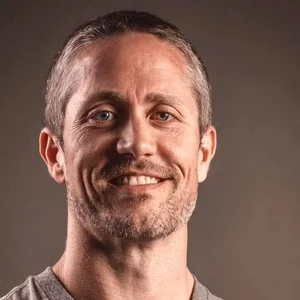
Coach, former pro physique competitor, and Optimize Your Body host Martin Silva explains why fewer, higher-quality lifting sessions can improve hypertrophy, recovery, strength, and body recomp.
Learn how training frequency and volume work together, why stopping one to three reps before failure can produce better muscle-building results, and how mechanical tension, tempo, and technique matter more than destroying yourself in every workout.
Join Eat More Lift Heavy to build strength, lose fat, and learn what works for your body, 1 week at a time. Learn to eat more and lift heavy with confidence.
Timestamps:
0:00 - Why more gym days backfire
2:00 - From high volume to better results
5:45 - Minimum effective volume and frequency
9:50 - Mechanical tension, tempo, and technique
15:10 - Staying shy of muscular failure
19:56 - Choosing three days or six
25:46 - Better activities for recovery days
28:09 - Mobility, injuries, and changing beliefs
Episode resources:
Podcast: Optimise Your Body with Martin Silva
Episode mentioned: I Trained 3x Per Week... And Got Leaner
Website: optimiseyourbody.com
Instagram: @martinsilvafitness
Facebook: @Optimiseyourbodycoaching
YouTube: @martinsilvafitness
-
Why more gym days backfire
Philip Pape 0:00
You're getting a bit older, but you still want to build muscle, lose fat, and feel like yourself. You know it's important to lift weights or at least work out in some way. So you're in the gym five, six days a week. Maybe push-pull legs, maybe an upper lower routine, some cardio added in, but the scale just isn't moving. Your strength isn't going up. Your joints aren't feeling it. So you think maybe I'm not doing enough. My guest today spent close to two decades preaching exactly that. He's competed at the pro level. He's built a coaching practice around training people hard and often, but then he started doing less and his results got better. So today we are getting into why most lifters over 40 are training too much and often for the wrong reasons. What's holding back your strength training results, and how a smaller number of higher quality sessions can do far more for you than five or six days of grinding it out. If you're showing up to the gym week after week and the work isn't paying off, tune in to find out if less really is more. Welcome to Wits and Weights, the show that puts a popular piece of fitness advice under the microscope, finds the hidden reason it doesn't work, and gives you the deceptively simple fix that does. I'm your host, Philip Pape, and today we're gonna talk about how often you should be lifting weights to build muscle, to lose fat, to get lean, especially after 40. Now, the popular advice tells you always that more is more. More days in the gym, more volume in each session, more sets, more cardio on top of that. And then the results don't come, and the assumption is, hey, I'm not doing enough. My guest today is Martin Silva, a coach with close to two decades of experience, an ex-pro physique competitor, host of the Optimize Your Body podcast. Go follow that right now because we've got a back-to-back on our shows. Martin works with someone probably a lot like you, who is busy, a professional, maybe over 35. You want to build muscle, lose fat, feel strong, feel like yourself again, without rebuilding your entire life around going to the gym. Now, what I like about Martin is
From high volume to better results
Philip Pape 2:00
that he changed his mind and he did it in public. He used to train a lot more. He used to train five, six days a week, push every set to failure. He used to recommend more volume is the answer to everything. And then he started training less. His results got better, as did those of his clients. So today you're gonna learn why high frequency training may not be the best approach for you, what to do instead, and how to apply this, whether you've been lifting for many years or you're just getting started for the first time. Martin, welcome to Wits and Weights.
Martin Silva 2:30
Thank you very much for having me on, brother. And thank you for that intro. That was awesome.
Philip Pape 2:34
Yeah, man. So I've been I've been listening to your show. I encourage listeners to do the same to follow you as well. But I really love talking about frequency and volume because there's a lot of confusion over just the general principles of it, what works, what doesn't, as well as individual responsiveness. And coincidentally, in my feed yesterday, I don't know if you follow Paul Carter, you know, love him or hate him. Yeah. He said building muscle is not a hard work endeavor. You can literally max out your physique, hitting the gym twice a week, never doing more than five reps, never training to failure, not bulking. If you're consistent and have a load progression scheme, you'll make all the gains you can make. You agree or disagree?
Martin Silva 3:07
Yeah, I do agree to an extent on that, but you hit the nail on the head, right? The individual, whatever word you use, but individual variants 100% plays a big part. Now, with that, obviously with the the not training to failure piece as well, which we can get into. I think the key thing is here, Philip, and you'll know this with all the people you've coached, it's obviously the consistency piece, right? It's like you could do the worst program in the world and get better results than the best program in the world done inconsistently, right? So just we we got to put that one in there first before we get into the science. If you're not consistent, forget about all the nuance, right? Because people talk about, you know, should I be doing this, that, and the other? And should I be doing like a single-leg squat and you know, balancing on one leg and all these bands? And it's like, don't worry about that, just show up first. But then there's a hell of a lot of nuance which we can get into. So I do partly agree with what he said in terms of training twice a week. So if you do it properly, and if you just think about again the consistency piece, I just want to hammer that home. If you look over the space of you know one year, because you'll probably you probably heard this with people you coach or you know, people you have on that initial call. And a lot of people haven't really trained for a year consistently for either a a long time or b ever. So if the person who's doing two sessions per week, and we know the research shows you need to hit every body part at least twice per week. So two or three times per week to get maximum results. You want to send that muscle building signal. So it's like every two or three days max, even four days. Let's say you trained on a Monday, you know, by by Thursday or Friday, that muscle building signal you've sent to any given body part has kind of died off at that point. So you want to hit it again. That's part of the research behind that frequency piece, right? So, yes, doing twice a week, you can get great results. And actually, not training the failure, you know, stopping one to three reps shy of failure, you're gonna get the same muscle. Well, you know, again, there's a little bit of variance there when it comes to training to failure, depending on the level you're at. But most people, 90% of people, right, they're gonna get way better results stopping one to three reps shy of failure. You're gonna get the same muscle building stimulus and growth without the fatigue, essentially. So, what he's saying there is pretty much bang on for most people. And and that's the tough part, I think people always want to do, which we can definitely get to today. They always want to do more. And I used to judge a good workout by how sore I was the next day, which you find a lot of people still do. They'll say things like, you know, I was sore, but but in a good way. And you're like, okay, let's let's unpack that a bit. How long were you sore for? You know what I mean? And if you're more, if you're sore for longer than generally a day or two, really, you've already crossed the line with the intensity, actually. So actually, you
Minimum effective volume and frequency
Martin Silva 5:45
don't want you want you might feel like you've done something the next day, but actually you don't want to be oversore for the most part as well. You want to recover, which is the key thing, right, Phil?
Philip Pape 5:53
Yeah, I agree, man. Recovery is number one. Like you reverse engineer everything from that. So you mentioned frequency. So let's clarify frequency and volume for Volks. Cause when you talk about hitting every body part two to three times a week, you're talking about the frequency of hitting that, getting that muscle stimulus across the week versus the number of sets within those sessions. Because we're I I eventually want to get to talking and comparing, like, okay, how does six days compare to two, but if it's the same volume and things like that? So one thing this brings up is a term I've seen lately, body maxing. I've seen people talk about it where you might train two or three days a week and you know, maybe seven or eight or nine different exercises per session, but you're only doing two sets. So you still save time, you still have a typical length, but you're now hitting different areas of the muscle, different muscle groups in different ways. From that perspective, like what do you think of the effectiveness of that approach to get the frequency or to get the volume? Or is there a more optimal approach than that?
Martin Silva 6:50
So, yeah. So when you look at, you know, it's weird, right? Because it's not weird, because when you look at research, there's a lot of things it doesn't account for, right? So what I'll say is, you know, maximum muscle growth and gains, 10 to 20 sets per week per body part, right?
Philip Pape 7:03
With a minimum of five, maybe, you know, yeah.
Martin Silva 7:05
Minimum of five, bare minimum. But you know, if you do it properly, and look, if we look at a beginner, for example, someone who just gets started, they've got the the beautiful newbie gains, right? Where they just they'll respond, and then obviously genetics plays a big part as well. Well, they'll respond really well because it's the body thrives off novelty, right? So it's a new stimulus, and they can start off by doing like anything, right? Literally, they could do one set and they'll build muscle. So if you're doing two exercises per body part and you're doing like seven to nine exercises each workout, 100%. If you look at that, even if you did two or three sets per work, let's say you did only did like the minimum, let's say you did five or six sets, right? If you're just doing those two workouts, let's just say you did five or six sets each body part and they were both full body workouts. If you're doing it right and you're focusing on that mechanical tension piece, I think that's the piece that gets overlooked the most. And we can get into that as well with like the uh, you know, just for what we mean by that is is really adding because the muscles only really know tension. So they don't really know how much weight you're lifting, right? Whether you're doing 20 pounds, 40 pounds, 100 pounds, all they know is how much tension you're applying to the muscles. So that's why technique, you know, mind muscle connection, and this is where I think the variable of doing slow tempo reps is just is just so underrated. You know, if you look at the optimal, I believe the optimal hypertrophy rep range, I'm pretty sure is a you can do a 3-1-1, but a 4-2-2. So just for the audience, that's basically a four-second negative portion of the rep. So on the lower portion of the rep, think about that. Four seconds, and then a two-second pause, and two seconds when you're actually doing the concentric part, you know, on a curl when you're actually curling, for example. So that's an eight-second rep, right? That's a long workout. So let's say people did that, or they even did, you know, because it takes forever, right? Let's be honest. If they do a three-one one, three-second negative, and they did what you said, they did the two sessions and they did it with intention, right? And they really focused on the skill of each movement, and they weren't just, you know, go in there to sweat. They were actually focused on the intention. What am I doing with this movement? You know, how can I improve it? You know, sure, they're gonna get results, right? So that's where the nuance comes in with, you know, don't throw that rep away because you never get that rep back, right?
Philip Pape 9:24
Exactly. I I so I love where you're going. There's two concepts, two principles you mentioned specifically, and that was the mechanical tension and skill. Like you use the word skill, I think is super, super important. And I think, you know, it is true. Mechanical tension, it really all comes down to that. Even if we talk about progressive overload, you can only achieve that because you're hitting the enough mechanical tension to get the stimulus to grow to then go heavier night. You know what I mean? It's all like secondary to mechanical tension. So the slow tempo, let me
Mechanical tension, tempo, and technique
Philip Pape 9:50
ask about that, right? Because I think there's people conflate like time under tension versus I think what you're alluding to, which is the long, the lengthened and shortened positions and the eccentric and concentric having their own value, like eccentric, I know, is correlated with flexibility, you know, as well as the stretch reflex versus the pause, each having its own value. I I love pause everything these days because of like joint issues, it's great. So I love that. Yep. And then the concentric, like exploding out and using those muscle fibers. There's a lot behind it. And I don't think people have to understand it all, but like if you boiled it down to, you know, how to lift, like how would you describe that?
Martin Silva 10:28
Yeah, definitely. Yeah, because like when you when you go into the gym, right? This is why I say the clients, it's showing up, like I said at the start, right? If you don't show up, forget about all of this. You've showed up, right? You've done the hard part, you got to the gym. I'd say that's the hardest part anyway, because the being there for the most part is the easy part when it comes to getting in shape. That's the fun part. So once you're there, then it's like, what's the intention of what I'm doing? Right. So I'll give you some examples now. When I have clients, the intention now, you're doing, let's just say they're doing between four to six reps or between two to six reps. The intention with this rep range now is for us to get stronger, physically stronger. I've built them up to a point where they're focusing on lifting heavy, and that's the goal is to get stronger each workout. Make sure you're having plenty of rest in between, and we're getting stronger each week. We're adding weight to the bar, and then obviously the side effect of that is building muscle. You know, you're gonna get some hypertrophy from that if you do it right. Then you've got the hypertrophy, let's just say the the time and attention phase. You get into the gym, think in your head to do it right. Like, what is my intention? What am I doing here? Okay, well, I'm doing, I don't know, it could be anywhere between six to ten reps, and I'm gonna do slow tempo. That's generally or eight to ten, even eight to twelve, but I I like to cap it off at 10 with the with the slower reps. If you're doing like a three-second negative or four-second negative, then your goal then is just exactly what we said it's the slow negative portion of the rep. And what you're trying to do is you're trying to just apply as much tension to the muscle, primarily on that lengthening portion that Phil talked about, when the when the muscle when the muscles lengthening out. So, simple example is obviously when you're squatting down, you're going down nice and slowly. And as you're as you're bending your leg, obviously your hamstrings are stretching out, and then when you drive up, you're flexing the quads when you stand up. So on the way down though, as you're sitting into that squat, that's when you're getting a lot of the tension. So, yeah, that and then and then you can do like a higher rep range then, which is basically like you know, it's basically similar to cardio when you do that, right? If you're doing, you know, 15 to 20 squats, for example, you're not gonna go too, you you know, you're not doing slow reps for any more than if you're doing it properly, I'd say more than 10 reps. And then you, you know, your goal then is I'm gonna get a good pump on, I'm getting the heart rate up, I'm still gonna stop two to three reps shy of failure, but I'm I'm going for a higher rep range. So obviously, then I've got to take the weights down to accommodate that. So that rep range, you know, plays a part in the rep tempo, of course, a big part. And I would just say when you're going into the gym, you know, you and you also should be feeling, you know, some people, again, it's the punishment mentality, which I was stuck in before. When they go in the gym, like I really want to get into this. It's not for everyone, right? Some people, less is not more, because some people need to go to the gym and push more. But the majority of people, 100%, especially people we we coach as well, right? Where if they're above 35, I know you generally work with people that are over 40, you know, in that age category, generally, you know, they've they've they've got the all or nothing mentality. That's probably a lot of the times what's holding them back, held them back a bit from getting in shape. Not with everyone, but with a lot of people. So then that transfers into the gym and you're going all out, you're like pushing yourself, and that's good to obviously progressively overload, but you want to be keeping the few reps in the tank at the end of each set. You don't want to be compromising technique, and you want to really be leaving the gym like with more energy. You should be leaving energized. You should never feel like you've got to lie down or like, oof, I'm tired. I need to sit down and just gather myself. You've crossed the line when that happens, and that's gonna slow down results because the body's gonna, it can only do you know these two things separately, right? So you've got recovery, the body's recovering is the recovery process, regenerating, and ultimately repairing your muscles and everything else, and your nervous system's recovering. Then you've got the adaptation when your body adapts to the stimulus. So they happen at they don't happen at the same time. So you want to recover as fast as you can so you can adapt quickly, and and when you adapt, the body adapts by you know building muscle or getting stronger. You know, that's that's the plan.
Philip Pape 14:29
Yeah, man, the recovery trap. So that that's gonna tie to a question I'm gonna ask in a second about the days per week. Because that's really what would what the reason I'm asking these questions is because I surmise that training less means you have to train more effective. And conversely, if you're training effectively, you can train less. So just hitting on that point a little more, first of all, some of the takeaways I got here for the listener, right, is that nobody wants to do 20 rep squats, but if you do, it's gonna affect the tempo, right? Because you don't want to be miserable doing a five, five minute set of super, super slow 20 rep squats. But it's gonna affect your tempo and your breathing. And there's kind of these variables that interplay with each other. You know, you've got the load, you've got the reps, you've got the breathing, you've got all these things. And I also think there's an aspect to that with the tempo
Staying shy of muscular failure
Philip Pape 15:10
of the mind muscle connection and listening to your body and learning things, especially when a lift is new. So then my question is how do you know you're near failure if you're trying to stay one to three reps shy and you've never really trained like this? Is there a technique like AMRAP or testing yourself or something that you would do to kind of really hit what true failure feels like?
Martin Silva 15:29
Yeah, this is this is a really good question because you know yourself, it just takes a long time to get intuitive with the body. You know, after a while you get intuitive, but if someone is if someone is just starting out, I would actually start off with more in fact. So I would go for more like two to three, two to three, leaving two to three reps in reserve at the end of each set. Now, to gauge that, there's not really like I try and keep it as simple as possible with clients. I don't I don't want to use like a formula or anything like that. I actually did a video recently where I was just kind of like showing them what it looks like, literally, where it's it's not it's not you know stopping one or three reps shy, but losing technique along the way and just going, okay, I reckon I can get one or it's actually really focusing on like stopping short of losing form, really. It's more a case of stopping short of losing one to two or even three reps of form. So that's why, you know, the best way to do it is again, you have to get intuitive and gauge it as you as you go. But I don't think it takes that long to get intuitive and like, okay, I'm gonna go for 10 reps. That's my that's my target. So let me pick a weight, let me just roughly gauge a weight that I reckon I could do 12, 13, maybe even 14 reps with, right? Roughly to absolute failure. I'm gonna pick that weight and then I'm gonna stop on around about 10 reps. You know what I mean? So it's kind of a tough one to explain. So I don't I've tried using like different things in the past where it's been almost like like a formula with clients and stuff, or a little, and it's just like I find it's just more it's too complex, and they get they get better when they just get more intuitive with it. You know what I mean? It is at the same time, one more thing. If yeah, you don't really know what it's like. That's the other, the other flip side. You don't know what it's like unless you've trained the failure as well, though, right? Actually gone to failure, and you know what that Phil, there's with that, that's all in there, man. There's so much in the tank. Once you experience and you know the technique and stuff and the tension piece, there's so much in the tank, right? Once you've got that piece.
Philip Pape 18:08
And I'll say, just mysteriously, you tend to go l farther from failure on the exercises you don't like. It's funny how that happens.
Martin Silva 18:14
That's a really good point. That's a really no, excuse me, that's a really good point. I do the same thing as well, you know. Like you say 15 to 20 squats, you probably got like 40 in the tank and you stop on 15.
Philip Pape 18:24
You're like, this is just too much. You know, it's funny, I ran Bull Mastiff last year. This is an Alex Bromley program, and it was the first time I've been exposed to like Amrap sets. It's the reason I ask it, but it does involve math a little bit in that you you tack on a last set and you go to Amrap and you realize how many sets you how many reps you really have in the tank. You're like, whoa, I have like seven left in the tank, and I thought I had two, but it helps you gauge the progression for the subsequent weeks, like based on a formula, actually. But it's interesting. Yeah, you just have to figure this stuff out over time. So then now let's talk about the frequency volume kind of interplay here, right? When we talk about three days a week, what are we comparing that to? Because I'm thinking a lot of people are trying to do like upper lower splits, typically four days, maybe some sort of power building, like a five day. Some people are insane, they like to go to the gym every day, right? And you mentioned recovery. So I think, okay, part of this is a recovery factor of just literally having that day off, even if it's to do other stuff, like you've been doing some mobility stuff I saw on your IG, right? Like that's still recovery. Is it that because we don't get enough sleep? So it's a couple extra days to sleep in, is it all the above? And I'm asking that because some people say, you know what, I'd rather have six days of half the session length in my home than three days, and it's the same volume. So are we talking two different things here?
Martin Silva 19:41
Definitely. And that's that's really interesting because personally I find it hard to get people to do like frequent workouts. Now, they they will do it, and I do have some clients doing it, but doing something every day, for example, in an ideal world, 20 or 30 minutes, 30 minutes, it really depends on the level, right? But let's just say 20 or 30 minutes every six days a week. Maybe one day then they could just have an active day where they walk or maybe do some mobility. Um, I would say for most people, especially when we look at age, and and it's not just you know what it's like, Phil. I know how many kids have you got, by the way? Two, two kids. You got two kids, yeah. I got a I got a kid on the way as well. I got a boy on the way. So uh yeah, man, I'll be joining you there. But but when you look at that, right, the responsibilities people have just naturally we get as we get older, right? So it's like you've got work stress, you've got kids, you've got this stress bucket filling up. So actually, you know, it's it's a lot harder to cross the line when you're doing 20 to 30 minutes, like a purposeful workout each time, then you'll cross the line with intensity and then get stuck in that recovery trap we talked about when you're doing those short workouts, generally, if you get it right with a workout. Then also you you you do you it's that frequency thing as well, right? You're sending that signal,
Choosing three days or six
Martin Silva 20:47
that muscle building, anabolic signal every single day and doing something. And then you can split that, you know, you can split that into like a lower up, maybe uh, and then just like a light kind of accessory workout or full body or even mobility, or you can split that into like, you know, three full bodies, Monday, Wednesday, Friday, and then just do some light body weight stuff. Literally, it could just be your own body weight, squats, you know, push-ups, sit-ups, or core stability stuff and some mobility on the on the Tuesday and Thursday, for example, right? So there's there's different ways that you can split that. But yeah, I would say really for most people, as long as as long as they're getting, you know, the it's the time they spend in the gym, right? So if as long as they're if you're doing three workouts in a week and you're doing one hour per session, for example, it's totally fine, right? Because some people they can do that, they find that more consistent. I think a lot of people find it easier from my experience with being consistent with someone like that. And then, but they normally want to do more than that three a week, right? So generally, you know, again, the all or nothing, they want to do more, more, more. So I do my best to start them off slow with that three a week. And then if they want to do an extra gym session, let's just say, for example, on top of the three full bodies, then they could go, like you said, they could do some mobility, they could even go and do some light stuff on even machines, but like this is where it gets a bit more technical, then, right? So it's like you've got to kind of like program them for that because then it's like you've got to take the intensity right down, and you're literally just gonna get like a light pump on on the eat into the next main training session.
Philip Pape 22:13
Yep, yep.
Martin Silva 22:13
There we go. But we should touch on what you said the upper lower stuff, right? You mentioned about like most people want to do that because I don't know, personally, I actually find that more enjoyable as well, doing like upper lower, you know, because you do a lot of things.
Philip Pape 22:28
I gotta do legs every day.
Martin Silva 22:29
Exactly. That's it. That's it, man. Legs every day, we're full body, it's not not pleasant, or at least one or two exercises. So, yeah, upper lower split four times per week, where you're doing, you know, let's say the whole of the upper body one day, and then maybe legs and abs the other, and then an upper lower again. Can work well as also. So yeah, I think the key thing is, you know, you're making sure that you're getting adequate recovery. It goes back to that, right? You get an adequate recovery. So let's just let's just look at three different scenarios, right? Because I'm thinking in my head, people that are coaching stuff. So it's like three, four bodies a week, right? The person who does that and they do that properly, a proper program, which is geared for their body. You know, if you work with someone like you know, Phil, for example, right? He's experienced and he's got the wisdom and he knows the nuance, and we're getting older now, mate. You know what I'm saying? So you know, you know the deal, right? So it's like you can program something properly and you're gonna get more bang for your buck. It makes a big, big difference, you know. I think there's so much nuance to the training piece. People always talk about nutrition, especially strength training. I think it's not it's not spoken about enough. So three per week, if someone did that consistently, right? Full bodies for like a year, six months to a year, the results would be amazing, right? But you know, I think for mental health and just for getting that boost and just for a habit to do something every day strength related is just a really, really good way to look at it, you know, because that actually it does it does a lot. Because again, you're sending the signal every day and you are getting a little, don't forget about all the other impacts that you get from strength training, right? Now, when you go into more than that, when you go into like the five and the six sessions per week, I just feel like at that level, you know, that's gonna be for more of an advanced person. If you want to actually lift that many days a week, realistically, I'd want you to be at a really, really high level. I do get some clients doing that. I can think of literally one guy now where he does like six a week. He's an absolute weapon, but he's been consistent for like three, four years. And you know, he just he just loves it. You know what I'm saying? So it's like, you know what I mean? It's it's a rarity, though. If you if you want to do that consistently and consistently get results and build muscle, it's got to be very smart that programming so you you know you don't get stuck in that recovery trap.
Philip Pape 24:31
Yeah, I think I think you hit on it, right? Like it is about consistency and if you can make it work, because because I know even personally, and then working with clients, trying four, five, six days a week, you just get weeks where you feel like you can't make that work for whatever reason. Business travel, you know, family events, holler, and you're like, am I gonna have that many weeks that are interrupted where this makes sense, or should I default to three and add in one or two? And that's a little bit of a psychological twist on them on it, right? So, or are you gonna do it for a short period, you know, leading up to a powerlifting meet or something, and then it makes sense. So I like that.
Martin Silva 25:03
Hey man, let me let me let me touch on that real quick because that's such an important point you make, is the behavioral aspect. We can talk about the science and frequency and everything else, but that gets overlooked. And it's like when you're traveling with work or when life, because life gets people don't never think about that, right? And you you you have to you have to remind people, don't you as a coach to anticipate these challenges that are gonna come. And if you're doing like an if you start skipping body parts, you know, you're doing like an upper lower split, you miss a leg day, right? Which is probably gonna be the leg day, it gets more tricky. You end up getting discrepancies, then mentally you kind of check out. Whereas if you're doing full body, for example, like we said at the start, on a bad week, I say this to clients, right? You're away, life's hectic. Can we get those two in this week? You know what I mean? Two full bodies, and you're still hitting every body part twice. And even if you don't do every single body part, if you just do the compound lifts, even if you just did like legs, shoulders, back chest, for example, right? The the so you're doing the compound movements, you can stay on track much easier then. So that's a good point.
Philip Pape 25:59
Yeah, I mean, I think you hit on the basics. This is what people need to understand and make make their plans flexible. And it sounds like different splits can work as long as you're getting the frequency, as long as you're getting the volume, which is all well established in the the research, like you said. And so I guess the last thing is in those in-between days, you know, you did touch on like something strength related, but I do know a lot of folks who would rather have the flexibility for just walks or, you know, playing some sports that they like or some sprinting or just not doing anything. Yeah, yeah, exactly. Other than some walking. Like, what are your thoughts on, you know, working with clients? Like, what are the big activities that you'd recommend to fill in those recovery days to keep them active,
Better activities for recovery days
Philip Pape 26:37
but not necessarily more strength movements, let's say.
Martin Silva 26:40
Yeah, yeah. Very simple, right? And it's not rocket science, bit boring, but just walking, right? Getting outside and moving as well, because a lot of people are like stuck indoors all the time. Or better yet, it's just doing something fun that they enjoy, right? Because as we get older, we forget to have fun. So if they've got a hobby or something that requires moving, you know, and just keeping themselves active, 100%. I would say just like literally, just the more you can move, the better. Yeah, simple as that, really, because you know, and I probably you probably see this as well. People you work with, you know, most people are just sat down most of the day. So it's a good opportunity to get outside, move, and ideally get in nature as well. The way I look at nature now is like a vitamin for me personally, you know, it's something I need. It's it's not it's not like it's something that's negotiable anymore. I need it to perform and to be able to deal with stress better, you know. So I factor that into my week as well. So that's what I I try to do with clients as well, is you know, get them to what are they doing for fun this week, for example, right? What are you doing for fun on the weekend or something? So I think it's a good good way to look at it for people is like, what am I doing for fun on the weekend? Let's plan something ahead. And it can be active stuff as well, right? It can be outdoors or whatever.
Philip Pape 27:46
I think it's really important what you hit on there. I had a coach who was a business coach, and he he actually he wasn't he wasn't helping me with nutrition training, nothing like that. And he's like, Philip, when's the last time you just took your laptop outside for half an hour? Like you just enjoyed nature. Yeah, I'm like, you make a good point. You make a good point. I'm a hustler, like I'm constantly, you know, we just get wrapped up in our our high stress world and and try to find that is important. So last thing I want to ask you then is in your own journey, right? Like, I'm sure you've changed your mind on things. I alluded to an Instagram post about incorporating mobility in between and how you need coaches and you need accountability. So, like, what's something that you've really evolved on over the past few years that you used to think this is how it is, and now maybe a little bit more flexible thinking on that.
Martin Silva 28:29
Yeah, I'm glad you reminded me of the mobility piece, actually. I got to bring that one in because you saw my post. So now I'm I'm 39 in a few months' time, right? So 38 now. And you know, in my 20s, I only started doing mobility in like my late, I think it was my late 20s, I started doing mobility. And I was just like, wow, this is awesome, especially lift before I lift. Mainly, I was I was trying to get it in before I lifted and just working on those usual kind of tight areas, hips, you know, shoulders and thoracic mobility, and then you know, the trunk rotational movements. And I because because back then I was more obsessed with
Mobility, injuries, and changing beliefs
Martin Silva 29:00
kind of aesthetics, right? From the bodybuilders stuff, and I noticed, wow, I actually can lift way heavier when I do this, you know. So that was, and then it was like, okay, and I my body actually feels better, and I kept doing it. And then over the last year, I just got slack with it. I was just getting away because I was this is a trap that we all fall into as well, with loads of different things, right? When you can get away with something or it doesn't cause problems initially, then you try and get away with it, right? We try all of us try and cut corners, and you know, at times. So, anyway, long story short, I noticed a twinge in my in my shoulder a couple of months ago, and I'm like, yeah, okay, you're taking the mick. And I tried, and knowing everything I know as well, right? So almost 20 years of coaching, knowing how well I know my body, I would just go, I would warm up, I'd feel a little bit of a twinge in it. It's like a bit of an impingement, and then I would just go, I'm all right, I'll just I'll just train. I'm fine now, I feel fine. And me, I uh what happened? I don't want to go on too much of a ramble here, but like last week, I randomly, right? I never haven't been this for ages, I was just upstairs on my rooftop, did a bit of a workout like body weight, and I just started throwing a jab to see how my shoulder was. I literally couldn't even lift my arm up, and that was like a wake-up call. I'm like, this is ridiculous now. What are you doing? Right. And I was doing like I'm doing like heavy bench press and stuff as well. I'm like, it's it's it's crazy. Anyway, so started that last week, and that's something I've changed my mind on, really, is mobility is just a necessity. And and you know, mobility is is it involves some flexibility, but it also involves strength when you're doing mobility, and that is not only is it gonna stop you getting injured, right? That's the bare minimum requirement that you get from these things, but it really helps you get better results because it kind of amps up your nervous system if you do it before you lift, and then obviously if you're doing static stretches as well, that's really important. I'm kind of slack on that, but I can get away with the more mobility dynamic ones, right? So I should add in some static stuff, but the dynamic one takes care of most of it, and doing that before you lift, you get better results, and then obviously, you know, at a bare minimum reduces injury, but you feel so much better, man. Another thing I've changed my mind on, I was thinking about this is nutrition. Oh, sorry, the less is more thing. Everything we just talked about, I've even over the last couple of years, I've still realized with clients in particular and myself, less is more, less is more, right? It's like less, even less is more, right? How can I just scale that back a bit more in terms of results with building muscle? And how can I get them to change their relationship? Not even not relationship, but change their outlook with training so I can sell them in to those kind of little short workouts or shorter workouts done more frequently for most people. So, like 30 minutes, maybe 45 minutes, you know, whatever, just done like more frequently. And even if it's body weight stuff or even the bands and stuff or mobility on the days in between, quick workouts, because they just get better results and they feel better. And then they get it's the mindset shift they then get with just doing the stuff, doing the strength stuff without having to like push themselves. It's the whole mindset shift. So I feel like that is something I've really kept changing my mind on over the over the years. It's like less is more.
Philip Pape 31:50
Yeah, and that's what I love is that we should be open to changing our minds and realizing everybody's different. So, man, this has been really cool. I think we hit on, I think we hit on the main points. I want to send folks to connect with you. And also, if you if you happen to have a resource or a good episode related to what we talked about today, we can send them there. Any any place you want to send them to?
Martin Silva 32:08
Great, yeah, yeah. So, in terms of an episode that we yeah, I've got some recent ones actually. I think I just did a recent one on not the most recent trainer, one on my YouTube and on my podcast. It's I think it was like eat less, what was something like I got bigger, eating less, or something like that. Sorry, training less, not eating, train less and and built muscle. I trained less and got bigger. It's literally a few episodes ago. It's everything we touched on, but a bit more depth in terms of uh you know the stuff we touched on. So go check that out. Yeah, and like you said, the podcast is optimize your body on all platforms, and yeah, it's just modern silver fitness on on YouTube. Yeah, that's that's pretty much it. And obviously, Instagram as well at Martin Silver Fitness. So, in terms of my resources, you can find you know most stuff on uh on my Instagram on the link there. And yeah, that's pretty much it, my man. Yeah, man.
Philip Pape 32:50
We'll throw the links into the podcast, obviously, Instagram, YouTube, that specific episode so people can find it. And then, of course, we're doing a collaboration between our shows, so we'll have me on your show as well. So follow both shows. Uh, I think you're gonna love Martin. I mean, I follow a lot of nutrition and fitness podcasts, but then I unfollow a lot of them because they get kind of monotonous. And uh I try not to be that, and I I get the sense you're not that either. You have very, you know, targeted problem-solving topics that are really good for the uh this audience. So go check them out. Martin, thank you so much, man, for coming on Wits and Weights. It's a pleasure to know you and chat with you today.
Martin Silva 33:23
Same, man. Thanks for having me on, man. I'm looking forward to interviewing you next. Cheers, my man.
Philip Pape 33:27
Looking forward to it. Cheers.