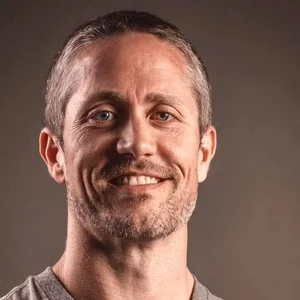
Can Electrical Stimulation Build Muscle and Speed Recovery? (Garrett Salpeter) | Ep 433
Get Fitness Lab (20% off for listeners), the #1 coaching app that adapts to YOUR recovery, YOUR schedule, and YOUR body. Build muscle, lose fat, and get stronger with daily personalized guidance.
—
If you train hard, want to build muscle, and still lose fat, how do you actually recover faster without breaking yourself down? Can electrical stimulation really support body recomp and strength training, or is it just another shiny gadget?
Garrett Salpeter joined me to connect the dots between neuroscience, rehab, and performance. We break down how early strength gains are driven by neural adaptation, why pain and restricted movement are often software problems not hardware ones, and where most recovery tools fall short.
You’ll learn why traditional TENS units underdeliver, how direct current stimulation works differently, and what the research shows for muscle building and rehab without excessive joint stress.
If you care about evidence-based fitness, smarter recovery, and training hard without burning out as you get older, this conversation will challenge how you think about recovery. Tune in to learn more.
Today, you’ll learn all about:
0:00 – Electrical stimulation myths
3:49 – Nervous system and strength
7:10 – Pain, protection, adaptation
15:08 – Fatigue and central governor
20:19 – Direct vs alternating current
31:40 – Muscle growth without load
35:45 – Real-world bodybuilding results
40:12 – Clinically designed recovery tools
50:40 – Regulation and real-world use
Episode resources:
Website: neu.fit
Instagram: @neufitrfp / @garrett.salpeter
YouTube: @NeuFit
Strength, pain, and recovery are often framed as “hardware” problems: torn tissues, worn joints, and weak muscles. Yet the nervous system sits above all of it, acting as the body’s control software that decides how far you can move, how hard you can push, and when to hit the brakes. In this conversation, we unpack how protective reflexes, inhibition, and threat perception can limit output and slow healing long after tissues are “fine.” By focusing on the software first, you can often restore range of motion in minutes, reduce pain, and build a foundation that lets training finally stick. The goal isn’t to ignore structure; it’s to recalibrate the control system that governs it.
A central insight is that the brain prioritizes survival over performance. Stretch reflexes, Golgi tendon organs, and fatigue governors exist to prevent damage, but modern sedentary life and past injuries push these thresholds too low. The result is guarding, inhibition, and hypersensitivity that restricts range and feeds chronic pain. When you return to sport, your muscles act like poor shock absorbers, shunting load into cartilage and tendons. Break that cycle and progress compounds again. The sweet spot after injury isn’t maximum rest or maximum grind; it’s optimal input that stimulates healing and relearning without crossing a re-injury line. That’s where targeted electrical stimulation can create high-value neural input with less mechanical load.
Not all stimulation is equal. Traditional alternating current (TENS, interferential, “Russian”) can pump fluids and blunt pain, but it often co-contracts opposing muscles and teaches stiff patterns. Direct current behaves differently: it favors sensory afferent input for mapping protective hotspots, reduces unwanted co-contraction, and creates electric fields that influence healing—what classic research calls the “current of injury.” Historically, DC burned the skin at meaningful intensities. Modern pulsed DC waveforms solve that, delivering a net DC field that penetrates tissue without sting, enabling both neuromuscular re-education and regenerative signaling in a tolerable way.
Evidence matters. In a 150-person diabetic neuropathy study, TENS reduced pain but did not improve function. Pulsed DC not only reduced pain but also improved sensation, EMG amplitude, and nerve conduction velocity—signals of real regeneration. In performance contexts, lab work compared traditional resistance exercise to low-load training with DC-assisted recruitment. Acute results showed similar muscle cell swelling, a proxy for hypertrophy stimulus, at lower perceived exertion. Over eight weeks, quad growth under the electrodes matched heavy training using light external loads. Think of it as “digital load”: higher motor unit recruitment without the joint stress of heavy weights.
How do you use it? For rehab, clinicians “map” the body to find guarded zones, then layer movement on top of stimulation to retrain efficient patterns. Unlike passive TENS, this is active learning—exposure therapy for the nervous system. For athletes, DC can target weak links, build lagging muscles, and maintain or grow tissue when joints won’t tolerate high loads. You’ll likely lift lighter, do controlled volumes, and manage soreness carefully, because recruitment is potent. Ratings of perceived exertion are often lower, but the physiological stimulus remains high, so dosing and recovery still matter.
The broader promise isn’t a magic shortcut; it’s precision. By addressing the software that governs hardware, you can speed safe range recovery, reduce pain, and keep training momentum through setbacks. Whether you’re a seasoned lifter aiming to bring up quads without beating up knees, or a forty-something trying to stay consistent despite recurring pain, targeted DC stimulation paired with smart movement may unlock capacity you already own—hidden behind conservative neural brakes.
Have you followed the podcast?
Get notified of new episodes. Listen on Apple, Spotify, or all other platforms.
Then hit “Follow” and you’re good to go!


-
Philip Pape: 0:01
If you're someone who trains hard and wants to recover faster, or you've dealt with nagging injuries that seem to take forever to heal, and you've heard about electrical stimulation devices that claim to re-educate your nervous system, build muscle, and accelerate recovery, but you're not sure what's actually supported by research versus what's just marketing, this episode is for you. My guest today is an engineer turned neuroscience researcher who's developed one of the most talked-about electrical stimulation devices in the rehab and performance space. We'll get into what the evidence actually shows, where the claims might outpace the science, and the practical ways that you can use this technology for recovery and performance. Welcome to Wits and Weights, the show that helps you build a strong, healthy physique using evidence, engineering, and efficiency. I'm your host, Philip Pape, and today I'm joined by Garrett Salpeter, founder and CEO of NewFit, creator of the newbie device, and author of the NuFit method. Garrett brings a background that we don't often see here. He is trained in physics, engineering, and neuroscience, and he's applied that to developing electrical stimulation technology used by hundreds of clinics, dozens of professional sports teams. And you probably heard about electrical stimulation in various forms. It's been around for decades. There's definitely a lot of claims around newer devices that sound too good to be true. So we're going to discuss the mechanisms, the evidence, maybe some of the science in the context of movement, of pain, of rehab, and those kinds of topics. So, what does the research show? What remains unproven? How can you benefit from targeting the nervous system as part of your training and recovery? So, Garrett, welcome to the Wits and Weights podcast.
Garrett Salpeter: 1:48
Thank you, Philip. I love that introduction. I like the three E's that you there. That's that's good.
Philip Pape: 1:55
It's a filter, you know, if you're not interested in nerding out and how to engineer your life and lifestyle to and do it by saving time and getting the result, then it may not be the right show for you. But you're uh you and I, I think are kindred spirits in that regard. Because, you know, with some of your story, I know there's an aspect of curiosity and hey, how does the nervous system fit into all of this? Because it connects everything in our body. But, you know, I want to define like neural adaptation and physiology and things like that with the nervous system, how they relate to strength training, to rehab, to our body. And then maybe from that we use it as a jumping off point into okay, how can these devices or this technology be used to take advantage of that? So I guess the question is where does the nervous system fit in to us as humans?
Garrett Salpeter: 2:42
That is a big question, a big topic. And there's there's a lot of different pieces that we can put together to start to build a picture here. So the nervous system is literally the control system of our bodies. It is, you know, our brain and spinal cord and nerves send electrical signals to control all of our organs, of course, our muscles for movement, and then our our heart, you know, for our heart rate and heart beating and blood pressure, right? There's neurological control of constriction and dilation of the blood vessels. And then going further down the viscera, there is neurological control of all the digestive organs. The stomach and gut motility is regulated by the nervous system. There's stimulation from the vagus nerve is really relevant there. And then it also controls the organs of elimination and reproduction. So if you think about issues that people have with blood pressure, you know, think about the amount of blood pressure medications people take, the amount of you know, medications people have to take for various digestive ailments, the issues we have with infertility, you know, if you think about these, these are all issues in in organs of the body that are controlled, we just listed off, are controlled by the nervous system. So it's super relevant. Also, of course, for our energy state, how we feel, how we move, uh, there's emotional affect, that's all you know in the brain, which of course is part of neuroscience, part of the nervous system, you know, big picture overall. And you know, it's super relevant to everything. So I think if we're trying to look at an approach for helping someone improve their fitness, their health, their body composition, their vitality, you know, the nervous system, because it is the underlying control system of the body, is a very attractive and you know reasonable target or you know, place to really focus our efforts. And then also, you know, I do a lot of work, and our our company does a lot of work in the physical therapy realm, you know, chiropractic, physical medicine, helping people recover from pain and injury and surgery or restore function if they've had MS, neuropathy, stroke, spinal cord injuries, you know, that sort of thing. And, you know, of course, that seems broad. The common thread in all of that is the nervous system. And that's that's why I talk about all those different areas. And one of the big breakthroughs in terms of the nervous system is that so many times when people are injured or have pain, we are operating in this hardware-based paradigm where we're so focused on the tissue that's been injured, thinking that that that needs to heal. And yes, of course, you know, we want it to heal. However, so many times, you know, I've I've just seen over and over again, and now our network of you know, hundreds of clinics and thousands of practitioners have reported the same thing, where there's so many times where some you know someone will come in with some sort of injury and they think that, oh, because the ankle's sprained or the shoulder has a grade two separation, or because the disc is herniated, they're not able to move past a certain range of motion, or they're not able to, you know, to exert force or do this without pain. And then in the span of you know, 10 minutes of neurological stimulation directed appropriately at the right amounts, in the span of 10 minutes, all of a sudden, someone's range of motion. If you're just listening, you can't see me, but if you if you could if you see the camera, you say, I'm gonna bring my arm for just from my side, you know, from here, and eight to ten minutes later, it's all the way up overhead. It's like, well, how does that happen? You know, in 10 minutes, no one's ligament is literally you know being sewn back together, right? Or it's not just naturally just mending back together. So the the change is not in the hardware, in the tissues and structures of the body, the change there is functionally in the software in the nervous system. And there's so many times where it's not as much about that initial injury or insult as it is about the neurological response, the guarding, the inhibition, the hypersensitivity, the perception of threat that leads to pain. And so many times working at that level allows us to have these breakthroughs to help people feel significantly better, significantly faster. And yes, there's times where you don't get as much of that, you know, that type of home run, wow moment, what you know, type of effect. And that's when we know that it is more of a hardware issue. Oftentimes, there's a significant component of it that is in the software in the nervous system. And so you can kind of tell how much of the issue is more hardware-based versus how much is more software-based by applying this type of neurological stimulation. And I think just to kind of put a bow on it, yes, that is sort of the breakthrough is that often by working with the nervous system, even for things that we think are more structural issues, we can often have these really incredible breakthroughs.
Philip Pape: 7:25
Man, you you just encapsulated it so well and you and you spoke a lot of my language there with the hardware and software too, because my engineering background's in control systems and and working with electronics, and I always love the beauty of the math of the human body and how many of these layered systems there are. And we take them for granted and do try to simplify sometimes things down to what we see or you know, a physical limitation. And of course, there's the mental side of it too. But as I like to define things in scientific terms, the idea that there's an electrical connection that is connected to guarding and maladaptive, you know, patterns that you get stuck in after injury. And like you said, the perception of threat when we talk about when we oversimplify and talk about flight or fight versus like the parasympathetic nervous system. It's very, very fascinating. And there's three things that came to mind, like in my personal experience that I think will relate to what we're talking about and the listener. You know, years ago, I had uh herniated disc and avoided for a long time having surgery. I did have surgery, and whether it was necessary or not, I remember reading a book about uh a gentleman who thought that like 90-95% of back issues could be treated with mental or psychological approaches. And I've always found some solace in that because I've seen that with folks who kind of apply a positive mindset and then try to use the tissue and strengthen, and then the pain goes away, and you're like, that's very interesting, right? And so, and it's not a woo thing either. It's it's it's connected to the nervous system. Another is the idea that strength training, which we talk about on the show all the time. I'm always telling new beginners, you know, you're not gonna build a whole bunch of muscle in the first two months, but you're gonna get a lot stronger. And there's a neural component to that that I think is tightly connected to all this, that if you can understand it, it explains some of these other areas we're gonna talk about. And then lastly, is I just had a follow-up for my rotator cuff surgery, and the doctor's like, your range of motion is much farther than I expected. He's like, I think it's all, I think a lot of it is in your head in a good way. Like he wasn't trying to gaslight me. He was saying, you know, I think it's, I think it's uh, you've been through it before, your body's like has muscle memory and this and that. And I'm like, that's interesting. I gotta talk to Garrett about that too when we have our talk today. So having said all that, like when we talk about the nervous system limiting someone in some of the ways you just alluded to, whether it's strength or recovery from an injury or thinking they have a limitation, what specifically are you referring to, like in a way that's measurable, if that makes sense? Like, what is actually happening? And is this dependent on the person's you know, thought process and their psychology of it? Or is there something else that's going on if if that makes sense?
Garrett Salpeter: 9:58
You brought up some great topics there. We're talking about we're talking about the the book about you know the the psychoemotional kind of underlying factors in contributing to back pain. Is that Dr. Sarno?
Philip Pape: 10:10
Is that Yes, there you go. Yeah, like the 80s or 90s, something like that. Yeah.
Garrett Salpeter: 10:14
Yeah, it was really good. So so then the underlying neurological phenomenon here, I think the first piece that we have to understand to start to build this narrative here is to understand that our brain's number one priority is survival and protection, right? Our brain cares far more about making sure we live to see tomorrow than it does about us looking good in a swimsuit or jumping a few extra inches in the air on the vertical jump or throwing a baseball a few extra miles per hour farther. So our brains are really set up to do more, you know, it's more like a break than the throttle. Our brains limit us. There's a lot of governors, a lot of inhibitory pathways. There's, you know, if you look at, I love your you know, talking about control systems and your perspective there, Philip. When you know, when you look at the control system that is the nervous system, there's just as many inhibitory pathways as there are excitatory pathways. And there's uh actually, in many ways, more you know, like when people talk about they get drunk and they lose their inhibitions, these different things that behaviors that they wouldn't you know normally let the safety mechanisms are gone, yeah. So inhibition is is that process of limiting function. And so, from the perspective of movement and maybe athletic performance, and just in this realm, what happens there is that the brain and nervous system have these built-in mechanisms like a stretch reflex. You know, if you stretch past a certain point, it makes your muscle contract to protect itself from tearing. You have a the Golgi tendon organ mechanism that senses force or tension in uh the junction of the tendon and the muscle. And the idea there is that if it goes past a certain point, it's gonna shut down the muscle to make sure it doesn't contract too hard and rip the tendon off the bone, right? There's these these mechanisms that are there for a reason, it makes sense. We don't want to get rid of them, but I'm just just sort of laying the foundation of understanding that there's these mechanisms in here that limit our output. They're there for a reason. Okay, so number one priority is survival and protection. So our brains, another part of that is that our brains, you know, evolved in over you know millennia where food was scarce, and and one thing that our brains often do that you and listeners may relate to is you know, our brains often will cause us to feel a little bit lazy, to want to want to not do something, want to conserve energy in case there's a famine tomorrow. So, another way in which our brains actually hold us back. Fatigue, there's some great work. Uh, Tim Noakes was the lead scientist who sort of proposed this idea, some work on fatigue actually being a central mechanism in the brain, where the brain actually creates fatigue as an emotion to prevent us from overheating or exerting too much energy, kind of proactive feed forward, protective mechanism like that. So, so all these pieces I introduce in order to say that our you know, brain and nervous system are interested in in kind of holding us back. And so oftentimes the use it or lose it framework is really applies here because if we are not stretching past a certain point or not exerting force through a certain range of motion or past a certain threshold, those mechanisms are just gonna gradually, gradually default towards narrowing, allowing less stretch for the stretch reflex, allowing less force for the Goldie Tin organ, allowing less energy production, metabolically speaking. So we're gradually going to be going towards that conservation of energy and that protection. And so it takes work just to maintain effort. And then so because of sedentary lifestyles and and you know poor habits and things like that, a lot of these mechanisms get set too conservatively. And then on that backdrop, if you add in injury, if you, Philip, have a shoulder surgery, you know, hypothetically, I know you literally just had a shoulder surgery, but you know, if if someone has a has an injury, an insult, you know, a surgery, of course, is like an injury, but you know, even more traumatic, in response to that injury, these same mechanisms kick in to try to limit movement. You create tension and guarding in some muscles, inhibition shutting down weakness in other muscles, and hypersensitivity and pain, all of those with an eye towards preventing movement so that you don't move that freshly, acutely injured area and hurt it worse. And then the problem happens when you don't effectively rehabilitate and restore and recalibrate those, and you end up getting left with these various protective and compensatory patterns where those that tension and that weakness, you never quite get back to baseline after an injury. And so then you go back out into life and you're at a little bit of a diminished level, and then you know it happens again, and then there's the sedentary and bad habits mixed in, and that sort of compounds to reducing function over time, and that's where you get to you see these pictures side by side. It's like both of these people are 70 years old, one of them looks like 90, and one of them looks like 50 and is super quick, and right, and so it's you know, things are our habits and activities can compound for us in a positive way or in a negative way. And that in terms of the underlying you know neurological mechanisms, does that start to build some of the pieces there?
Philip Pape: 15:40
Oh, fan, yeah, fantastic. No, no, that really hit directly on it. Uh, because it sounds like it's an it's an adaptive response, just like anything else we do, and you have to train the nervous system essentially in all these different ways. I was thinking when you were talking about um rehab and and limiting, there's always this conflict when you hear layman advice, but even surgeons and doctors, where it's like take it easy and rest versus use the tissue and heal. And some people are like, oh, you you go too hard and and don't go too fast, and and others are like, but you're not going fast enough, right? And and nobody ever knows like what the right thing is to do. Uh, and that's part of the confusion here, right, in those situations, versus when you're kind of healthy and and nothing every everything's good, and then you kind of feel confident to take it to that next level. So I I briefly thought of like the David Goggins Navy SEAL mentality out there around, you know, when you're 40% or when you think you're at your limit, you're only 40% there, and then you have another 50%, and then there's this mental thing. Um, can you touch on that real quick before we get into like AC versus DC current and and the device technology and all that?
Garrett Salpeter: 16:44
So there, yes, I definitely want to touch on that. I also want to touch on uh something else you said there. But so in terms of the, you know, when you're when you think you're done, you're really only 40%. That speaks to that central governor of fatigue. When our brain causes us to feel like we need to stop, that often is a protective mechanism that is set too conservatively. And by learning to push ourselves, by leaning into that, by learning to push ourselves over time, we can expand that capacity and do more before the brain starts to trigger that. And then we can all, of course, learn that that even though it feels like I might die, I'm actually, if I push through that, I'm gonna be okay on the other side. There's a component of that. And then the other thing that you mentioned, which I think is a great insight, is this whole question of after an injury, after a surgery, you know, do I push it? Do I rest, ice, compress, elevate? Like what do I do? And so there is this old paradigm of rice, right? Rest, ice, elevation. And that is based on looking at things through the hardware lens. It's it's coming from the perspective of, okay, the issue is that this tissue is damaged and we need to just give it time to heal. It's not looking at what happens neurologically, what happens physiologically within the body, because when we rest, you know, the body is always wanting to conserve energy, the body's always responding to the signals that we're giving it. And so if if we're just resting, activity, various activities in the body metabolically and in terms of rebuilding and repairing structures, those activities are going to diminish. You see that people who are uh, well, an extreme example would be astronauts in space when they don't have, when they don't experience gravity, they begin to lose muscle mass, bone density in the span of you know a day, it starts. When people are in hospitals and are uh have you know have a leg raised or are unweighted or just you know totally sedentary, they start to atrophy very, very quickly. So the body's responding to the signals that we're giving it. And of course, if we're trying to recover from an injury or surgery, we want our body to be working at its maximum capacity internally to accelerate and optimize the healing and regenerative and repair processes. And so, to your point there about what do I do? Do I just sit there and raster? Do I really go David Goggins at it? What we have to do is it's not minimum or maximum, it's it's optimal, it's in between. And it's like many things in life and in engineering, it's about creating as much healthy, productive input as we can without crossing that threshold where we overload and cause re-injury. And you know, if you think about it, like like I talked about how a lot of these mechanisms are evolutionarily over millennia. You know, if you think about one of our you know, Paleolithic caveman ancestors, you know, think about someone who gets injured. They're not gonna be sitting around watching TV, they're gonna have to sort of like move on it. And they're, you know, they're gonna, they might be hobbling around, but but there's there's some benefit to within reason just getting after it and moving because you're gonna be signaling the body to start working again to to upregulate all the underlying processes that control the the healing result. And so what we want to do is find ways to do. That, not necessarily being, you know, with the average person, the David Goggins, you know, just suck it up. But using uh technology, like you know, like of course we have and are passionate about sharing at NewFit, by using technology like that, we can create neurological input just the same as if you were really moving and loading that tissue, but without creating the same mechanical loads that might otherwise put you at risk of re-injuring the tissue. So that is a very you it's a great insight, and it that balancing act is the thing. If you want to optimize the overall recovery, you basically want to spend as much time as you can on that that point.
Philip Pape: 20:37
Yeah, that's a great segue. You're right, because there are other technologies and folks I've had on the show too, when we talk about blood flow restriction, for example, where that's the similar philosophy is how do we give you enough stress to, I'll say, progressively overload your healing, right? While without going to the level of overload or overtraining, you know, because when people are pretty healthy, most people probably don't train hard enough. I joke about that on the podcast because I get questions like, how do I avoid overtraining? I'm like, I bet you're not even training hard enough next, you know. But but when it comes to injury, right, there's a little finer line. So electrical stimulation. I honestly don't know much about it. I did some research, of course, for this show. I have a little bit of an electrical engineering background as well, like circuits. We're not going to get into that and everything, but I know there's, you know, the two types of current, AC versus DC current, come into the equation here. And using, like you said, stimulation as an aid for recovery to give you extra inputs to kind of take the load off of your own body is a very interesting concept. So help us understand, you know, why I brought you on the show to begin with. It's like I want to get into some of this technology and why it works.
Garrett Salpeter: 21:42
At the most fundamental level, what we're doing with electrical stimulation is we're we're using an outside influence to stimulate the same signals that happen inside of our body anyway. So it's sort of like the first domino. You know, if you have a bunch of dominoes set up and I tap the first domino with my finger, or you tap the first domino with your finger, the same thing is they're all going to knock each other down, right? So the rest of that, after the first domino, the rest of the cascade is the mechanoreceptor, the sensor out in the body, and then the neuron going to the spinal cord, and then the spinal cord up to the thalamus and into the brain, and the various processes that happen as a cascade in response to all of that. So what we're trying to do is create that, use an external stimulus or source to trigger that process that would happen naturally in the body anyway. And that's the same process, that cascade of neurological activity is the same process that happens in response to load, to movement, to stretch, to force, all these other things that we were talking about earlier. So that probably gives you a little sense of how we can start to use electrical stimulation to start to optimize that balance of creating input to drive positive changes or improvements and upregulation and processes in the body, start to trigger those, but without having to get as much of the mechanical load. So we're starting to start to hint at that. So then the question becomes sort of what type to of electrical stimulation to use and how to apply it. And what we're probably best known for is using direct current, this kind of more modern paradigm of electrical stimulation. So there's benefits to direct current that I'll get into just a quick aside. The history is actually very interesting, where a lot of these benefits that that we'll talk about momentarily, a lot of these benefits were known back in the 1960s, 1970s. The Soviet sports scientists were experimenting with all types of electrical stimulation as part of their effort to prove that their political system was superior and they were trying to assert athletic dominance. And so a lot of what we get today, periodization, plyometrics, a lot of these principles that we use in sports performance training came from that era of Soviet sports science. And so they knew a lot of the benefits, but there was always this really big hurdle, this really big problem, where when you turn direct current up to a high enough level to create progressive overload and neuromuscular reeducation, it would literally sting and burn the skin. You'd get positive charges gathering around the negative terminal or electrode and vice versa. And that creates resistance, leads to heat dissipation, and then ultimately burning, stinging, burning, discomfort. And so direct current totally fell out of favor. And in its place, filling that vacuum came the various alternating current devices that we're familiar with. Most people probably think of the tens unit, yeah. Then there's also interferential, there's quote unquote Russian STEM, which even though the Russians use different types, they're what we think of as like sort of the trade name Russian STEM is alternating current. And so alternating current came became the standard in the subsequent decades, the standard in this field, because you could get the current into the body without stinging and burning the skin. You send these impulses in, you can get some you know muscle contraction in a way that can help you pump blood and lymph and other fluids. So there's some benefit there with the tens unit. You get some of this blocking or masking or distracting of particular neurological signals that can help reduce pain temporarily, like an electric aspirin. And so there's there's some benefits to that. However, they're also limited, and that's why a lot of you know insurance companies, for instance, stopped covering or dramatically reduced the amount at which they cover or reimburse electrical stimulation. A lot of clinics stopped using it. You know, there's these old STEM units in clinics around the country just collecting dust because there's just you know significant limitations in what you can do.
Philip Pape: 25:53
Real quick, so like if you had dry needling with stimulation, that's probably tens, it's probably AC current type stimulation.
Garrett Salpeter: 25:59
That usually, yes. And that that's a little more mild, and that's just getting that mechanical kind of twitching and pumping. So a little bit of a you know, in that sort of narrowly defined limited use case there, yeah. Uh typically, yes. I mean, you can use our device for that, but most of the time it's it's that sort of thing, yeah. And so so direct current has two main benefits, which are the reasons why you know we've put a lot of effort into engineering this product that allows us to get direct current into the body without burning the skin. And so the first is the functional effect on the nervous system. When we're doing uh I would normally I would often say software programming, but for you, Philip, I'm gonna say when we're doing systems engineering, attempting to get you know, optimize these patterns within the nervous system, there's a there's a really powerful effect there. And then there's also, because of these direct current electric fields, powerful effects on the underlying processes of healing and repair. And so I'll just share each of those uh a bit on each of those individually. So, in terms of the process of neuromuscular education and communication and precision of signaling within the nervous system, when you have an alternating current device, the signal literally is going back and forth, positive, negative, positive, negative. And so when you turn it up again, when you turn it up to a high enough level to really make a difference within the neuromuscular system, you're signaling this contraction of both sides of the body. It's like your bicep and tricep fighting against each other, hamstring and quad fighting against each other. It's like if you're driving your car, hitting the throttle and the brake pedal at the same time. So that's the signal, and that becomes the limitation in how much you can take and it and it locks you up, and it ends up training these inefficient movement patterns, which can, you know, yes, make the body less efficient and also create a lot of internal resistance and tension that that could exacerbate problems, or at least not make the improvements that we seek. And so with direct current, we can bypass a lot of that. You know, one metaphor that that I like that often lands with people is you know, imagine you have a highway, you have all your cars going northbound, right? And so, you know, northbound could be from the body up to the brain or northbound on a highway. You have all your cars going northbound, then all of a sudden you have a car just going the wrong way. It's like, oh shit, there's a, you know, that that's that's a that's a problem. So that's that's sort of what's happening there. And and with direct current, we can bypass a lot of that. So we don't get the protective contractions, and we get a lot more of this sensory afferent input signaling into the nervous system, which allows us to do things like scan around on the body and find where it's guarding and protecting against these various sensory inputs, which means uh that's actually where the body's gonna be compensating around and resisting movement in real life, too. You know, allows us to find those and allows us to do this sensory input that's kind of like a form of exposure therapy to drive input to allow the nervous system to recalibrate and down-regulate the various protective or inhibitory responses and allow greater function. And so that's a big part of why in some cases we see those five-minute miracles, or in 10 minutes, we have the person who can all of a sudden lift their arm up overhead or all of a sudden can bend down and touch their toes for the first time in 10 years. And you know, again, not that that you have that every single time, but we see that often enough that it's it's worth talking about. So those effects on the nervous system happen in large part because of the effects of direct current. And then there's also the effects of these direct current electric fields on the body. Uh, you know, cells in the body have various charges. There's really interesting research. Like there's a great book, book recommendation, The Body Electric by Robert Becker, and he talks about the research showing that when animals and humans, also, of course, we're we're animals, when whenever when there's an injury, the body actually creates electric fields. He calls it the current of injury. The body creates electric fields inside that do things like summon inflammatory cells to start to clear out the debris and then further act as messengers to summon the next level of growth and repair uh cells that actually rebuild the structures there. So we have these electric fields, and there's really cool research. It had been mostly in animal models until a study we did that I'll tell you about, had been in animal models looking at the effects of direct current on the underlying processes of healing and repair and regeneration. And then we did a study, the first comparing in humans alternating current versus direct current. And for this, we worked with diabetic neuropathy patients. So patients' average age was 74. And this is an interesting population because it's been written off that they can ever really heal in any meaningful way, that they can ever really restore function. And for it was 150 patients, so really statistically powerful. 75 of them got traditional tens unit. And with them, what happened is what most people expected little to no meaningful, significant functional improvements. There was, however, some reduction in pain. It's about symptom management. That's kind of the standard of care. So there was some benefit there. With the direct current of the newbie, however, there was not only the same or more reduction in pain, but there were improvements in sensation and function and EMG amplitude when we're actually measuring the electrical activity inside of the nerves and the nerve conduction velocity. So we're seeing improvements and healing and regenerative changes in the axons, in the myelin of the nerves. And again, that speaks to these benefits of direct current. So a long way of coming back to that conclusion of we care about the type of current because of the effects that it has, both functionally on the nervous system and on those underlying processes related to healing within the body.
Philip Pape: 31:42
Yeah, I was gonna ask about that study, so thanks for getting ahead. There's another one I'll mention in a second. But direct current, I imagine the safety aspects, I mean, are those addressed because it's a pulsed form of direct current versus continuous? Because continuous would seem to like be a problem. But how does it work in that sense?
Garrett Salpeter: 31:58
Yes, you're exactly right. So if it were continuous, past beyond a certain period of time, you are going to get that charge buildup that we talked about, that is the reason why you get resistance and heat dissipation and burning. And so what we're able to do is have this pulsed direct current, and there's actually multiple waveforms. So in between the primary pulses, there's another waveform that comes in and sort of you know moves around the charges a little bit so they don't accumulate, so you can get that next pulse through. And it allows us, therefore, to get the net electric field delivery of direct current, but with the comfort and the ability to penetrate through the skin and all the layers of uh capacitance between skin and fatty layers and connective tissue and all that, it allows us to get the benefit of that net direct current field, but with the sort of penetrating ability of alternating current.
Philip Pape: 32:54
That's cool. That's cool. All right. I think he did a study in the University of South Florida. I don't know if that was with Dr. Campbell's lab or if it was something else, because I I know Dr. Bill Campbell down there.
Garrett Salpeter: 33:03
Bill Campbell, oh brilliant guy. So yeah, so one of his associate professors is a guy named Sam Buckner, who uh was the lead researcher. It was it was in his lab, and his lab is part of Dr. Campbell's program. Yeah, so I got to meet Dr. Campbell when I was there, but his name is not on the paper because it's his uh, you know, kind of Sam Buckner, I think is is in his department or whatever the whatever the right word is, but they certainly work together, yeah.
Philip Pape: 33:28
Yeah, and I think I think this one for the listener was uh there was an exercise protocol along with the newbie device, and they found more swelling or similar swelling and soreness, I think, to lifting, but with less effort. But I don't know if it showed better outcomes. Is that the same study we're talking about?
Garrett Salpeter: 33:45
Yeah, so there's actually two. One okay one was the acute study, which is looking at fatigue and soreness and and yes, muscle cell swelling immediately after a traditional resistance exercise, like traditional weightlifting, and then immediately after a session with the newbie and you know, little to no external load. And the reason that muscle cell swelling is interesting, as you know, Philip, and as you know, many of your listeners probably know, you know, you get that, you know, when you're lifting and your muscles are swollen, you get that the pump. The pump, the pump, the pump is actually a thing because what happens when your muscle cells are depleted of energy, and perhaps there's microtrauma, not not necessarily, it doesn't have to be soreness and damage, but when they're depleted enough, they actually start to start to slurp in or suck in the blood plasma, the extracellular fluid there, because the blood plasma, right? We have our red blood cells, then our plasma carries a lot of things, including amino acids and proteins. So the blood the muscle cells start to suck in that fluid so that they can get the proteins and the raw materials and glucose and energy and stuff like that. And so part of the process of hypertrophy, one of those early steps is muscle cell swelling. And so being able to look on an ultrasound and see the amount of muscle cell swelling is an important precursor for the hypertrophy, the processes of hypertrophy and muscle building. And it's sort of functions as a proxy to know that you got the job done in your training, and you can expect, assuming all the underlying health processes are viable, you can expect that you're you're on the road to hypertrophy. So there was the the effects were virtually the same using the newbie with little to no external load versus you know traditional higher resistance exercise. And then there was a second study looking at muscle growth over a full eight-week training cycle.
Philip Pape: 35:42
Okay, no, yeah, and well, and I was wondering about so the first study was immediately measurable, but not necessarily longitudinal, like that hypertrophy actually did occur over time, or you're saying the outcome was the same as the heavier load traditional group?
Garrett Salpeter: 35:55
So for the first study, yes, outcome was approximately the same. And then for the second study, you know, in the area of the electrode, the muscle growth over eight weeks was approximately the same using little to no external load plus the newbie for muscle recruitment was approximately the same as traditional resistance exercise using heavier weights. Uh I think it was twice a week for eight weeks, or something like that. Yeah.
Philip Pape: 36:17
And were these untrained or trained individuals?
Garrett Salpeter: 36:19
These were uh that's that's a good question. It's an important question. Um and I I knew that detail at one point.
Philip Pape: 36:29
It's all right, it's all right. No worries. I'm not gonna, it's not a quiz.
Garrett Salpeter: 36:33
They were they were you know college students in the lab, and one of the interesting things is that they were, you know, each individual subject served as their own control because they did one leg, it was knee extension and looking at quad muscle growth, and they flipped a coin for which one was right leg, which one was left leg. So they did the traditional you know resistance exercise, you know, something like 70 to 80 percent, one rep max, multiple sets on one leg, knee extension, and then you know low to no external load with the newbie on the other leg. And so in the area around the electrodes, it was uh uh similar muscle, so in that quad muscle, uh similar muscle growth.
Philip Pape: 37:12
Okay, and and are we so when you look at populations that benefit the most, the least, where it's not worth or whatever, are we talking about so uh what comes to mind for me is somebody who trains regularly, is this an enhancer? Somebody who trains regularly and is recovering, I could definitely see see an application there, and then people who don't train regularly, and I guess in that context, it's either recovery or just is it okay. Let's start with this. Is there a population where they want to build muscle and take it easy and not have to train as hard? Like, does that work with the with the with their device?
Garrett Salpeter: 37:49
So, you know, there's there's no there's no easy button that Yeah, okay.
Philip Pape: 37:54
I want to get that out of the way because BFR is this has the same conversation. People are like, yeah, just use BFR. You never have to lift heavy again. I'm like, you know, BFR is kind of hard to do, uh, and you have to do a lot of reps. So I I'd actually prefer to just lift heavy. But yeah, well, give a I guess lay out for us the main segments and use cases.
Garrett Salpeter: 38:10
So I think, you know, of the of the use cases you you mentioned there, I guess I have a slight inclination to just start at the top, which is someone who's extremely well trained. What can we do for someone who's a professional bodybuilder, for example? Like, you know, someone who's already gotten the muscle definition, you know, just like the what seems to be the maximum a human could possibly achieve. And there's you know, dozens or perhaps now hundreds of professional bodybuilders who have been using the newbie for a variety of reasons. You know, one interesting example that stands out is Dexter Jackson, who won Mr. Olympia in 2008. And it was when you know Jay Cutler won a bunch of them. He won a few, and then Dexter won, and then Jay won again. It was during that era. And so uh Jay also uses and unlikes the newbie now at uh at his gym out in Las Vegas. So so Dexter, when he was he was either 49 or about turn for he had just turned 50 because it was Mr. Olympia during COVID and it got delayed. So he's either 49 or 50 years old. So let's say he was 50. So when he was you know 47, 48, 49, he was still competing in bodybuilding, but everyone said he started to lose his legs, his legs are getting a little smaller, a little bit less defined. And once you lose your legs, you're done. And he started working with the newbie, he did one leg day per week for 16 weeks leading up to this Mr. Olympia. You know, should have been the 2020, but it was in 21 because of COVID or what you know, whatever year that was. So he started using it. And if you look at the before and afters, you can actually see holy crap, this guy built his legs at 50 years old, doing one day per week for 16 weeks on the newbie, and he With a guy named Brad Rowe at the the Gold's Gym Mecca, the original Gold's Gym in Venice Beach. And he went out and he won uh he won uh achieved fourth place at age 50 when he hadn't been top 10 in you know years. It was this amazing, amazing transformation.
Philip Pape: 40:18
So you're saying he got newbie gains.
Garrett Salpeter: 40:20
He got newbie gains.
Philip Pape: 40:21
All right, I'm sure you've heard that before many times.
Garrett Salpeter: 40:24
Gains with a Z.
Philip Pape: 40:26
Yes.
Garrett Salpeter: 40:26
And so he um, you know, is just just one example. But there's a there's a lot of examples in bodybuilding where the benefits are either something like Dexter's experience where you need to really create load in a specific area to get to get more precise, targeted growth. You know, for someone, maybe it's calves, maybe it's biceps. For him, it was his you know, quads, that lateral vasculateralis quad sweep and some VMO definition, you know, stuff like that. Uh so sometimes it's that, it's sort of bringing up, you know, in air quotes, I'll say weak links. You know, uh sometimes it's being able to rehab or train around injuries or be able to have a sustainable way to continue training even in the background, uh, even when there's these you know significant joint degeneration or injuries in the background, because a lot of these you know high-level bodybuilders, the volume of training they've done, they've beaten themselves up. Look at you know, Ronnie Coleman now is one of the strongest guys in the sport and you know, Mr. Olympia level, and you know, now he's wheelchair bound because he just beat the crap out of himself, you know, just so he's super debilitated. So being able to train to get that deep muscle recruitment effect so you can can maintain or even continue to build muscle without having to get as much mechanical load and wear and tear on the joints and the connective tissues. So that can be a big part of the value proposition there.
Philip Pape: 41:55
So let's stick stick on that population for a second, right? Because we talk about muscle fiber recruitment and like how different loads have a different impact in that regard, right? 80, 90% load, more on that strength regime tends to work on the deeper muscle fibers and the larger muscle fibers, and that versus 30 to 60 percent is like your hypertrophy regime of percentage of your max. So for a guy like that, or even somebody who is just an advanced trainee, I think your device requires a professional to it's like FDA cleared and you can't do it on your own. Is that correct?
Garrett Salpeter: 42:25
Yeah, it's an FDA device, you know, so it's it's either used by you know a physical therapist, chiropractor, licensed medical person, or under their supervision. So there are people who use them for fitness, don't themselves have credentials, but they're either under the supervision of or the business run by a medical professional, stuff like that.
Philip Pape: 42:42
And so if you were going after your quads specifically, how would that look as far as like dosing protocol now that like practically what does that look like?
Garrett Salpeter: 42:52
So in terms of kind of understanding why this matters, I think it's it's worth going back to what you said. You know, you're talking about like these higher percentages of your one-rep max, typically being more lower rep, more strength oriented, a little bit lower load, higher rep is typically more hypertrophy oriented. So for hypertrophy, what you essentially need to do is stimulate mechanically and deplete as many motor units, as many, as many muscle fibers as you can, which means you need to activate neurologically as many motor units as you can. And that's part of why pushing past some certain threshold of fatigue is required, because as some motor units fatigue, you're gonna start calling on more and more and more. And so the volume of muscle fibers that you're gonna stimulate or hit is gonna be great enough that you're gonna get more of a muscle growth and muscle building effects.
Philip Pape: 43:44
Right. You're you're saying just naturally, like that's how we have to train, right? You have to train close to failure. You're not talking about with the device, you're just the premise being this is mechanical tension, that's how we get hypertrophy.
Garrett Salpeter: 43:54
Yes.
Philip Pape: 43:54
Yeah, yeah. Just so the listener knows, that's yeah, that's why we say train close to failure and why you could do it at a low percentage of your your max, but you you know, I always say, you know, bodybuilding and physio or um hypertrophy is like a physiological adaptation versus strength, which is a specificity or performance adaptation.
Garrett Salpeter: 44:10
Yes, that's right. That's a good more of a hardware versus more of a software adaptation. So the key to extrapolate here is setting the stage for what we're gonna talk about next. The key is, of course, muscle fiber activation, you know, maximizing that. You need as many motor units. The motor unit is the neurological structure that's gonna control multiple muscle fibers. So you want to activate as many of those as you can. And we can do that then with this external signal. We can use this external signal. So, what I talked about before in the rehabilitation realm, where we're getting more of the sensory input, there's certain settings, especially has to do with changes in frequencies and the and the use of direct current generally that allow us to get more of that. We can also change the settings to where we actually get more motor unit output. Now, it's not as much of that back and forth muscles fighting against each other because of the direct current, it's more targeted more directly on the target muscle that we're stimulating. And by changing the settings, we can preferentially get more relaxation or contraction. So, for this context, we're of course going to the settings where we're going to get more contraction. These are the settings that were used in that study with Dr. Spock Buckner and Cam Campbell at the University of South Florida. And what this does is it increases motor unit recruitment just the same as you know, increasing resistance, like it's like digital weight. You know, if you think about what happens, if I just curl my arm, if I just flex my elbow here with nothing in my hand, I might be using 10 or 20% of the motor units in my bicep. If I get a moderate weight, maybe I go up to 30 or 40. If I get a heavy weight, maybe I'm going up to 60 or 70, right? A really average person can only activate maybe 40 or 50%. A really well-trained athlete can maybe activate 70 or 80%. You know, no one's really getting to 100. 100 is like in the electric chair when you get so overloaded with electricity that you literally tear your tendons off your bones. You go through a bypass all those protective mechanisms that we talked about. So weight is causing me to increase the number of motor units and muscle fibers that I'm activating. So we can put the pads on at these certain settings and electrically stimulate. Remember, we talked about that first causing the same electrical signal to go in now to the motor units that's going to cause those neuromuscular activation, create more contraction there. And even with a relatively light weight, we can still get that, you know, 50 or 60 or 70 or 80 percent of the motor units to contract. And so you can do, you know, you could be curling your arm here without any weight, you know, 20 times, but if you have the machine on, it's almost as if each one of those 20 reps was like a one-rep max or a three-rep max or a five-rep max. So each one, you're getting more activation, and so that allows you to get more volume of work and to touch or stimulate or affect more muscle fibers, and that's how you can have uh you know a greater per unit time, like a faster effect in that realm of hypertrophy, because you're going to be getting more stimulation on more muscle fibers in a shorter period of time.
Philip Pape: 47:16
So when you do that, does the effort feel the same? And is it like you're pre-fatiguing where now you can't do as many reps because you're you're effectively getting to that failure point sooner, or because you don't feel it, you're getting past the point you normally would?
Garrett Salpeter: 47:30
Part of that is the you know how it feels, the rating of perceived exertion or RPE, which you know you're Yeah, RPE or I R I R the inverse, yeah. Yeah, yeah. So R I R being reps in reserve, is that right?
Philip Pape: 47:43
Yeah, yeah, yeah. I the industry's moving I see more toward just using RIR now, but RPE is is totally cool. Yeah, it's what bodybuilders know.
Garrett Salpeter: 47:50
In the first study, they actually looked at RPE. And even though the effects you know on muscle cell swelling and and fatigue and soreness and stuff like that, even though they were they were similar for both, there was less RPE with the machine. So it did feel easier. And so I mentioned there's there's you know, there's no easy button in the sense that there's no shortcut, you do still have to work, but it is a bit easier, subjectively easier than lifting that heavy. So it does feel a little bit easier when you're doing it like this. And so the way that we commonly implement this in practice, like if you're if you're in this example, you know, just following along with wanting to grow the quads, you know, if Dexter Jackson or you listening to this would normally have to do, you know, say you're doing uh five by five, you're doing five sets of five with 500 pounds on a squat. Just easy numbers.
Philip Pape: 48:46
Yeah, yeah. That everybody who listens does that easily. Yeah, yeah, yeah.
Garrett Salpeter: 48:50
Well, not not easy to lift, but easy numbers just because they're all fives.
Philip Pape: 48:54
But yeah, got it.
Garrett Salpeter: 48:55
Easy to keep in our minds. So now you might do, you know, the you might do five by five with the machine on, but you might only do, you know, 20% of that weight would be 100 pounds, or half of that would be 250 pounds. You're you can use a much lower amount of weight, so you're not gonna have to have as much load on your spine and as much, you know, torque on your knee joints and stuff like that. So you can get that, and you can still get similar muscular recruitment effect. So it's sort of like digital load there. So it it's you know, it doesn't feel totally easy. It's not like you're doing nothing. There's some discomfort of you know turning the machine up and stuff like that. So it's a different type, you know, generally does feel a little bit easier. And then there was another there was another part to that question, too. That can you remind me?
Philip Pape: 49:42
Uh I was talking about, oh yeah. So I think the other part was then can you bang out a few more reps before you feel the before you get to failure, in which case you're effectively going to a higher level of close to failure than you would otherwise.
Garrett Salpeter: 49:55
You yes, you can. And so uh you can do more reps. You know, if you're if you only have 100 pounds on your back instead of 500, because you have the machine, this like you know, digital weight helping you increase recruitment, you'll be able to do more. And so that's where you know this whole notion of having uh you know a trained professional working with you comes in because you will often have the experience of feeling like, oh yeah, I could do more reps, I could do more reps, but we actually want to want to stop, want to limit that until we see how someone responds. Because you can have you know significant muscle soreness after this because you're getting so much recruitment. So we have to, you know, it's with great power comes great responsibility. We have to uh sort of titrate up, dose appropriately this because it is such a potent stimulus.
Philip Pape: 50:40
Okay. I'm having a lot of fun because this is uh fun. I'm nerding out with you. But okay, so then that's really interesting. So now the next, I guess, category was okay, maybe you do lift and now you're dealing with injury, or like in my case, a surgery or something like that, what that looks like for uh for recovering or you know, how it compares. Because let me let me tell you, Gary, you're probably aware there are so many schemes and products and devices out there now. I mean, you have peptides that are becoming all the rage, and I have so much skepticism about those, even though some people swear by them. There's the BFR has been around for years. There's the electrical simulation, which I honestly don't hear talked about as much, and I think it's because the tens like really didn't blow anybody out of the water, you know, like anybody uses like eh, I don't, whatever. So the recovery rehab thing is huge, especially for our listeners who tend to be over 40 and dealing with these kinds of things. So let's let's deal with that uh scenario now. It's a good one.
Garrett Salpeter: 51:34
This is, I think, one of the real sweet spots of this type of technology because like we talked about back at the the towards the beginning of this, when people have injury and limitation and pain, it often is this compounding effect of diminished neurological function. Of course, there's a structural corollary of that, you know, with connective tissues and you know, need needing to strengthen and maintain range of motion and stuff like that. But a lot of it really is neurological. And so if you are you know a 40-something year old man or woman and you haven't been training for a while, or you attempt to train and then your back starts to hurt, so you take some time off, then you go back out again, your knee hurts, then you try to go do something else, maybe you know, play tennis and your elbow starts hurting, you're in this situation. The reason that those injuries happen, and the reason that you can't sustain that practice for a long enough period of time to accumulate the progress and achieve the results that you wish to achieve, the reason is because your muscles aren't working properly, they're not doing the job to support and stabilize your joints through the full range of motion. There's a simple metaphor, again, another oversimplification, but a useful one is to talk about how muscles are sort of like shock absorbers of a car. And when they're working right, they keep, they they protect a lot of the joints. So it's like shock absorbers protect the chassis of the car. They they, you know, they they protect your joints, whereas when they're not working as well, you know, torques and forces concentrate in certain areas of of cartilage in your knee joint or in in other certain connective tissues, and you end up irritating those and eventually damaging them. And so a lot of it comes down to yes, how the muscles are working, which as we talked about also, is the control under the control of the nervous system, right? The muscles, there's there's really no such thing as you know, muscle memory. Muscles don't do muscles just blindly follow the neurological commands they're given, right? So ultimately it is the nervous system. And so, so by working at this level, by finding, and you can do this sometimes really, you know, a week or two of this re-education type work can lay the foundation where you can go out and train you know for months or years just by sort of hitting the reset button, by recalibrating, by resetting that foundation of healthy movement. Sometimes it you know certainly takes longer, but in you know, that that type of use case, someone who's struggling to get back to a routine or or maintain a more sustainable uh you know, fitness, training, sports, hobby, recreational element, this this is super helpful for those types of people. And you know, if anyone's interested, what I would encourage you to do would be you know, you don't have to work with me, I have no financial incentive in this, but you know, find one of our practitioners. You know, we have a website directory and stuff like that. So I would encourage people to go find, you know, it's mostly physical therapy clinics, chiropractic offices, some gyms. You know, there's many hundreds of locations around the country. And you know, for international listeners, we have you know some in the in the UK and Australia, we have other distributors coming online with our product in other countries, you know, now, but uh as of early 2026, you know, just you know active distributors in those countries so far. So I you know I would encourage you to try it out because if you can get rid of, you know, it's sort of like we want we want to get to the root cause of why people are experiencing these pains and injuries and limitations. And you know, if we if we really keep digging, you know, you as an engineer, Philip, know the the five whys. You keep asking why, keep asking why until you get to the root cause. And oftentimes it is that you know dysfunction within the nervous system, and this allows us to really get to that root cause where you can make more meaningful change.
Philip Pape: 55:19
And is it when working with a like a physical therapist, is it often applied on its own in many therapy sessions, uh, or is it off always with uh a form of movement, you know, like bands or exercise of some form?
Garrett Salpeter: 55:34
So the it can be applied in you know a variety of settings. There's a couple of things that we do that are more like you're sitting there, like we have the like the neuropathy study was actually a foot bath where one of the electrodes is floating in a bucket of water, your feet are in there, you're kind of sitting there. You know, we have a vagus nerve protocol where you lie down in sort of our quote unquote electric meditation or master reset. And then there's, you know, sometimes you can connect it to an electric glove and people do manual therapy work. You actually work on you know trigger points for certain areas, mobilizations there. And then, yes, you know, what we're probably best known for is this mapping process where you scan around, find where there's neurological dysfunction that would you know correlate to compensatory and protective movement patterns, like we talked about. So probably best known for this process where you scan around, and you know, virtually everyone that you would go to see who's offering new fit treatments or training sessions would do this mapping process with you and then have it on while you're doing different movements and exercises. And the the reason that's so valuable, well, one traditional alternating current tens unit treatments are typically passive. You lie there and just let it work you. So that's a big difference. And the reason it's so important is that it allows you to relearn, to incorporate the appropriate muscles back into movement patterns. So it accelerates, it fast tracks that process of re-education, of relearning, you know, efficient movement patterns, healthy movement patterns.
Philip Pape: 57:01
Yeah, that makes a lot of sense. I mean, that definitely appeals to my mindset of trying to trying to move and use the tissue and load and and all of that. So, all right, this is good stuff. I mean, I know there's a lot more we could cover. Uh, you know, we've pretty much hit on the big parts here, how it works, why it works, why it's different than the AC devices out there, different use cases. Is there any any other big blind spot we haven't covered that in this context you think the listener wants to know about?
Garrett Salpeter: 57:27
You know, I don't I don't think so. I mean, of course, there is the because we're working so neurologically, you know, there are the use cases. I mentioned the neuropathy study, you know, we've we have studies also look you know with functional recovery in MS patients. We have a a case study on an ALS patient published in the Journal of Integrated Medicine. So, you know, those types of things. Only reason I mentioned that is that, you know, if if you're listening to this and you have a you know, friend or relative with some complex neurological condition or injury, you know, there there could be hope of you know harnessing the power of neuroplasticity for longer-term adaptations and changes. So I just share that because we've seen some really you know, as cool as it is to work with you know, professional athletes and and the bodybuilders and the Joe Rogans of the world, he he talked about us on his body, you know, he has come in here and helped them a lot. So uh you know, as cool as that is, you know, the the people that that we've helped get out of wheelchairs and regain their autonomy, those have been just the most inspiring and wonderful transformations. So that's you know, that's why I mentioned that.
Philip Pape: 58:31
That's incredible. Yeah, it's great. Yeah, I'm glad you came on because I learned a lot. And ultimately, if that happens, hopefully the listener learned a ton today about this potential tool. I'm definitely gonna look more into it and even uh talk to some PTs I know and see if they're already in your network or not, or you know, maybe look you guys up. So, with that, where would you like the listener to reach out to you or learn more about the product or the technology or anything like that?
Garrett Salpeter: 58:55
So our website and social media are probably the two best places. Website is newfit uh www.new.fitne-e-u like neurological.fit. Uh and then on on Instagram and Facebook, we're most active at newfitrfp for rehab fitness and performance. I also have a personal Instagram if uh want to chat at all in there. It's just my first and last name, Garrett.sallpeter.
Philip Pape: 59:17
So new.fit, that's N-Eu.fit at newfitrfp, you said?
Garrett Salpeter: 59:23
Yeah, for rehab performance.
Philip Pape: 59:25
Yeah. And at Garrett Saulpeter, and we will put that in the show notes. All right. Sorry, just getting that in my notes. All right. Yeah, this is awesome. Thank you so much for coming on wits and weights, telling us all about this uh really cool tool. We love tools, tools in the toolbox, especially when they work. And guys, go check out the studies. I'm gonna see if I can find a couple of the ones that I've found on my copious notes and pull it in there as well. But Garrett, thank you so much for coming on.
Garrett Salpeter: 59:47
Thank you, Philip, and all the witty waiters out there. Appreciate you.
Philip Pape: 59:52
Well, good one. I haven't heard that one before. All right, take it easy.