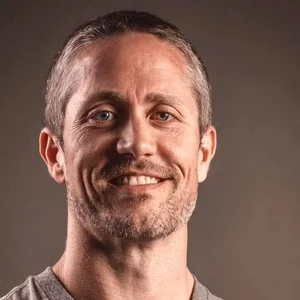
Tissue Capacity and Training Through Pain for Lifters Over 40 (Dr. Tom Walters) | Ep 492
Can resting an achy joint actually make it weaker? What should you do when pain flares during strength training?
Dr. Tom Walters, board-certified orthopedic physical therapist and founder of Rehab Science, joins me to challenge the idea that pain always means you should stop moving.
Learn why there are no inherently bad movements, only loads and positions your body may not be prepared to handle yet. We cover heavy, slow resistance training for tendinopathy, why mild discomfort can be acceptable during rehab, and how your 24-hour response helps guide your next workout.
We also break down low back pain, mid-set flare-ups, range-of-motion modifications, explosive training, bone density, mobility, and strength training over 40.
Join Eat More Lift Heavy to build strength, lose fat, and learn what works for your body, 1 week at a time. Learn to eat more and lift heavy with confidence.
Timestamps:
0:00 – Why rest can backfire
2:09 – No bad movements, only dosage
8:28 – Tendons become the tissue bottleneck
10:38 – Heavy slow loading for tendinopathy
19:55 – Low back pain patterns explained
25:20 – Returning to lifts without fear
29:20 – What to do mid-set
35:31 – Power training for lifelong resilience
46:29 – Rehab science resources and takeaways
Episode resources:
Tom’s book – Rehab Science: How to Overcome Pain and Heal from Injury
Website: rehabscience.com
Instagram: @rehabscience
YouTube: @RehabScience
-
Why rest can backfire
Philip Pape 0:00
Many lifters tend to take a break when something hurts. You rest the joint, you stop doing a particular lift, you wait for the pain to go away before doing it again. The problem is the pain doesn't go away. Or it comes back the next time you squat or press, or three months later you're weaker, stiffer, even more afraid of the movement than before. My guest today is an expert in injury and rehab science and is going to explain why too much rest might be one of the worst things you can do for an achy joint, what to do when something flares up mid-workout, and how to build the kind of joint tissue that is more resilient to breaking down in the first place. If you've ever stopped doing a particular lift or lifting altogether because something didn't feel right and then you never got back to it, this one is for you. I'm your host, Philip Pape, and the premise that we're challenging today is that when something hurts in the gym, you rest it until it stops hurting, or maybe avoid the movement forever. It's what a lot of people do, and it feels sometimes like the safe thing, but that approach might be making the problem worse. My guest today is Dr. Tom Walters, a board-certified orthopedic physical therapist and the founder of rehab science. He spent nearly two decades treating everyone from weekend lifters to circus LA performers, taught kinesiology and pain science at the university level for nearly a decade, and reaches over 10 million people a month with his rehab content. He's also the author of an incredible book. You guys should definitely check it out. We'll link to the show notes. It's called Rehab Science, How to Overcome Pain and Heal from Injury. Today, Tom is going to walk us through what happens in your tissue, your connective tissue, your joints, based on how you rest or move it, how to decide whether to keep training or to back off when something hurts, how to think about tissue capacity as a longevity strategy. Plus, we'll get into things like self-management of pain, injury,
No bad movements, only dosage
Philip Pape 2:09
how to heal up and get back to doing what you love to do. Tom, it's a pleasure to have you on Wits and Weights. Welcome to the show.
Dr. Tom Walters 2:15
Thanks for having me, Phil. I'm excited to be here. All the topics that you mentioned there are such important ones. So I'm really excited. It's going to be the things that I've seen over the years of people thinking about tissue capacity and what do you do when you have pain? How do you work through it? Like such important questions that come up. So I'm excited to chat about all this.
Philip Pape 2:34
Yeah, I'm excited too because we're getting old, you know, creaky bones, creaky joints, us 45-year-olds. And I'm kind of joking, my audience knows I didn't even get started lifting until I was 40. And it's been the best thing for me, even though I've had surgeries and pain. And a lot of folks I talk to, they say when things hurt, you know, the fear goes up. Should I switch things? Should I avoid a lift? Should I stop lifting for two weeks? Should I take a bunch of ibuprofen? Whatever. And there's something you wrote in your book that it's less about the position and the movement. Like there are no bad movements. It's more about the volume of the position and movement. I think that's a good place to start, unless you think otherwise.
Dr. Tom Walters 3:13
Yeah, no, that's a great one. You know, this is something that's kind of changed over the years. I mean, when I came out of physical therapy school in 2007, I was much more at that time, we were much more inclined to tell people when they had a pain, we would look for some kind of problem with their biomechanics or their structure or their posture. And we kind of blamed all pain on that. And it's not to say that those things aren't relevant in some cases, but I think what we've come to realize over the years is that pain is much more complex. And we kind of we talk about it more now as looking at sensitivities that people can develop rather than sort of demonizing particular exercises or movements. Because in most cases, it's not that a particular posture or a movement is bad if it produces symptoms. It's usually just kind of the volume, like you said, like the volume. Like people may be, if you look at postural stresses, they're really low load stresses. But if you sit all day and you hold your body in one position, even if you stand in perfect posture, like right, we used to, you'd see those images of like this is perfect military posture and this is bad posture. No matter what posture you're in, if you hold it for long periods of time, it will probably become uncomfortable. And so you see examples of these things across the movement kind of spectrum. Like you can look at people who look like they have what would be considered sort of dysfunctional or bad movement who don't have any symptoms. They have no problems. And this kind of gets us into this tissue capacity type discussion where what's kind of like the training state or the capacity your tissue has. And in a lot of cases, people end up developing pain when their tissues don't have the capacity to meet the demands they're putting on it. And so again, it's not really that something's necessarily bad, a particular movement or exercise is bad. It's in a lot of cases that the person is doing too much of it or they've ramped up the intensity too quickly. And for whatever, you know, whatever variable it is, they've kind of surpassed their tissue capacity. And, you know, pain is an important experience. Like your nervous system is essentially telling you, like, hey, wake up. There's something potentially dangerous happening here. You need to adjust.
Philip Pape 5:14
Yeah. You talk about the duration in one position, but you also talk about adaptation, the stress on your body, and the ability to meet those demands. And that's a lot of what we talk about with just strength training in general, right? In that your body is resilient. And so, hey, this guy that's deadlifting 800 and has not had an issue, but he has a rounded back. Why is that okay or not okay? Right. You know, you get the criticisms on absolute terms or on specific anthropometry or biometrics, as opposed to what you said is everybody can adapt to certain things. I just listened to another podcast someone forwarded me, and he's like, I want you to listen to this. The eight unsafe exercises that you should never do again. But two of them were deadlift and back squat. And they're trying to make some various cockamakimi arguments that I think ultimately came down to poor form and you know, the typical arguments about why people fail these movements. But what is the verdict on like, is there a bad movement or not? And why not?
Dr. Tom Walters 6:07
Yeah, there's not a bad movement. There's just movements you aren't prepared for. You know what I mean? So if you look at deadlifting, right? Like a lot of people have back complaints that are initiated by deadlifts. Like you hear this a lot, like people get worried about I'm gonna have a disc bulge or a disc hernation, it's gonna hurt their lumbar spine, their low back in some way. And you know, anytime you put external load on your system, which is what you're doing in strength training, you do have to be more considerate of, you know, I think there is an argument in those things, and I even talk about this in the book, that form, there's form is more relevant when you add external load to your system. Like if you're a total newbie to deadlifting, you probably want to start with as close as you can be to kind of a neutral spine and learning to really hip hinge well. And, you know, you probably when you're brand new to a movement like that and you don't have the tissue capacity developed, going in and doing the rounded spine like some of these elite lifters can do probably doesn't make sense for you. Like if you're looking to just minimize injury risk, I think there are things that you can think about from a form standpoint. So it's not like saying form never matters, but to say that there are exercises people should never do is completely inappropriate to me. It just people get injured when they don't have the capacity to tolerate that stress. Your body, just like you said, the musculoskeletal system has this amazing ability to adapt. It just takes time, right? Your cardiovascular system adapts much more quickly than your musculoskeletal system. So it takes a while for connective tissues to thicken, for muscles to hypertrophy, for bone density to increase. These things don't happen in like a week. Like, you know what I mean? Like you, it takes, even if you look at the hypertrophy research and in the muscle research, it's like that stuff isn't starting to occur until like four to six weeks of consistent lifting. And I think you need to think about, you need to be have respect for your current training state and your tissue capacity. And you need to think about, right, when we think about strength training, we talk about progressive overload all the time. Like you we think about progressive overload in terms of building in terms of strength and performance, but you also kind of need to think about progressive overload in terms of reducing injury risk. So you've got to be intelligent about how you design your program. I was moving my daughter's bed the other day. Like it was basically a deadlift. Like I need to, you need to do that in life sometimes. So to skip it because someone's made you believe it's bad only increases it increases your injury risk when you actually have to use that movement pattern under a load.
Philip Pape 8:24
Yeah, but you you mentioned something really helpful, really useful about respect
Tendons become the tissue bottleneck
Philip Pape 8:28
for your current training state. And it got me thinking, it's not just about strength or muscle mass. You mentioned tissue capacity and connected tissue. There's the cardiovascular system, there's your nervous system, there's bone density. So now it gets me thinking, is one of those the bottleneck more than others? And should we be thinking of training in a different way, particularly when we're new? But then also for us intermediate and advanced lifters that are now strong enough to hurt ourselves. But is there a bottleneck? Is there a way to think about training that's beyond just like strength and muscle?
Dr. Tom Walters 8:57
Yeah, it's interesting. I think from a tissue standpoint, that's an interesting question. Most people end up having connective tissue injuries, you know. So that's like your tendon, ligament, fascia, that kind of stuff. You know, I think when you look at people when it comes to strength training, in a lot of cases your muscles can handle it or you just get fatigued, you know? It seems like when people end up developing a kind of pathology, if you want to call it, some pain issue or an injury, it ends up being in their connective tissues, especially tendons. You know, like tendons are probably the number one tissue problem I treat in physical therapy, whether it's a lifter who's developed a tendonopathy or it's some sort of like aerobic endurance athlete who's putting really high volume loading, like a runner who has Achilles tendinopathy or patellar tendinopathy. It really, I think if you look at it from a tissue standpoint, from what I've seen over the years, probably the connective tissues are the bottleneck. Muscles have such a good blood supply, they heal really well. You know, maybe you're less likely to hurt them because you'll kind of get fatigued and you just can't do anymore. But those connective tissue injuries, especially tendons, are where most people end up having issues, lifters or like I say, runners and endurance athletes, they all kind of that's the number one thing I kind of see in the clinic.
Philip Pape 10:12
So let's start, let's let's take that example. So a tendon tendinopathy, something is starting to aggravate you. And let's say you do been doing a lot of bicep curls, you know, with a barbell or a lot of squats, and you know, people I noticed have issues with how they position their arms and and such, you know, extension of the wrist and whatnot. Obviously, everything is kinetically linked, right, and systemic. When people start to have that pain, okay, what's the next thing they should think about?
Heavy slow loading for tendinopathy
Philip Pape 10:38
Is there an aspect of rest? Is there an aspect of just changing the intensity or the volume but continuing to do it? And is there an aspect of like load? Because there's lots of different theories floating around, a lot of armchair theories of like, no, you got to use pin firing where you like really go low load but high rep to kind of re or break up the scar tissue and like re-develop it. Right. So, what are your thoughts on that?
Dr. Tom Walters 11:03
Yeah, I haven't heard of that one. Pin firing. Okay. Yeah. If you look at the evidence, it's pretty clear cut. Like when it comes to tendon disorders, the thing that has the most evidence is heavy, slow loading. So it's heavy, slow resistance training. And there are different paradigms for this. It used to be, so look, if if somebody has a tendonopathy, I am not someone you we want to be careful with how much we kind of promote rest when we talk about people. But there is a point of that sometimes, like a day or two of just letting a tendon calm down that can be really useful. So I don't, I'm sure you've experienced this. I've had a lot of tendonopathy. Sometimes loading it right away just doesn't feel great. And if I just give it a day or two, it kind of simmers down and then you can start loading it again. And really, like I say, if you look at the research, tendons adapt when we load them intelligently. And so what we will look at now, like I said, there are kind of different paradigms for this one. In the research over the years, it used to be that we would go from we would use different types of contractions to kind of build these programs to load tendons. So we'd start with isometric contractions, which are contractions where the joint's not moving. Like if you're thinking about that bicep tendon, you might think about kind of doing a bicep curl, but just holding it your elbow at 90 degrees and just holding it there. And so sometimes those are really useful. Isometrics are kind of interesting in that they have this hypoalgesic effect where in some people they'll reduce tendon pain. So if somebody had an Achilles tendon issue, the beginning isometric phase was you'd have them do a calf raise on both legs and then they'd at the top position, they'd shift over to the painful side and they'd hold it there. And so in the research, they'd have people do four to five reps of this and hold for around 40, 45 seconds. And that in some people would really help reduce their pain. And so you would do that in the beginning. Then you'd go to eccentrics, which are contractions where the muscle fibers are lengthening. So if you think about that bicep example again, you might position your arm up in the kind of top position of the bicep curl, pass the weight to your arm, and then slowly lower it. You're doing the lowering phase back down. If it's the calf raise, you'd go to the top positions, you'd go up on two legs, shift over the painful leg, and then lower on the painful side. So, but then the research has kind of shifted. So that was the way we thought about it for a long time. We'd go isometric, eccentric, and then we'd do full range of motion under load. Now the research has kind of shifted to where it looks like just doing full range emotion with heavy, slow contractions is just as good as the isometrics and eccentrics. And I think it's something with patients that I experiment with. Everybody's a little different in what they respond to. But you know, the key with these types of things, and then, you know, the way we have people think about it, and this might be surprising people, is that with tendons, you it's okay to have kind of mild discomfort while you're loading the tendon. I actually think if the person feels no discomfort, the load is not strong enough. And if they have discomfort above, say, a three or four out of 10, then it's probably too much. And so you're kind of finding this sweet spot to encourage tendon adaptation. And then we'll have people track it for 24 hours. So if their pain, their baseline pain is worse 24 hours later, then it probably meant you'd had too heavy of a load or you did too many sets and reps, the volume was too high. So, you know, rehab always has kind of a trial and error. Each person's a little bit of an experiment. You know, nobody, people don't all fit the same exact formula. But I would say, you know, when you look at the research, it's pretty clear cut. We have a lot of studies in certain tendons, Achilles tendon and patellar tendon, are where a lot of this started where we really see that heavy, slow contractions have the best evidence.
Philip Pape 14:16
And of course, trial and error is the feedback loop that we should all be going through when it comes to anything with our body, right? Like we talk about that with food. We talk about the biofeedback. So heavy and slow, let's just define real quick. When we say heavy, is it like a certain percentage of our one RM, like over 80% load? Or is it, you know, a rep range you're going for? And then slow, are we talking adding in a pause? Are we just like a couple seconds up and down on the eccentric and concentric?
Dr. Tom Walters 15:25
Yeah, that's great. Really, the heavy part is based on symptoms. So you really are gauging it based on their symptoms. So you're trying to find a load that keeps the person in that sweet spot of their symptoms. So it's really in that kind of three to four out of ten, like mild pain. So the load is really specific to the person's tissue sensitivity. Okay. So you've got heavy and then slow. So this is a great one. This is kind of actually newer in the research. Like we would have just slow is, I mean, that's pretty subjective. Like back before, back in the day, I would have just had people, I would have said, you know, two seconds on the concentric, three to four seconds on the eccentric, kind of like normal strength training in a way. But there's been some kind of cool new studies where they've been using metronomes to have people complete the contraction. And I think if I remember right, it's set to 60 beats per minute. So it's kind of like if you're doing like a calf raise, for instance, you'd kind of go like one, two, and then one, two. And so it's like, I want to say it's a, I'm trying to remember the exact time frame, but it's interesting. These studies where they have people follow the metronome, they seem to get better results following. And and what's interesting about it is they don't think it's necessarily what's happening that it's changing something dramatically, the tissue. It's about the kind of sensory input from having to pay attention that because a lot of these disorders in the physical body that we think about as just purely the physical body, they actually change things in your sensory motor cortex and your brain. You know, when people have pain, it changes how they perceive their body and it changes the motor output of how they recruit their muscles. And so it looks like some of this metronome type feedback and following at a certain tempo actually can be helpful from a central nervous system standpoint, maybe more than what it's actually doing to the local tissues. So and you can get free metronome apps, you know, you can download them. And if people want to find these studies, they can just look up Achilles Teninopathy metronome study and they can find the exact kind of protocol they used in those. But it's a great, you know, if you don't have a tool like that, just try to go slow. Maybe think about kind of two to three seconds in each phase. Just deliberately make it slow, intentionally focus on full range motion and and that quality of movement.
Philip Pape 17:34
So this is important because people have always asked me, what do I listen to when I lift? And I say, I don't listen to anything because I want to be mindful of the movement and you're hitting on that. And also you do talk about like the neuromuscular connections and mental health and everything. So I like what you're saying, but I also think it's important in general as people train to do it that way, not for time under tension, but really for the mindfulness of it. And also just guys listening, you know, if you've had flare-ups or certain joint issues, you might find pauses are beneficial versus using the stretch reflex. What's your thought on that one? Like like let's say a squat or like a bicep curl, like doing a pause, a long pause in the stretch position, I mean, versus using the stretch reflex.
Dr. Tom Walters 18:13
Yeah, this is where like the nuance of loading is actually really cool. You know, I think in rehab it has a lot of relevance because a pause is essentially isometric loading. And we've already seen early days isometric loading was really helpful for especially tendon disorders. And so I think it can be really nice. Like, you know, because I didn't mention it before, but modifying range of motion is another one that can be helpful sometimes. Like if people have a spot where their pain really kicks up, they could use that heavier load, maybe stop just shy of where the pain really kicks on. And maybe at that spot they do an isometric. And I think, you know, I had a rotator cuff tendinopathy that on my right shoulder. I was a gymnast in high school. And so sometimes if I do a bunch of handstands, it will kind of flare up again. But I was finding that when that was happening, when I would strengthen my shoulder extra rotators, I was using a band or a cable machine, and it was my right shoulder. If I went out, I couldn't get through full range of motion. When I'd get out to the end, it would really kick up the pain. And what I found with that is that I could kind of take it out to that point. And when I couldn't go farther with my right arm, I'd use my left, my other arm to kind of pull on the cable so that I could go a little bit farther, and then it'd hold an isometric there and then do so. I'd do a pause. So I was doing a pause at that spot, maybe one to two seconds, whatever it was. And then I would do a really slow eccentric back. And it was amazing how much I really think that expedited my recovery versus if I just only did what my injured arm could do through that available range of motion, getting out to that hold spot, I felt like was because it really is just about the right dosage of stress. And so you're really trying to load the tendon in the spot where that sensitivity is occurring. And I think those kind of pause or isometric holds can be really helpful for that.
Philip Pape 19:46
Yeah. And thank you for expanding the principle here to more of, you know, finding a way to do it in your training and perhaps assisting the other limb, perhaps using a shortened range of motion. You know, I I used a lot of pin presses when I was recovering from shoulder surgery until I developed full range. What's the pin press? Oh, oh, just just putting spotter arms or pins to shorten the range of a bench.
Dr. Tom Walters 20:07
Got it, got it. Yeah.
Philip Pape 20:08
Yeah. Yeah. So yeah, so this is really good stuff. But I do like the idea of a pause isometric at the pain spot. So I want to migrate a little bit down the body here because I was thinking about the low back when you were talking about tendinopathy. And I think one of the common sources of discomfort for so many people is the low back pain. And it comes in different ways. Like sedentary people have a ton of low back pain when they have desk jobs. You just see it almost inevitably to a T. And I know a lot of those folks, they start lifting or deadlifting and the pain goes away. I know I've had situations where I've really hit my RDLs hard or something, and you know, the back starts to throb. But then, like you suggested, maybe resting forever, it doesn't really go away
Low back pain patterns explained
Philip Pape 20:46
necessarily until you do something about it. So the low back specifically or disc bulges, MRIs, like all that whole thing, but just the general pain that people have. What what are your thoughts on where to start diagnosing that for themselves?
Dr. Tom Walters 20:59
Low back pain, you know, it it's such a, it's probably the most experienced human pain that exists. You know, it's like 80% of people are going to have low back pain at some point in their lifetime. If you just survey the population at any point in time, about 25% of people have some type of low back pain. So it's such a big kind of complex issue. And especially when you look at the people who have chronic symptoms that have gone on for longer than three to six months, where there's some sort of mismatch in what their nervous system is telling them and what you actually can identify in their physical body. And so a lot of factors come into. So I think at a base level, for anyone with pain, especially if you have spine pain, you want to just think about your whole kind of health ecosystem. And when it comes to spine pain, it's so important to think about things that people might not even associate with physical therapy right off the bat, like your sleep hygiene, like how much you're sleeping. It's when our musculoskeletal system heals. It's when remodeling happens. So sleep is a huge part. So many patients I have with spine pain have a lot of stress in their lives. So I just think there's something about the spine and us kind of holding stress subconsciously, and whether it's the neck or the low back. And I think trying as best you can to kind of manage stress levels is a huge part. And then movement, you know, movement's probably the other, and it can just be walking. Like it's amazing how much walking, how therapeutic that is for the low back. You can overcomplicate and do all these corrective and therapeutic exercises, but sometimes just walking and just moving a little more is the best antidote to low back pain. And so I think, you know, when you start getting into how people should think about approaching back pain outside of kind of those variables, when you're thinking about it maybe a little more specific to rehab, you know, I think one of the easiest forms. Frameworks people can look at is sort of paying attention to most people with low back pain will either be provoked by positions of spinal flexion, so rounding their back, or by spinal extension. And so we'll start to break people down into flexion versus extension sensitivities. And a lot of people honestly are more the flexion sensitivity, especially if they're lifters and they've been deadlifting or whatever and they have a flare-up of back pain because you're in a flexion position when you bend over to deadlift, right? So even if you try to maintain spine neutral, we have bone pin studies where they put pins in the bones of the low back. Even if you try your best to keep your low back neutral, it flexes. It's just natural biomechanics. As your hip flexes, your pelvis goes into anterior pelvic tilt, your lumbar spine is going to flex a little bit. And so that is a flexion position. And you know, if somebody has an injury in a position like that, then they would most likely fall into this flexion sensitivity where if they come into the clinic and I have them bend over, I do different flex, or they have to sit for long periods at work, that might that's gonna have a tendency to kind of flare up their symptoms. And so, but then you have people on the opposite side where if they arch their back, they get more symptoms. Maybe they have something like stenosis, or maybe they notice when they sleep on their stomach, they lay in their stomach, it triggers their back pain. And so in the beginning of rehab, sometimes at just a base level, because I think whenever we have a pain, we want to try and figure out what's the tissue causing this. That's most people what they want to do. Like, is this a disc? Is it a muscle? Is it a tendon? What is it? And I think sometimes we can kind of let that go. I know it's hard for people, but don't worry so much about the tissue because it doesn't really change a lot about what you do to get better. You're really, really what's important is to kind of pay attention to your symptom behavior and look to see like what are the positions or movements that provoke my symptoms? And are there other movements or positions that relieve my symptoms? And just, you know, you don't want to go around all day like being hyper-vigilant and just thinking about your pain and your symptoms all the time, but just starting to notice what is that symptom pattern like. And then in the beginning, when pain is acute, a lot of what we do in rehab is, you know, so say somebody had a flexion sensitivity. A lot of what we do in the beginning is give them extension exercises because extension exercises usually kind of relieve symptoms. And so it might be temporarily removing or modifying some of the flexion movement just until the system calms down and desensitizes. Maybe you give them extension kind of movements or exercises to help speed that process up. And then you gradually reintroduce the movements or positions that triggered symptoms previously. So you're not avoiding them altogether because what'll happen to people when they just rest, and that's their only intervention, is that they will usually feel better when they rest. But as soon as they try to go load the system or challenge it in that way that created their pain, it'll just come back again. So that isn't helpful for life. You've got to make the system more resilient and get that long-term kind of desensitization. So usually then what we're doing is we're gradually introducing the movements and positions that triggered their symptoms in kind of a systematic way.
Philip Pape 25:45
So then you said, okay, you need to get back in and not avoid it and kind of work through it. So let's talk about that. I think you've you've talked about like the three or four out of ten. If it's kind of no worse than that, then maybe you're in a good spot. How do you like get back into it without the fear and making sure you're doing it right?
Dr. Tom Walters 26:03
Yeah. As soon as you move more quickly, if you look at the full force is mass times acceleration. So if you accelerate quickly, you're adding more force to your system.
Returning to lifts without fear
Dr. Tom Walters 26:11
So yeah, I think when people are getting back into it, there's a lot of things you can modify. So for like deadlifting as an example, usually it's as people get deeper into the deadlift where they'll experience symptoms. So right away in the beginning, of course, you're probably dropping load. Usually it's not a good idea to go back to whatever load you were at before you started having pain or got injured. So usually you're dropping load, and then you're having people focus on just part of that range of motion. So you're looking at what's, you know, what's the range of motion that you can complete and stay in sort of that mild discomfort. And then knowing that you still have to track the person for hours, you know, probably 24 hours after that to see how they respond. Because when people are warmed up, you don't always get a good indication of how they're going to respond. So, you know, I think that can be a good way. A lot of times for strength exercises, focusing on the isometric or the eccentric can be a good way to get back into something, you know, like like you mentioned, like a deadlift has that concentric phase at the beginning. So maybe you could, you know, maybe you're able to devise a system where you are taking some of the concentric out and just starting with the eccentric. It could be that people who are looking to go back to deadlifts start with like a Jefferson type curl or something like where it's really unloaded. They could just use a dumbbell, one dumbbell, and kind of start just working on that movement, but starting up at the top position. So they're just working on the eccentric. More like an RDL or something. Yeah, exactly. Fast with their partner, like figure out a way to kind of start training that movement again. So I think a lot of it is reducing load, shortening range of motion, maybe only doing the eccentric phase at the beginning and maybe adding in that isometric or pause at certain parts in the range of motion, uh slowing it down. But yeah, I think, you know, I hurt my back deadlifting years ago, and it was because I went back to the weight that I just can was what I had done before, and I hadn't deadlifted a long time, I hadn't been deadlifting. And it just was a tissue capacity issue. I mean, I literally just had, but for a month I could barely get up off the toilet, sit down. Like it was bad. I mean, it was really painful. And I think if I hadn't had my background, that could have been really fear-inducing. You know, I could have been really worried about is this gonna get better? Luckily, I didn't have any neurological symptoms that could have made it even scarier, but it was very painful. I mean, it was really down low in the back, in the connective tissues. It wasn't even really in my muscles, it was down in like the thoracolumbar fascia where all these back muscles, their fascia comes down and connects into the pelvis. And man, it hurts so bad. Like you made me realize how often I'm rotating my pelvis in daily life and you know, took about a month to recover. But it and it really was as it desensitized, it's not like I was completely resting and not moving. I was still going through the movement pattern, some in just daily life tasks, some intentionally, but not really loaded a ton at that time because but I was basing it on my symptoms. And I think that's so much of hopefully what people will hear when they think about if you're going through pain or an injury, a lot of what guides you and how much you load your system, because most rehab conditions are do really revolve a lot around a lot kind of loading the system and resistance training is really listening to letting your symptoms be the guide. You know, you want to, for most conditions, I think kind of thinking about am I in kind of a mild discomfort level, it's tolerable, and I don't have some big flare up afterwards. It's kind of a good rule of thumb and letting your symptoms kind of dictate how much load you're putting on the system.
Philip Pape 29:39
I think the older we get seeing how populations train who really want to train and do it well, you're gonna get injured. You're gonna get pain. Sometimes you just have an off day. What about during the set itself when pain starts to flare up? So it might be your knees on the squat, or again, it could be the back on the deadlift. Because I've had situations where, you know, you might call it a tweak or you might call it a like, what's going on there? Let me be more careful on the next rep or the next set, and it's fine, but then in other cases it gets worse. So how do you figure out what's going on there like during a set or during the exercise?
What to do mid-set
Dr. Tom Walters 30:11
Man, if there was only an answer that worked in all scenarios, it depends. It depends. I think a lot of it is knowing your body, honestly, like knowing your body. And most of us, you know, all of us just probably are gonna have some pain issues or injuries along the way. And once you've had something, you're probably a little more likely to have that symptom again. And I think maybe what's helpful for people to know is okay, one, you've got to really pay attention to your body. But two, most of these pain issues are not true tissue injuries, they're not something to really be fearful of. They're just a they're just kind of a maybe just think of it as like an irritation. You know what I mean? Maybe there's some inflammation there, whatever it is. It's like you couldn't go, if you went and did an MRI, you probably wouldn't see anything there. Like there's not like to have an actual physical tissue injury, usually you've got to have really high force on the system. You know, it's like the soccer player who's running and cutting, or, you know, somebody, you know, there there has to be higher force on the system. So most of the things that most lifters are running into are more of like are are kind of these less worrisome kind of irritations. So I think sometimes it's helpful for people to know that because most of us want to connect pain to I hurt something in my body. And so we get into this kind of hurt versus harm discussion where it's like, okay, it hurts, but that doesn't necessarily mean that I've harmed some structure. And so I think maybe that gives people a little bit of maybe that takes the stress level down a couple of pegs. So you can like that does give you some leeway to kind of experiment with it and see, okay, if I try this, I'm gonna try loading it a little bit more and see how it responds. If it flares up, then I just know, okay, that was just too much. And I'm gonna give it a little bit of a chance to calm down. Maybe I find some other movements that strengthen similar groups but don't provoke the symptoms as much. Or like I did, maybe you go and you work kind of in the kinetic chain, but you do a different movement pattern to kind of take some stress off of that region. But I think you're just it give it opens up the door, I think, to where you can kind of experiment a little bit with your pain system and those tissues and figure out how can I work around this. But I it just each person, there's just so much kind of nuance and experimentation that goes into figuring out what their body will tolerate. And I think it really comes down to like in the exercise, like I was talking about before, you're monitoring symptoms, but you have to be careful with that because a lot of soft tissue pain things get better when you're warm. So I think you've got to think about what are my symptoms during this, during the workout, knowing if it's a soft tissue issue, it probably feels better when I'm warmed up. And then let's track it for the next 24 hours afterward. And then just paying attention to that and designing your recovery program around those, how your body responds.
Philip Pape 32:54
The injury rate from lifting is the lowest of any sport we know, right? So, like soccer and running are probably number one and two or two and one. And there's a lot of things that you can experiment with. Chris Duffin was on the show, inventor of the you know, kabuki transformer bar and a whole bunch of other things. And he started training barefoot, saying that look, his his feet, you know, the feet are the core of like your whole body in some ways. And that helped him strengthen his feet musculature, which then translated to everything else feeling better. So you just never know, right?
Dr. Tom Walters 33:22
There's so many things you can modify, so many little biomechanical, like most of these pain issues are related to a stress you're putting on your body. And so a lot of what we look at now and actually in treating pain with people is just altering the stress slightly. Like, and those are all perfect examples of that. Like switching your shoe type, going barefoot, like changing your hand position. Like I, when I do pull-ups, I do all different types of hand position. I mean, I had this bicep tendinopathy that I got from rock climbing. I went rock climbing the buddy. I didn't ever rock climb, so I didn't really have that tissue capacity. But then when I came back to the gym, it was provoked by death uh by bench press and dips, which is very common for long head biceps when the shoulder goes into extension, it's loaded. And so it took me a while. It's all the main kind of foundational movement patterns. I will just sprinkle in kind of accessory lifts if something is kind of bothering me. I'm not doing those on a super consistent basis. And so, you know, with that biceps tendonopathy, I figured, okay, I'm going to modify these movements a little bit, change the range of motion, add in some rotator cuff strengthening. And then I remember down the road, I it was once in a while, I it would get triggered. And I realized it was, I found that if I did a flat bench press and seated rows on the same day, it would kind of tend to trigger it. But it took me months to figure that out. But they both put the shoulder back in extension and put stress on that bicep tendon. And so in that example, I ended up switching my workout a little bit so that I didn't do I wasn't doing seated rows.
Philip Pape 34:46
So much volume on the same day.
Dr. Tom Walters 34:47
It took me forever to figure that out. It's just a volume thing, right? And I could build that capacity up. But for me, it was just like, oh, this is easier. I'll just put, I'll just switch and put the seated row on a different day from my flat bench press. And the pain stopped happening. So I think there's so much of like what you talked about of like, don't be totally distracted during your workouts. Like, pay attention to what you're doing, like be thoughtful about how you design your programs. And if something keeps hurting, then it probably means that you are loading it in a way that it's not able to kind of recover and and heal. And so it doesn't probably mean that anything's broken or damaged, but it's just you're maintaining a sensitivity that you can fix if you just start paying attention to all the variables and experiment with tweaking things.
Philip Pape 35:27
It's true. It's true. And if if if you came from it from the lens of just traditional strength training rather than injury, and you realize just for a mid-back movement, you have like 20 variations of the cable row that bodybuilders have come up with. There's a reason for that. And if you like look at somebody's triated back as they move back or do it yourself, you can feel like the different muscles being used just slightly different. So I think that's great. I do want to quickly ask about explosive movements, because you did allude to it briefly. And again, personal examples is fine, because I'm doing it too. Like just today introduced a push press into my routine, which I hadn't done in years. And I had rotator cuff surgery on December. Now I can imagine some people saying, oh my God, that sounds dangerous. But for me, it was a way to like get some athleticism back, overload my shoulder a little bit in the overhead position, not do the static position, which actually is more irritating for me. So I feel like it's a good decision for me, but I'm curious about what you think in general about explosive movements.
Power training for lifelong resilience
Dr. Tom Walters 36:22
Yeah, I mean, I like to get people back to explosive movements, especially because, well, if they need to do that in life for sure, then it makes sense, right? But like most of us, even just if you're not an athlete or something, there often is a need for explosive movement. So I think for most soft tissue, especially like most of these muscle tendon injuries, even ligament to some degree, people are probably gonna encounter things where they have to move rapidly in life, where there is that acceleration component, like something happens with your kid and you got to chase them really quick, or you something falls and you've got to catch it quickly. Like there's gonna be situations where you need to generate force rapidly, or one that comes up a lot older people's falls. Like people trip and we see lots of older people, you know. So this comes up a lot in older individuals where it's it's one thing to develop slow strength, but you also need to be able to develop force rapidly and have that power capability. And so I like, I like in the later stages of rehab, once people have kind of gotten through, you know, that heavy, slow kind of resistance training phase to bring in some more explosive movements. And in a lot of cases, I'm probably doing that more often in the lower body, but I think what you highlighted there, like that's something you enjoy and you found that the bottom position is actually more provocative. And, you know, it just it come, I think it boils down a lot to the person's goals, what they want to get back to, if that thing's important to them. But I think if you're looking at just from a tissue capacity standpoint, being able to do explosive movements is sort of the upper end of tissue capacity. And so if you really want to protect your system, that's gonna be one of the best things. Yeah, well, if you look at like tendons again, think about all the people. I've had so many friends ruptured their Achilles tendons recently, and they're all people who have become a little more sedentary, they've gained a little bit of weight, and then it's the whole weekend warrior thing. They go out and they one guy tore it in soccer, another person in basketball. You know, our tendons are meant to be like springs. And springs, you train a spring by putting force on tissue in kind of an explosive, rapid way, right? It's not the heavy, slow resistance training is good for building strength and making tissues more resilient, and it can be really helpful in rehab when you're looking to build capacity and bring pain down. But at a certain point, if you really want to prevent injury for those types of tissues, you probably need to introduce more explosive movement. So you're retraining that kind of that tendon's ability to store and release energy.
Philip Pape 38:43
And you've got people in their 50s, 60s, 70s who are listening, and I know some of them who are very athletic, not because they're athletes, but they just want to have fun. They want to go for their long bike rides, they want to go for hikes, whatever. And so they incorporate some of these things. There's also the bone density piece. Correct me if I'm wrong. I I believe the only way to like reverse osteoporosis is to you have to have explosive, like jumping type movements. Like to preserve bone density, you just need to be strong and lift heavy. But is that correct?
Dr. Tom Walters 39:12
I still don't know if the research will say that it totally reverses it, but for sure the things that have the best evidence for at least maintaining or slowing any kind of bone loss are strength training and impact. Like a lot of it in the research is jumping. You know, it's like jumping from a certain height. It's like the landing of it.
Philip Pape 39:27
So jumping off a box instead of off the box.
Dr. Tom Walters 39:31
Exactly. Yep. That landing. Yeah, those are the two that get cited in a lot of these studies for maintaining bone density.
Philip Pape 39:37
Okay. And then the last thing here is, you know, there's a lot of confusion about mobility work, you know, and again, but uh, you know, when it comes to the the idea of mobility and flexibility, now I did an episode recently about the some of the recent evidence showing that, you know, the length and position that you were talking about earlier is high most correlated and the stretch reflex with improved flexibility. And it's even it's equivalent to or even slightly superior to like flexibility work, whether that's yoga or what have you. So, as a rehab expert, what is your thoughts on that?
Dr. Tom Walters 40:09
So, look, if I look at people who have from a rehab standpoint, there is a place for flexibility and mobility sometimes, but it's not as much of my emphasis as the resistance training. So it really boils down to does the person demonstrate a mobility impairment that affects them in daily life? If you look at most healthy people, they tend to have the mobility they need to accomplish most of their daily tasks. So giving them a bunch of like flexibility exercises and mobility exercises probably doesn't make sense unless they truly have some restriction that limits them from doing something. And this is, I was a gymnast, I used to go do the splits. Like I was a kickboxer and gymnast, like I spent a lot of time static stretching. So, but I don't do that much of it anymore because it's not really relevant to what I'm doing in life and I can accomplish all the tasks of my daily life with the current, with my current mobility and flexibility. And so, and just for people listening, usually flexibility is usually thinking about kind of muscle tendon unit and how long, how much it can stretch. Kind of like if you think about like a sit-and-reach test for your hamstrings. But and mobility, that term has become such a marketing term over the last few years. But the way it was originally taught, mobility tended to relate more to joints. Like, so how much range of motion could you move your joint through? And there was active and passive mobility. If people come into the clinic, sometimes we'll move their like if they had shoulder surgery and they can't do active range of motion yet, we'll move their shoulder for them. And that would be like passive mobility. And then when you move on your own, it's active mobility. And so, you know, if somebody has in rehab, especially like after surgery, a lot of people have mobility restrictions. And it's one of the first things we work on in physical therapy because people can develop contractures and deficits if you don't prioritize mobility in the beginning. And so, but then once mobility starts to look normal, then it really is this shift to neuromuscular control and strength training. And that's really how most every physical therapy program ends, is with a focus on those. So kind of that active control and building up tissue capacity through strength training.
Philip Pape 42:04
The framing of if you're kind of in a deficit, which if you've had surgery, you're that you're in a deficit from your like full normal baseline. That's a great place for it. And and I I could imagine somebody who's, let's say, on the older side who's just been sedentary their whole life, even if they're not injured, but now they want to get into lifting weights, they might even have some sort of deficit. But it's not that big. Like even though they're older, they're not injured either. And so let's not let's give people the benefit of the doubt that they can start loading their tissue if they can just uh sit down and get off a box. But let's say they can't sit all the way down to a box. Well, they can sit down to like a higher band and then eventually a box, right? Exactly. Um I think that's a good good way to put it and ultimately it makes it easier on people too, because then it's like, okay, you don't have to do 12 things and you're fitness every time. You just have to basically lift and move and throw in a few things that are good for your joints and your lungevity. All right. Last question is just kind of hypothetical. So if somebody's listening that's let's say they're my age, 45 or 50 years old, and they want to make sure they're still lifting, moving, athletic, whatever, when they're 80, like what's the one thing? I know it's hard to simplify, but like what's one rule they should really prioritize today?
Dr. Tom Walters 43:13
I think it really does boil down to resistance training, consistent resistance training, you know, through full range of motion, because you're getting so many benefits. You know, we're just talking about mobility a second ago. If you have a strength training program and you are making sure to go through full range of motion, you are achieving mobility at the same time. So, and I think that's kind of similar to the studies you were talking about where they look at static stretching versus, you know, a mobile like a resistance training exercise under load. Like if we compared static hamstring stretching, where you just sit and hold it versus doing dead like RDLs or something, you know, you can achieve increases in flexibility and mobility with the resistance training. And I think to me, you're kind of killing two birds with one stone there. You're getting stronger, you're making your tissue more resilient, you're maintaining muscle mass, which we know is so right, like sarcopenia with people losing muscle mass as they age, you're helping to prevent loss of bone density. Strength training has so many benefits. It makes the discs in your spine stronger, your ligaments get thicker. There's just so many benefits to it. And I think as we get older, if you look at people like I've worked in nursing homes a few different times throughout my career, a lot of times what happens to people is they start losing their functional independence. And so when they start losing their ability to transfer, for instance, like they can't transfer, they can't get up from sitting to standing and back down, they start losing some of that capability, or you know, they're having issues with their gait, their walking cycle. A lot of those issues come on gradually. Like people just aren't thinking about it and it kind of creeps up on them. And the cool thing about the muscular system is if you care about it, you can make changes at any point in your life. You know what I mean? You could live. Literally start, you could have been sedentary until you're 75 and start a strength training program, and you will get stronger and become more functional. But I think it's hard for people sometimes when something is such a slow, long process, it's hard for people to think about how significant these daily inputs that we put into it. And I think it's easy for me and probably easier for you because I like exercising. So it's like one of my main mental health strides. And I just love being able to do pull-ups and jump and do things like that. But I know a lot of people who that is like they dread it. It's homework to them. They don't want to. But I think if you're someone who comes from that side of things, the resistance training, like having a resistance training program, it could just be two to three days a week where you're trying to get all the major muscle groups. It doesn't have to be really fancy. A lot of times it can be body weight type stuff. Just having that built into your weekly routine is going to help offset so many of these kind of longevity issues that people are discussing and functional limitations that people experience as they get older. And besides the physical body, all the brain health benefits, the nervous system benefits. There's just, I think if you had to pick one thing, that would be it. I mean, mobility and flexibility kind of exercise programs, sure, those can be great and feel good. And I know a lot of people like them for their mental health, but that would be a secondary, that would be farther down the list to me from the strength training. And if you do string training correctly, right, you can get a cardiovascular stimulus too, right? You could do like circuit training. Like some of those are like the hardest workouts ever. You go join a class and they move you through stations, you're getting stronger, you're working mobility, and you have a cardiovascular component to it. So, you know, that would maybe be the one other thing is thinking about the person's aerobic capacity and their cardiovascular system. So that would be the thing I'd prioritize the most from a kind of longevity if you had to pick one thing as you age.
Philip Pape 46:24
The physique stuff, which is where a lot of, you know, 20-year-olds start thinking about this stuff. I didn't, you know, I kind of missed the boat on that. I didn't like exercise, actually, Tom, until I was about 40 and then discovered like low and slow strength training and the benefits that came from that, along with the ability to eat more food, which is always fun. But so having said all that, people, you gotta you gotta lift weights, and hopefully that's why you're listening to this podcast. I wanna have you guys look up Tom and reach out to him. Before we do, I'm gonna plug his book for him because I have it and I love it and it's really good. Rehab science. Uh we'll put a link in the show notes. He's got a bunch of follow-on series that cover different parts of the body if you're struggling in one area looking for tons of illustrations and background and progression schemes and all the stuff we talked about today. Other than that, Tom, where should we send people to find you?
Dr. Tom Walters 47:10
Yeah, thanks, man. Thanks again. I'm at rehab science mostly on Instagram and YouTube. And, you know, kind of like you alluded to, all the things that I show on my accounts are, you know, the rehab
Rehab science resources and takeaways
Dr. Tom Walters 47:20
kind of movements and exercises that tend to help people with different common conditions. So if people are looking for something like you, usually I'll cover three or four exercises, something like that, both on Instagram and YouTube. If people have any questions, they listen to this and they're wondering about more detail on a particular thing, they can DM me on Instagram and I'll try to help either send them a YouTube video link or point them in the right direction. It's like logically, I think people can understand that your physical musculoskeletal system is this system of muscles and tendons, and but it's very mechanical. You know, pain gets more complex with the nervous system, but your physical, your musculoskeletal system is a very mechanical system. And I think it's I think people can connect the dots on that. Like if I strength train and my tissues get stronger, they can handle more force before they fail. It makes sense then that you're less likely to be injured if you're stronger.
Philip Pape 48:06
It's fantastic. Yeah. The the whole and the whole brain side is is amazing. We think of like mechanal transduction and how our like what we do physically translates to chemical and electrical things in our body. And it's all so connected. In an amazing way. Wits and weights, thank you for coming on the show, Tom. It's been a pleasure. I wish I could talk for hours to this great stuff. We'll send folks to Instagram, rehab science, link to the book. And yeah, thanks for coming on.
Dr. Tom Walters 48:29
Thanks, dude. Appreciate it.