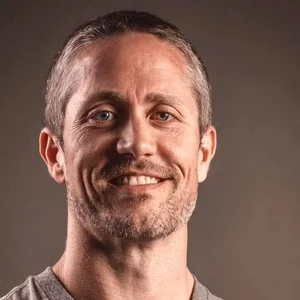
Why BONE Strength Is As Important as Muscle for Longevity (Dr. Doug Lucas) | Ep 409
Get Fitness Lab (20% off for listeners), the #1 coaching app that adapts to YOUR recovery, YOUR schedule, and YOUR body. Build muscle, lose fat, and get stronger with daily personalized guidance:
https://bit.ly/fitness-lab-pod20
—
Have you ever wondered if your skeleton can actually support the muscles you work so hard to build? Or how bone density affects the way you lift weights, lose fat, and build muscle for long-term strength?
This conversation with orthopedic surgeon and bone health expert Dr. Doug Lucas completely reframed how I think about body recomp, strength training, and longevity.
We break down why bone health is the real foundation of nutrition and fitness, what happens to bone metabolism as you age, and how lifting weights, optimizing macros, and supporting hormone health directly impact bone density and muscle building.
Dr. Doug also shares why women’s fitness, men’s health, and strength training over 40 all depend on resilient bones that respond to training stress.
If you want evidence-based fitness strategies that support metabolism, weight loss, and long-term performance, this one is packed with takeaways.
Today, you’ll learn all about:
0:00 – Why bone health shapes long-term strength
4:13 – How bone metabolism really works
7:19 – Why Dr. Doug left surgery for prevention
10:25 – At-risk groups and early bone loss
14:07 – What lifting heavy means for bone strength
16:33 – Bone density vs bone quality
21:19 – Lifestyle factors that build stronger bones
23:30 – When to use impact training
29:30 – Medications, risks, and limitations
32:55 – Hormone health and skeletal strength
40:42 – The 4R Method for reversing bone loss
46:39 – A real success story of reversing osteoporosis
53:39 – Lifting safely when you have osteoporosis
Have you followed the podcast?
Get notified of new episodes. Listen on Apple, Spotify, or all other platforms.
Then hit “Follow” and you’re good to go!


-
Philip Pape: 0:01
If you're someone who takes your health seriously and wants to build muscle and strength that lasts decades, but you've never thought about what's supporting all that muscle tissue or whether your skeleton can actually handle the load you're putting on it, this episode is for you. My guest today is an orthopedic surgeon who left his surgical practice to focus on bone health. He's going to explain why your skeleton isn't just scaffolding, it's the limiting factor for how much muscle you can build, how hard you can train, and how long you can keep lifting. You'll learn how to optimize bone density without drugs, what hormone optimization has to do with skeletal strength, and why bones aren't passive structures, but active organs that respond to training stress. If your goal is to build a physique that's strong on the outside but resilient on the inside, you're gonna enjoy this one. Welcome to Wit and Weight, the show that helps you build a strong, healthy physique using evidence, engineering, and efficiency. I'm your host, Philip Fape, and today we're gonna talk about something that doesn't come up as often as I'd like to see it in physique and strength training discussions, but could be the most important foundation for long-term performance, and that is bone health. My guest is Dr. Doug Lucas, a double board certified orthopedic surgeon and osteoporosis specialist who stepped away from the surgical practice to focus on a mission that he's passionate about, and that is proving that osteoporosis is not only preventable, but often reversible. He's the founder of the Osteocollective, an online community supporting bone health education and lifestyle change. He's the author of two best-selling books on osteoporosis and hormone optimization and host of the Dr. Doug Show podcast. I invited Dr. Doug on the show because of his perspective on how bone density, hormone health, and strength training intersect. For those of us who lift weights and care about building muscle, that lasts, that gives us longevity, aka everyone who listens to this podcast, understanding the role of skeletal integrity is at least as essential as, say, getting jacked. So we're going to discuss why your bones should be a priority, how strength training builds bone density, you know, mechanistically, what our over 40 lifters need to know about hormones and skeletal health and steps you can start taking today. Dr. Doug, welcome to the show.
Dr. Doug Lucas: 2:21
Oh man, that was such a good intro. That just like so many things to talk about in there. Happy to be here.
Philip Pape: 2:26
Good, good, good. Hopefully we can remember them all. Because I know you're an expert in bone health, but you also have these other angles that relate to our listeners. And before we get into those, I like to define some things. I want to nerd out with you on the anatomy, the physiology, the system-level interconnectedness. Because I know we're talking more about, you know, there's buzzwords like osteosarcopenia, the kind of portmanteau of two different things, so that we have that foundation for the rest of the discussion. So let's just start with defining bone health.
Dr. Doug Lucas: 2:56
Yeah, man. Well, so I wish it were just that simple. You know, when most people think bone health, they think osteoporosis, they think old people, hip fracture. And that is true that all that's exists. And I love talking to that population too. But bone health really, for me, has taken a turn over the last five years as we've been creating, you know, clinical programs, community resources, and I'm on stages across the, you know, right now, the globe, talking about bone health. And what's happened to me is that I think that we really need to just redefine bone health. Bones in general are such a great organ to look at because they're telling us a story, not loudly, quietly, but through imaging, through blood markers. And we know that on average, people will lose bone as they age. But I think we've got it backwards where we say, oh, if you lose enough bone, you have a disease. But actually, I think we need to be looking at bone health as a biomarker of longevity. If you're losing bone, something's wrong. And that's how we need to change this perspective of bone health. Because bone health is really just imbalanced bone metabolism when it's wrong, and it's balanced bone metabolism when it's right.
Philip Pape: 3:59
No, I love that term, bone metabolism, because that I haven't heard. Let's let's dig into that. I like that bone can be a biomarker. It's it's a changing thing, right? I think people maybe think of it as this fixed structure and it's super dynamic like everything in the body. So, what do you mean by bone metabolism?
Dr. Doug Lucas: 4:13
Yeah. So imagine this. Every 10 years, especially as younger adults, we are replacing our entire skeleton. So, you know, go back 10 years ago. The skeleton you had then is completely different than the skeleton that you have now. Bones are not just static, you know, framework for our body that our muscles attach to. They are, as you said, dynamic. They are living, they're making cells. They actually are full of stem cells. They are really, really cool organs that are communicating to the rest of your body through hormones, just like everything else. And so when I say bone metabolism, what I mean is how much bone are you breaking down at any one time? How much bone are you building at any one time? And then what is that balance? So you mentioned, you know, cells earlier. So osteoblasts are building, osteoclasts are breaking down. There's always a balance between the two. And if you break down more than you build up, you'll lose bone. And if you're building up more than you break down, you're gonna build bone. And that bone metabolism is what we need to be looking at when we start talking about bone health.
Philip Pape: 5:11
So is there a proxy or I should say an equivalent for muscle protein synthesis then in the bone world?
Dr. Doug Lucas: 5:16
Yeah, that's interesting. Um, I don't know how you measure it with muscle, but yes, the idea is that you want to stimulate bone. There's not a cool process like bone protein synthesis that I'm aware of. Um, you know, maybe there is. I'd love to learn about it. But we can measure it in bone, which is different than in muscle.
Philip Pape: 5:32
Got it. And I know for some context for the listener, right? You were an orthopedic surgeon. Uh, I've dealt with several of those. I had back surgery and rotator cuff surgery, and some are awesome and some, you know, I wouldn't see again. And, you know, just like anyone else in the healthcare industry. Right. But you then pivoted into more functional medicine focused on bone health. So, what's the context behind that transition as it relates to your passion for this today?
Dr. Doug Lucas: 5:56
Yeah, man, I love the OR. You know, when I went into medical school, I didn't know, I didn't know what I wanted to do. I think like a lot of medical students, and I was just fascinated by the operating room. I loved the, you know, the power of the literally power tools, but the power of what we could do in the operating room, we could make something that is so broken, so much better quickly, you know, and just it was so clear, so black and white. Loved operating, did that for, you know, a decade or more. But what I realized too is that when I got into practice, yes, we could do great things in the operating room, but really the most powerful thing is preventing what we were operating on in the first place. So I got very interested in a lot of the stuff that you talk about. We talk about the right nutrition that's right for you, the right type of movement, resistance training, you know, what kind of supplements based off of what biomarkers. I just went down all these rabbit holes and I realized that I wasn't as excited about seeing patients anymore because I realized that they were, it was already too late. You know, they'd already gone down the, you know, this path based on either their own bad decisions or somebody told them, likely their doctor told them to go down. And I was really just cleaning up the mess of metabolic disease, especially as a foot and ankle surgeon. And so I was very fortunate. My wife uh is also an entrepreneur and runs a company. So we were able to tolerate me stepping away from a relatively high-paying W-2 job, getting additional training, hormone fellowship, you know, anti-aging, you know, functional medicine fellowship, and then starting my own telehealth practice and getting to where we are today.
Philip Pape: 7:19
Okay, that makes a lot of sense. And um, there's more of that in this industry, especially as a podcaster, getting to interact with cardiac surgeon, urologists, uh, all sorts of doctors who have done a similar thing as you, I think, because they almost feel frustrated that they have come so late in the process. Yeah. Right. Just as well, GPs, um, you know, you've got the Dr. Spencers of the world who are trying to integrate as much preventative stuff into their practice as possible. Okay, so that that's really important, right? Because that's what we're focused on on this show. So when someone hears osteoporosis or bone density, and I know there are a lot of different terms. In fact, I heard you on Karen Martell talking about some that are a bit maybe archaic now. I think osteopenia is used less now. Yeah. And they think either you think, okay, this is an old person's problem, right? Like this is something to worry about years and years from now. I know are are much more cognizant of it now, especially those that listen to these types of shows. But you work with people from across the age range. So one important question, speaking of preventative, is when do we start doing something? And I know the question's obviously like you should lift weights, guys, as soon as you're able to, like, you know, you're 14, start lifting weights. That's fine. But, you know, what does the spectrum and the timeline look like where the risk just starts to accumulate in that timeline? Yeah.
Dr. Doug Lucas: 8:30
You know, this is this is one of the things I talk about most, actually, because I I try to get in front of younger audiences. The part of my mission, which is educating about how to reverse osteoporosis, I love that part. And it's really important because there's a lot of there's a lot of anxiety and fear, and unnecessarily so in those that have the diagnosis of osteoporosis. But I think the bigger part of this is who needs to be screened, when, why, with what, and what does it mean? And so if you think about bone density, the bone density increases as you go through childhood into early adulthood. Bone density will peak, your peak bone mass will occur in your late 20s, early 30s, both men and women. Arguably because we are no longer that physically active as young children, as adolescents, more screen time, more games, more school, you know, less running around, jumping off of stuff, banging our bones around. We are seeing young adults with lower bone mass to start with. This is a big problem because on average, all women and men will lose bone density as they age. I don't think it has to be that way, but that's the average. And especially women as they get into perimenopause and menopause are going to see a rapid drop. If you don't know what your starting point is, you don't know what you should be doing. So, right now, I'm telling every young adult with any risk factor whatsoever for bone health, and I'm happy to go through them, but I can just shorten it by saying that you all have them. Everyone should be screened to see what their bone density and hopefully quality are, depending on the screening modality, to know what your starting point is, especially certain populations at risk. So, just a couple of things there. Young women who are involved in endurance sports, all should be screened. I've had so many patients, young women in their 20s and 30s, that have not even low bone density osteopenia, outright osteoporosis. It's frightening. And I think it's rampant in that age group, that subgroup of athletes, and they don't know it. Nobody's talking about it.
Philip Pape: 10:25
And real quickly, why is that?
Dr. Doug Lucas: 10:27
Yeah, well, I think it has to do a little bit with uh, you know, how much stress they're putting their body through. I think there's some, you know, there's body dysmorphia in there, there's eating disorders in there, and then there's hormonal disruption in there. So a lot of women who are in, you know, endurance sports, especially as young women, either will never develop a normal menstrual cycle or will lose it and then not worry about it because they're told that, oh, that's okay. Totally common for you know long distance runners to not cycle, but it is a big deal and it is not normal. So if you're not cycling as a woman, you are losing bone by definition.
Philip Pape: 10:59
Okay. So that's one, that's one at-risk population. Young women endurance sports.
Dr. Doug Lucas: 11:02
Yeah. So and then the other group that I think is, I mean, nobody ever talks about this, but I think, you know, young men, the more and more we see young men either with low testosterone and then subsequently low estrogen, either naturally or they're on testosterone replacement, but they're using an aromatase inhibitor like anastrazole, and they're bottoming out their estrogen just because that's what they're trying to do to increase their testosterone. If you don't have estrogen, as a man, even a young man lifting heavy weights, you're still losing bone. And so I've seen, you know, this, I don't know how common this is, but I've seen men, 20s, 30s, on TRT, but on too high a dose of AI that are losing bone and they have osteoporosis and they look, they're jacked, right? They're lean and they jacked, they look amazing. They look like Superman, but they have osteoporosis.
Philip Pape: 11:46
Are they on TRT for physiologic replacement or or to get performance enhancing, you know, up into the thousands of testosterone?
Dr. Doug Lucas: 11:54
Yes, yeah, yeah, yeah, yeah. Yeah, but both, right? I'm not prescribing it at the the super physiologic levels, but you know, but either way, even if you have a testosterone, it's you know, 3,000 total T, but you're on a you know, a large dose of AI and your estrogen is zero, it doesn't matter. You're still losing bone.
Philip Pape: 12:10
Okay. So then that raises the question that for people who are training for strength of physique, let's say beyond these at-risk populations, which right there, we're going to include them in the list of absolutely get checked and baselined early and monitor this. You know, what do we take out of when we talk about bone density, bone quality, whatever the metrics are, and prioritizing them in and of themselves, right? So I guess we can talk about the metrics that need to be screened. And is there anything you're doing specifically that you're not already doing for muscle and health anyway? Because I love the fact that we get two for ones when we talk about this stuff. If you're lifting weights, you're gonna solve a lot of issues. So you're good. But in some cases, like is it the at-grist populations or maybe a need to pay attention to bones specifically for one reason or another? So help me understand that.
Dr. Doug Lucas: 12:56
Yeah. So I think it changes the way you train and it might change the way you eat. You know, so I mean, let's go back to that, like the young athletic, you know, endurance athlete woman. I'm not saying that she has to stop running, but she should pay attention to how many calories are you getting, what is your total body fat? You know, if you need to be super lean for competition, can you get less lean in your offseason? You know, let's figure out can we create a way where you're not losing bone? Because again, if you're losing bone, something's wrong. And then if you're truly osteoporotic in your 20s as a woman, I mean, this is this is, you know, red flags, warning signals, like we got to build bone. And then if that's the case, then maybe you're gonna have to back off of your long distance training, add more resistance, build more muscle, and do some kind of impact training as well.
Philip Pape: 13:40
And speaking of building muscle, this is another thing that comes up strength versus muscle. And I say versus loosely, because right, there's a lot of overlap, obviously. But the idea that lifting heavy and heavy is another subjective term, because do we mean training close to failure for muscular tension, or do we literally mean low reps up in a high percentage of your max? So just let's resolve that real quick. And then I do want to dive into some of the how do you scan for this and and other stuff. Lifting heavy, like what are your thoughts on that?
Dr. Doug Lucas: 14:07
Yeah. So I mean, when I say it, I say we need to lift heavy. But what but what do I mean by that? And I and I get I have some some interesting exercise physiology people out there in like the longevity space that will give me negative comments to say, like, you don't have to lift heavy or, you know, I mean all these different like subjective terms, right? But what I mean is when you look at the literature, there are studies looking at what's called high intensity resistance. So they're talking, you know, 80 to 90 percent of one rep max. That's heavy, regardless of what your starting point is, you know. So that's what I mean by high intensity, heavy. We know that those studies, those protocols are going to have a better response to either slowing down bone loss or potentially even building bone if they are mixed with impact. So when I say heavy, I don't mean go out there and try to deadlift 225 pounds if you've never done it. Like, please don't do that. But if your starting point is, you know, a band and your wanderet max is like, you know, whatever this color band is, then you know, go 80% of that. Like that's heavy. So you could do that with pink dumbbells if you needed to. It just depends on your starting point.
Philip Pape: 15:32
100%. Uh, my mother-in-law, we we were getting her for Christmas a set of you know, arthritis-friendly dumbbells and a wrist wrap, because for her, that's super heavy, and I'm excited for what she's gonna get out of it, right? Um, yeah, no, that's a that's a good qualification because I'm going forward, you know, some of these recent talks I've had, and now you're only reinforcing that, is I think there's these different regimes of percent max that kind of have different goals, right? There's the hypertrophy regime, which is extremely wide, and there's the strength, which is a little bit higher up, like 60%. And then maybe we say, okay, the the super necessary bone health population is 80%, right? And that is what, five, five uh reps-ish, I think. Right. I forgot my.
Dr. Doug Lucas: 16:11
I mean it's five by five-ish, right? Yeah. Five reps.
Philip Pape: 16:14
Yeah, exactly. Which is a beginner program like starting strength or something, is gonna be in that range. So that's perfect. Um, okay, so then before we get into the scan discussion terms here, bone density, that's pretty self-explanatory, but we can describe what we mean by that, you know, uh physiologically. Bone quality, like what are the different metrics of how we measure bone health?
Dr. Doug Lucas: 16:33
Yeah, so we talk a lot about bone density because the definition of osteoporosis is based off of density from the imaging modality of DEXA, which is not a great imaging modality, to be honest. You know, we can use DEXA for a lot of things, body composition, bone density. It's okay, but it's just a two-dimensional x-ray. So your output is only as good as your input. Uh we're not gonna get away from DEXA anytime soon, though, because it is the gold standard, even though it's not, there's nothing gold about it, but it's the standard and it's widely available. It's covered by insurance under many circumstances. So with DEXA, you know, you're gonna get this thing called a T-score. It measures, well, for older individuals, T-score is gonna measure your bone density compared to a younger version of your sex and ethnicity. And that's what we use as a definition of osteoporosis. Now, for younger individuals, there's a thing called a Z-score. You also get from DEXA, it compares you to your age-matched peers. That's valuable for individuals younger than the age of 50. And that's just comparing you to somebody who's like you, but maybe has different bone density. So we can use bone density from that perspective. But what we really want to know is what's your fracture risk. Now, maybe not in a 20-year-old athlete do we want to know your fracture risk, although if you have low bone density, I want to know your fracture risk. But as we get further along, we want to know what your fracture risk is. And then that question is really a combination of bone density and bone quality. Because we see a lot of issues with bone density when you start predicting fracture risk. In fact, most fragility fractures, and there's clear definitions there, but most fragility fractures occur in those without osteoporosis. They have low bone density, not osteoporosis, partially because there's just more of them. But it's not necessarily just a density problem, it's a quality problem. So then how do you measure quality? Well, this is not super clear. There are modalities out there that are not DEXA. So ultrasound device called RAMS from the company Echolite out of Italy, that device has a fragility score. It's measuring quality and comparing it to a database of people who have or have not fractured. So that's kind of cool. Um, CT studies, quantitative CT can do it as well. So, quantitative CT, you can look at different ways that the computer can calculate strength. It's usually calculated as strength. Um, and so there's a quality metric there, but CT is not a great thing to use because you can't use it continuously over time. Like you don't want to go CT your body every six months or 12 months to look at your bone density and quality. It's just too much radiation. So you're kind of stuck between the ultrasound device, the RAMs, or what else you can do on DEXA. There's a couple other things you can do on DEXA. One's called TBS or tubecular bone score, one's called 3D Shaper that just got FDA approved. But neither of those are are adding any additional inputs to DEXA. It's just different ways to calculate on the output side. And again, DEXA is an old school two-dimensional x-ray. So how good could it be? So this is one of the challenges with imaging and bone is that there really isn't a great tool to say that you can accurately say what your bone density is, what your bone quality is, and then ultimately what your fracture risk is.
Philip Pape: 19:31
Well, that's discouraging, but but you made me my you made my brain go to AI when you mentioned obviously the uh ultrasound and having the comparative, the correlational analysis and where is that all going? Like I imagine they're looking at taking the imaging and like you said, correlational machine learning uh comparisons. Are we on the cusp of something there? Are there any breakthroughs about to happen? What's going on?
Dr. Doug Lucas: 19:54
So the company Echolite and I have not worked together, but I just imagine, I mean, I know so many business owners that have these devices. The scanned data, after you get a scan, all of that data is owned by Echo Lite, by the parent company. So they'll download from these machines, you know, these thousands and thousands of scans. Their database is massive. So, yes, could you use AI to come up with a better calculation based off of these inputs that are coming in from Ultrasound? Absolutely. I hope they're doing that. I don't know for sure that they are, but yes, you could certainly use AI learning to better predict this. And I think that is where we're going.
Philip Pape: 20:30
Yeah, that's pretty cool. Um, yeah, I have an app coming out just to show that that's based on AI. And I'm surprised myself at what it can do because we almost don't have full control of some of the things these this AI can do. Uh, it's insane. All right. So if so let's say someone is uh assessing their density and quality with one of these measures or a combination of these measures over time, maybe they're at risk, maybe they're not, but they want to know what to do on a daily basis. And of course, we love to start with lifestyle uh first here. And I think a lot of people assume that if they're lifting weights, fairly active, not doing anything overly stressful, like the at-risk populations and not under-eating. Like, so we're saying all the things that they, a lot of things they should be doing that maybe they're not doing. What would you say are the big hitters besides lifting weights? Or are you like, hey, lifting weights is 80% of it? And then here are the other ones.
Dr. Doug Lucas: 21:19
Yeah, I mean, I think um, not to pander to your audience or anything, but I mean, yeah, like the resistance training part is huge. But we we kind of build it like this. Like we have a pyramid, the foundation of our pyramid is just like every other functional integrative practitioner out there. Nothing special about it, right? It's exercise, nutrition, mindset, and sleep. There's nothing special about those categories, except that when it comes to nutrition and bone health, just like with muscle health, you have to eat enough calories. And there's just no way around that. You have to get enough of the basics, you have to get enough protein. And for those that have osteoporosis, it is a sign that they have had inadequate protein, either consumption or absorption, one of the two. But either consumption or absorption, they've had inadequate protein for a long time. You know, and I used to get on stages and I used to, you know, preach about my beliefs about food. And then I realized like nobody cares what I think about food outside of the things I can prove in research, which is more protein in population studies, better bone density. It is hands down clear. Same thing with muscle mass, right? Like you have to reach this muscle protein synthesis threshold. We don't know what that threshold is for bone, but it's somewhere around the same thing because it just gets you anabolic. It's just that simple. Yeah. And then exercise perspective, we we kind of talked about it, hit on it. The resistance training, high intensity, fantastic. The difference is impact training because most of your listeners are probably not doing intentional impact. It hurts, it might not be good for your joints if you're doing it wrong, but it does provide a good stimulus for bone. Resistance training has not consistently shown benefit for bone health in the literature. In fact, usually it's it just slows down bone loss. It does not build bone. If you want to build bone, you need to add additional impact, either through something like a box jump, some kind of plyometric thing, heel drop, or some kind of simulated impact like whole body vibration or osteogenic loading as a device that's there's some devices that are out there as well that could potentially do it. But something that adds more than just resistance to that exercise piece.
Philip Pape: 23:15
I want to hit on that. That's interesting because you said um lifting at best preserves your bone density, which of course itself is important. For those listening who want an excuse not to do impact training, then I want to talk about doing impact training. Okay.
Dr. Doug Lucas: 23:29
Yeah.
Philip Pape: 23:30
If they've been living a healthy lifestyle since, say, their 30s, is it a big concern that they're not doing impact training or is it kind of like you're okay? Or is this a non-negotiable almost?
Dr. Doug Lucas: 23:39
Well, and this is where you screen, right? Like you screen, and if you're if your bone entity is great, cool. Like you're probably fine to not do it. But if you have osteoporosis, you need to start figuring out how to do it in a way that your body can handle it.
Philip Pape: 23:50
Okay. And that's not unlike some messaging I've had from some other good coaches in the space I respect. Like Megan Dahlman is really big into bone health, and she's she talks about impact training, but she's like, not everyone has to do it. But yeah, if you're trying to recover bone, so that's really good. So box jumps, you mentioned whole body vibrations. So are we talking about things that some of us make fun of because some people use it as like their only form of exercise, thinking it's gonna, you know what I'm talking about? It's the vibrates your whole body. Yeah, yeah, yeah. The plates and everything. Yeah.
Dr. Doug Lucas: 24:16
Yeah.
Philip Pape: 24:17
Okay, okay, interesting. So there's a good use for that then.
Dr. Doug Lucas: 24:20
Yeah. So I so I'm a big fan because I have a lot of a lot of my, you know, community members, they have such a low starting point that their resistance is, their resistance training is very, very minimal, right? Or they have significant arthritis. I mean, there's we have all cumbers from different health perspectives. So we have some very sick people. Something that is passive could be absolutely beneficial if it works, right? So it's got to work. The evidence behind whole body vibration, if done correctly, meaning on the right device. So the the company we utilize is power plate because their devices are very, you know, they're powerful, hence the name. Um, they're powerful and they are predictable and they're commercial grade or even healthcare grade. So they have home devices and it moves up and down the certain amount. So that's hertz, 30 to 40 hertz. And then it's up and down, not like side to side, like you know, the pivot one side to side that just make your sacrum looks like it hurts. Um, so the up and down version is what you need, and it has to go up and down enough to actually create enough gravitational force. And that's you want that three to five Gs, and or that's two to four millimeters. And so if you have the right device, stand on it for 10 minutes, you can actually see bone mineral density increase and multiple studies demonstrating that.
Philip Pape: 25:28
That's incredible. Okay. Yeah, I'm learning something here for sure. I didn't I didn't know that. I'm gonna, this is gonna be pinned in my notes for personal reasons for people that I know in my life, but also to share this. So I thank you. Thank you. Always always looking to learn something.
Dr. Doug Lucas: 25:41
Yeah.
Philip Pape: 25:42
So, okay, so we've got lifting weights, we've got impact training, we've got not undereating, eating enough protein, huge. I'm a big fan of that messaging in general. Even people who want to lose fat, we talk about the importance of the majority of the year being spent at maintenance or potentially in a surplus building muscle, and you're gonna be much more healthier, you're gonna feel great. What about vitamins, minerals, and fiber and their correlation? Because there's a lot of confusion about calcium over the years and vitamin D, et cetera.
Dr. Doug Lucas: 26:07
Yeah, so um so minerals are super important. So uh we talk about, we hear about calcium all the time. Oh, you have osteoporosis, you need to take calcium and vitamin D. Hopefully they say vitamin D. The thing about minerals, though, is that like they don't exist in a vacuum. So your bones, yes, the most prominent mineral is calcium by volume and by weight, but it's so much more than that. And if you're gonna lay down calcium, you need magnesium. In fact, you need more magnesium than you need calcium. You also need potassium, you also need boron. You like you need it all. And so when I see people taking just big doses of calcium, essentially chalk, right? Calcium carbonate is chalk. If you take a big dose of calcium carbonate, first of all, your body's not gonna absorb very much. But secondly, osteoporosis is not a calcium deficiency problem. Osteoporosis is a you know multi-factorial thing. And so if you're gonna consume calcium or other minerals, it has to be done in a way where uh you're consuming them all together. That could be through supplementation, preferably through diet, but you need them all together. It's not just a calcium vitamin D deficiency. And then from a vitamin perspective, yes, vitamin D does help with the absorption of calcium, it does help with utilization, but you can almost get yourself in trouble. And this is where the research is actually pretty clear. If you take a huge chunk of calcium and you add vitamin D to it, you will absorb it. But then what? And so then you see these spikes of blood serum calcium. And when you do that, so you also need vitamin K to help to put it where you want it to go. So it's again, it's like we try in in medicine to simplify things because we need to do it at scale, right? We need to do this for 280 million Americans. Great. But we need to be realistic too. Taking a thousand milligrams of calcium plus 400 IU of vitamin D seems to not be dangerous, but is it really helpful? The research doesn't really support that. Even go back to the women's health initiative from 2002. What was the benefit of those things? It was pretty minimal. If you start stacking them, so you get multi-mineral, right? So you get calcium, you get the magnesium, you get all the things together. And then you start adding vitamin D, vitamin K. You also need A to make the D work in the cell. Like you have to start putting a list together, then you start coming up with a comprehensive stack that can help you to build bone.
Philip Pape: 28:18
Got it. And is this comprehensive stack currently sold that way in in different markets? Or like is it readily available at Walmart or Amazon, like the osteoporosis stack?
Dr. Doug Lucas: 28:27
Yeah, so it is. Like if you were to go on um, you know, if you're going to Amazon and shop, you know, whatever, whatever product you're looking for, right? You'll find a bajillion supplements. The challenge is how do you put it together? Because there's not a single product. And even in companies like there's companies I work with that are very specific to osteoporosis. So even in those companies, uh, you have to stack multiple products depending on your starting point. And this is what I always say about supplements is to say, look, depending on where you are, your genetics, what your biomarkers show or your deficiencies are, and maybe even functional testing, you're going to have a different stack than the person next to you. So there really isn't a one-size-fits-all approach.
Philip Pape: 29:07
Yeah, that makes a lot of sense. All right. So in addition to that, um, what about medications? And oh, I actually want to start with is there anything people should be avoiding? Because, again, some like Boniva has been around years and I've heard horror stories about that. I mean, what's the latest state of things that are, you know, ancient and to be avoided, still around that should be avoided and things that are sometimes recommended?
Dr. Doug Lucas: 29:30
Yeah. So the pharmaceuticals and bone health are tough because in the conventional system, you know, we have this, we have this system that is really good at some things, right? It was designed to treat infections and to, you know, treat trauma and do surgeries as all that developed. But what it's terrible at is treating chronic disease. So whenever you're talking about making a drug, a specific pharmaceutical for something like osteoporosis or dementia or even heart disease, you know, like cholesterol, different story, but even like the chronic heart disease thing. Like it doesn't do a great job of that. And bone health is certainly no exception here. So the drugs that are designed for bone health are designed to be a single solution that will reduce fracture risk. To do that, there's kind of two different ways to do it. And they they all work off the same bone metabolism thing that I was just talking about, right? So if you want to reduce fracture risk, you can either slow down bone loss or you can build up bone. Which is the same thing I do. I just use different tools. The drugs that slow down bone loss, you mentioned Boneva. So there's kind of two main classes here: there's bisphosphonate drugs. So that's phosmax, boneva, reclast, all of these drugs that are bisphosphonates and work by essentially poisoning osteoclasts, those cells that break down bone. Prolia is a similar drug. That one also works by shutting down the osteoclast different mechanism, but you're still slowing down bone loss. The challenge with that is when you slow down bone loss, you also slow down bone building. Bone metabolism, neither side works in a vacuum. And so if you shut down one side, you shut down the other. And we can measure these things in blood. So there's bone turnover markers. This is what I meant. Like you can't measure this in muscle, or at least not well. In bones, you can actually measure it in blood. So we see the marker for bone loss drop. We see the marker for bone building drop as well. That's okay in the short term, especially if you are at high risk of fracture. And uh if you're at high risk of fracture, you might have to take one of these drugs. There's a time and a place for these drugs. So I'll come back to that. Um again, perlea, same thing. Slows down bone loss, slows down bone building. You can't do that forever. Now, the other side of that equation is drugs that increase bone building. Those drugs are called anabolic drugs. They push bone building up. So you're push pushing up that side of the equation. And the other side of the equation rises too. So now both sides are doing more. And those are actually my preferred drugs if you're going to use a drug. The challenge is none of these drugs you can take long term. So the bisphosphonate, the recommendation is three to five years, depending on your risk. The anabolic drugs, it's one to two years, depending on your starting point and your risk. None of those things make sense if you're 50 years old or even 60 or even 70, right? Pro Lee is a little bit different. That one is there's safety data out to 10 years, recommendations to continue on kind of mixing up drugs after that, but we don't have a long-term plan here. Unlike the other things that we talk about, resistance training, the right diet, the sleep, the mindset, potentially hormone replacement, which I know we'll get to, those things you can do for the rest of your life, or at least hopefully.
Philip Pape: 32:30
Perfect segue. Um, hormone replacement, which I was gonna talk about next, because you're right. Let's put that into contrast of the things that are that are there for the long term, that are uh positive practices that we can do and fully control without medication. So hormone, both optimization, I'll call it, hormone balance via your lifestyle, but also hormone replacement are big topics for our population. So where do we start in the context of bone health here?
Dr. Doug Lucas: 32:55
Well, I guess let's start at do you want to start at the end or the beginning? You want to start at the, you know, the as hormones start to get wonky in midlife, honestly, both for women and men?
Philip Pape: 33:03
Let's start there.
Dr. Doug Lucas: 33:04
Yeah. Yeah. So um one of the things you didn't mention that I do professionally is that one, my clinical practice got acquired by a larger company, LifeMD. I now work as their VP of health and hormone optimization. So my job is to build programs, both for women, mostly women right now, but for women and for men that are set up to help optimize hormones. Again, through potentially lifestyle, but also through replacement. So very deep at these topics. Like you said, one of my books is about hormones. Huge advocate for hormone use, replacement, optimization. For women, as they start to get into this perimenopause midlife phase, it is the wild, wild west. We'll talk about postmenopause and you know how challenging that space is, some things that have changed recently, actually, as of you know, this week, that we can talk about. But perimenopause, there's very little data, very little research, very few guidelines, and yet wildly symptomatic population who's searching for an answer. So it's a it's a really tough space. But the good news is there is hope for all the women who are looking for answers because there is a lot of research going on right now.
Philip Pape: 34:10
And you know, real quick on that, it's a very vulnerable population because of that. And I don't say that's a fearmonger, but I've seen that in the industry, it's it's rife for taking advantage of. And this is why we have to be all of us, including those of us giving the information, super nuanced and respectful of truth. Is it not even a word you can use today uh and have any meaning. But uh, you know, what what's best supported by our our latest information and the scientific evidence? Yeah.
Dr. Doug Lucas: 34:38
So I mean, I think this is this is where I see this challenge, especially in social media, between, you know, doctors talking about perimenopause versus coaches talking about perimenopause. And you have coaches saying it's not your hormones, work on your lifestyle. And you have doctors saying it's not your lifestyle, work on your hormones. You have women in the middle pulling their hair out uh or losing their hair, depending on the situation, right? And it is, it's it's tough, and it's really hard to figure this out, even as a provider who understands that both sides are actually true. Where do we start? And so I'm a huge advocate for testing, especially in perimenopause. There's different ways that you can do that, and we can get into some of those details, but ultimately we need data. We need data to understand what's happening with your hormones. Is this more of a lifestyle thing? Is this actually a hormone dysfunction? You know, and it gets, it can be challenging because you have to get into some of the things that our our society and our culture are not comfortable talking about. We have to talk about cycles, menstruation, symptoms. We have to talk about sexual dysfunction. Like we have to get into these things in order to understand what's happening with your hormones and your symptoms. Only once you uncover all these things can you actually create a plan to move forward, potentially with hormone replacement, maybe optimization, maybe supplementation, you know, maybe all through lifestyle. Yeah.
Philip Pape: 35:47
So it's lifestyle and hormones is kind of what you're saying. And it's it's some somewhere along that spectrum for each individual. So then still talking about this population, and we can include men in there too with testosterone, because you briefly mentioned TRT before, as it relates specifically to bone health. Are there any concerns? Are there, you know, is it just a matter of if you need replacement, that will also happen to help with your bone health?
Dr. Doug Lucas: 36:11
Yeah. So TRT is a really interesting topic. I love talking to men about hormones and testosterone replacement. It's, I think it's been, you know, fortunately, like we're not in the same, we're not in the same problem with men as we are in women, but it's still not good where we are with men. With women, I mean, there is no, there is no testosterone product to even talk about commercially, which is just wild because it's such a huge market. But for men, you know, at least we have products. The question is, how do we do it and who do we do it in? Um, I just redid the testosterone protocols for Lyph MD. When they were done originally, they were very strict, treating only the strict diagnosis of hypogonadism, as some of the guidelines would recommend. But more and more research is coming out showing that it's not just total testosterone that matters if your doctor is even checking it. It's total testosterone, it's free testosterone, and it's symptoms. Now, both for men and women, we kind of get trapped having to talk about sexual function, dysfunction, libido, et cetera, which is fine. We can talk about that. But I also find for men that low testosterone is associated with all of these other potential symptoms too, like depressed mood, fatigue, less vitality, vigor, inability to maintain muscle mass. Like a lot of these things have other causes too. And this is why the research is difficult here. But when you find a man who is symptomatic, the biomarkers fit, and you put him on TRT, nine-day difference. And it's it's awesome. But it still has to be done correctly. There's still this, you know, this recommendation generally from especially the physique world of like using AI to block estrogen so you have more testosterone. And I think that's a mistake for your bones. I used to use aromatase inhibitors and uh not at big doses, just to try to kind of balance things out. But as I got more mature in my practice, I realized I don't have a single patient that I have them on now at all. Like not one. Because there isn't, there hasn't been a patient that I couldn't just adjust their dose or adjust something else with their metabolism, their detox of the hormones to help balance out their hormones. So I think it just has to be done right, but it is massively powerful for men.
Philip Pape: 38:14
Okay. So that's really clear. I mean, and it's consistent with when, you know, men have these numbers total, free, uh low in general, and have other issues related to strength training, for example, where again, we say it's not just the lifestyle. I know I've seen men who, you know, tick up their testosterone, maybe 50, 100 points through that, but then they're still 300 or 400 shy on the total. Right. Moving kind of up the chain to the younger population, then, because we started there. What what do we want to talk about with hormones? Is there something preventative that people need to be doing?
Dr. Doug Lucas: 38:44
As you go younger, you mean?
Philip Pape: 38:45
Yeah.
Dr. Doug Lucas: 38:46
Yeah.
Philip Pape: 38:46
Benjamin Button style. Let's do it.
Dr. Doug Lucas: 38:48
Yeah, yeah, yeah. Okay. So then uh yeah, I mean, as we go younger, I mean, I see low testosterone in men, well, and women, but if we just talk men, you know, into their 30s and 20s. I think there's a really challenging problem happening with our, you know, in our modern culture, the environment that we all live in is so toxic. Too much stress is rampant, poor sleep is rampant, we're all exposed to toxins all day long. A lot of these are hormone disrupting. And so I, again, I see men, you know, in their 20s with low testosterone. I mean, it's insane. So we know that on average this is happening in the population. I'm probably in a biased space because I'm a, you know, I'm a hormone specialist. So I see people who have are symptomatic with low hormones, but there's too many of them. So I think I would encourage testing. If you have symptoms of low testosterone as a guy, or if your hormones feel off, you're not cycling regularly as a woman, let's get some data, right? We need to know what's going on. And then what do you do about it? Well, I wouldn't at that age prefer to start replacing testosterone. There's so many things we can do when it comes to lifestyle, you know, optimizing all these things that we've talked about already, and potentially some other treatments, you know, things like clomophene that it's off label, like things where we can help to sort of hijack the system, get it going, and then hopefully not need a pharmacologic therapy as you get into midlife.
Philip Pape: 40:06
Yeah, that those are good guidelines in general, right? The younger you are, hopefully there's more you can intervene with naturally. Right. If that word can be used, uh lifestyle. So you have a framework, because I do like frameworks and helping people understand timelines here. And you know, when you go from scanning to intervention, and I understand this changes by age. I know you have a framework here for our method, right? Recognize, reverse, retest, revive. Maybe we can tie that into a process. Yeah. Um, folks listening here, they like to collect data, figure out things, experiment. Um, how does that fit into this? And what do timelines look like, maybe for a I'll say typical person listening to this show in their 40s?
Dr. Doug Lucas: 40:42
Yeah, absolutely. So this framework was really developed for people that have, you know, some low bone density, osteopenia, osteoporosis. They want to figure out what's going on. One of the biggest challenges in the conventional system with osteoporosis as a diagnosis is that once you have it, there's really no specialist in osteoporosis in the conventional system. Thinking about orthopedic surgeons before, like, they're not specialists in bone health, really. They're specialists in putting implants in bones, you know, endocrinologists, rheumatologists, internal medicine, like nobody wants it. And there are specialists in bone drugs, but they're not really specialists in bone health. And so it's a really interesting space. And so, you know, what happens is when you start talking about, you know, okay, I have low bone density, I have osteoporosis. What do I do about it? Your doctor says, well, you either are or are not a candidate for a drug, and that's it. They might do some additional tests to make sure that you don't have something like a parathyroid tumor that would result in bone loss. You know, some of these clear things like celiac disease, you know, do you have symptoms of that? Should we test for that? Because that causes osteoporosis. But once you get those things off the table, then they just say, Well, I don't know why you have bone loss. This is part of aging, and you either are or are not a candidate for a drug. I think that's a huge mistake. And I don't blame the doctors. This is how they're trained. And, you know, they're again, they have drugs and surgery to use. But if you want to do this naturally, if you want to do this from a comprehensive perspective, you need to sort of take a different angle. So this is where we created this four-hour method. And the first R, as you said, is to recognize why you're losing bone. Why are you losing bone? Go back to the longevity conversation we had at the beginning of this talk. If you're losing bone, something's wrong. What is it? Is it a dietary thing? Is it an absorption thing? Is it a gut health thing? Is it a hormone thing? It could be a lot of things. And the way you figure that out is by asking the right questions and getting the right data. And then once you do that, then we oh gosh, what's the second R? Recognize reverse. Thank you. Goodness. I usually have it in front of me when I talk about it.
unknown: 42:40
Oh, good.
Dr. Doug Lucas: 42:40
Uh the second R is to reverse. So then you want to reverse those causes of bone loss. And this is actually what I talk about when I'm talking about reversing osteoporosis is reversing the causes of bone loss. Eventually your T-score will get above negative 2.5. That's the threshold that the WHO set as the diagnosis. But that's actually, I'm not that worried about that. Right. If your T-score is negative five and you go from negative five to negative three, you are reversing your osteoporosis. And I'm excited for you about that. So then you have to make that plan. And that plan is going to be like we just talked about. I have that pyramid, it's lifestyle, it's hormone optimization, it's supplementation. And then and only then, once you've done those things, potentially move on to like a peptide or a drug. Right. So that's the second R. And then the third R is to retest. I can't tell you how many times I've seen women and men who get a diagnosis, they decide to do something. Maybe it's a supplement, maybe it's an exercise program or whatever. And then they just stick their head in the sand and they don't retest. That is such a mistake because they're going to get a DEXA again in two years or maybe more, maybe like four or five years, and realize that their plan didn't work. There's so many things that we can measure, right? So if you identify that a vitamin deficiency, like your vitamin D deficient, okay, that's an easy fix. But then you need to retest that and make sure that you're headed the right direction. Same thing with hormone dysfunction, hormone deficiency, postmenopausal woman. Let's get you on HRT if you're a good candidate for that. But do you have enough estradiol in your system? Are you absorbing it well enough through that gel or that patch in order to actually have the impact on bone that you want to have? We can measure these things. So let's test it.
Philip Pape: 44:11
I'm sure it depends on the intervention, but what test cycles are we talking about? Three, six months, a year?
Dr. Doug Lucas: 44:16
Yeah, it does depend. So something like, you know, a hormone, if you were to start estradiol as a, let's say a woman who starts an estradiol patch in an oral micronized progesterone capsule, I can check her hormone levels next week, you know, and they're going to be different. I wouldn't, that's too soon, but just give you an example. But if you're talking about bone turnover markers, you're going to want to give it a couple of months. If you're talking about, you know, some of the things are going to take longer, like how long does it take for magnesium to come up? How long does it take for homocysteine to go? Like it just depends on what you're looking for.
Philip Pape: 44:43
Okay, great. Yeah. Just wanted to clarify it's and it's not like four years, you know.
Dr. Doug Lucas: 44:47
Right. Well, that and that's the thing, is that's too long because that's DEXA, right? So DEXA is recommended every one or two years. And two years is way too long, in my opinion, to A, do any intervention without knowing it's working, and B, just like that's a long time. So for sure. All right. Yeah. Yeah.
Philip Pape: 45:02
So go on to the last R and revive.
Dr. Doug Lucas: 45:04
So the fourth R is to revive your life. And I just I love this one because even as an orthopedic surgeon, watching my patients have a hip fracture go through the process of recovery. And remember that not all of them survived, right? A third of those patients on average are going to die. Two-thirds of them are going to lose their independence. This is a big deal. So watching them recover is difficult from a surgical perspective. But watching them recover from their fear and anxiety if they didn't fracture, that's much more rewarding, honestly. But it's also much easier to do because you still have your body intact. And so this is the this revive your life so you can live without the fear of fracture. Get away from that fear, that anxiety that you're going to sit down in your car and break your back, that you're going to pick up your grandchild and you're going to break your spine or your hip, right? You're going to be out hiking on your own, you're going to fall, break your hip, and you're going to die out there overnight. I hear these things every day. So that fear and anxiety is real. So that's what we want to get you to is to get back to the things that you love to do to create the memories that you're here to create.
Philip Pape: 46:04
That's the message here, man. That's awesome. I mean, I think osteoporosis puts fear in some people's heart as this binary precipice that you fall off of, and now you're you're ruined for the rest of your life. Your bones are beyond repair. And this message that you can reverse it and not only reverse it, but do it fairly quickly if you do the interventions and start to see that is a very empowering and very, you know, uh optimistic. And so I guess maybe to wrap up here, because this is a great message to end on. Is there a story or an avatar that you could share with the audience? You know, I you work with people all the time, but just so they can kind of viscerally feel what that looks like.
Dr. Doug Lucas: 46:39
Yeah, sure. Yeah, one of my favorite stories, uh, I talk about her a lot. She was actually on stage at my uh last live event in February. Her name's Robin. And so she was one of our, one of our earlier patients. So she came in right at the age of 51, had gone through menopause. I believe she had a family history of breast cancer. So she was decided she was not going to start on HRT. I forget why she got screened for osteoporosis, but she got adexa and she had pretty significant osteoporosis of her spine. Hips, low bone density, not terrible, but still she was blown away. I mean, just changed her life, right? Young, active, I mean, very young at heart. I mean, you've if you look at her, you would think that she's probably 30 years old. Entrepreneur, great family, you know, two young daughters. And this totally changed her life. Fear, she didn't know, you know, could she do all the things that she wanted to do? So she came and worked with us. This was clinically as a patient, and we did all the lifestyle stuff that you and I've talked about. And she did a great job, improved her stress. Again, entrepreneur, how do you do that? It's difficult. Um, improved her sleep, stopped drinking, really changed things around, worked on her gut health. We did start her on HRT because I reassured her that a history of breast cancer in an immediate family member is not a contraindication to starting on HRT. And so we started her on HRT. It took us a while to get that optimized. But in the first 12 months, with just those interventions, we saw her hips improve, I believe 6% and 7% left, right, which is a lot on ADEXA. That's a ton on ADEXA in 12 months. It was amazing. And I love the story because her spine actually got worse. So her spine actually went down by about 4%. And I share the story, not to show my failures, but to say that we said, okay, well, my goodness, you seem to be doing all the things. What are we missing? And this is great for your audience because what we were missing was she didn't tell us that she had back pain. She had an old back injury. She was afraid to load her spine. So we were talking about loading her spine, you know, talking about putting a barbell on her shoulders, but she wasn't doing it. So she she worked with our exercise physiologist and like, okay, let's figure out how to load your spine without hurting it. So she was able to do that. And then the next year she went from a negative, she was at negative three, two at that point. I think she went from negative three, two, it was something like negative two, four. I mean, some massive leap. It was almost 20% on inner bone mineral density. And it was just amazing. Because we clearly had all of the pieces in place, right? She called me when she left the imaging center. This is back when I used to give my phone number to all my patients. She called me when she left the imaging center. I mean, just bawling because she felt that all of that fear, all of that anxiety was gone. It's gone. And then what's cool is that now, so we have now another year of data, and her DEXA continues to get better, right? So now she's definitely no longer osteoproduct. She has reversed her osteoporosis. She's barely even osteopenic at this point. She will, if she'll continue on this trajectory, she will have normal bone density in the next couple of years. So she has taken this thing, this precipice, like you said, she was on the other side. She was falling into the crater and just climbed right back out of her own will. She just needed the right information. And she climbed right back out and she has recovered. She has lost that fear, that anxiety, and is back to living her life.
Philip Pape: 49:46
That's awesome. Yeah. And it sounds like, you know, the information was great. And obviously the support you guys gave her and kind of recognizing that she was afraid of part of that, which is a very, very common fear we talk about all the time, which is you have pain, back pain, especially, um, is one of the most common. And there's a fear that doing anything with your back is going to make it worse. So I love that you guys were able to support her through that and say, okay, this the data is telling us something isn't working. We know this stuff does work. So what's missing? And then go ahead and do it. Right. Really love that. Everybody listening, I'm sure, is hopeful, especially the women who, you know, write in with concerns about uh bone health. And I'm I'm always telling them, hey, just go lift weights. Like I have no problem. I don't feel like I'm taking a risk doing that because I know how valuable it is. It's just doing it right and having right form and building into it. So is there anything I didn't ask you in this whole context that's super important that you want to?
Dr. Doug Lucas: 50:36
So I think this is a really important one because we probably have some audience members who have osteoporosis that are afraid to lift weights. And so I I'd love to talk about this. It it kind of gets me in trouble. But I just had a community member today. She was uh talking about another uh another provider who's actually talking about pelvic floor health. And this pelvic floor provider was talking about doing, you know, like cat cow exercises of the spine and then how that relates to the pelvic floor. But she said, Oh, well, I was told with osteoporosis I can't do cat-cow. Right? And I'm like, wait, like you can't bend your spine. I mean, I understand you don't want to load in a flex position. There are some things that would not be wise that could potentially put you at risk. But cat cow is just a that's a I mean, this is a normal range of motion thing of your spine. Like if you are that fragile, then you would fracture just standing up.
unknown: 51:28
Right.
Dr. Doug Lucas: 51:28
And so it this is really hard because doctors will scare people once they get the diagnosis to say, don't lift more than whatever their arbitrary number is, five pounds, 15 pounds, don't lift more than 15 pounds, you know, take calcium and vitamin D and take this drug. And that's what they tell them. And then they're afraid to do anything. But what we know so clearly is that if you're gonna build bone, you have to load it. Then how do you do that safely? And we actually used to back away from exercise in our program because it's all virtual. And you know, I was hesitant, like somebody's gonna fracture, you know. But what we realize is that we can't back away from it. We just need to, you know, face it head on. And so we have a program that is very fundamental, very rudimentary, because we have so many of our community members who have never lifted a weight ever in their life. So they can come in, but there's so many things that you can do safely, right? Watch a video, you can lay down, you can lift something, you can do it in a way where your spine is neutral and you start somewhere. Pick that point carefully. But once you start there, then it's just all about progressive overload, just like everything else, right? And so, have I ever seen a fracture? I had one person recently who did have a fracture, and it wasn't because she was following and just fractured um accidentally. What she did, she was doing a barbell back squats. You can imagine she was already pretty advanced, right? She was training with her husband. She didn't take her husband's weight off. Well, she said he didn't take his weight off. So I'll let them figure that one out. But she she unracked it and then didn't rack it back. She just said, well, well, you know, I guess I'll try it. And then it was clearly way too heavy for her. Uh, and so she did actually end up with a fracture of her uh somewhere on her spine as a result of that. But that was just bad decision making. That wasn't because of exercise, right? And so, you know, I have watched women who have never lifted a weight, work their way up to doing barbell deadlifts, barbell, you know, overhead press with severe osteoporosis. Like that's the only way that you're gonna get better. But I know that somebody's gonna listen to this and go do something and have a fracture. So, you know, doctors need to say what they need to say to protect themselves. But uh, if you are trying to improve your bone, you need to understand that you have to pick a safe starting point and progressively overload. It's the only way you're gonna do this naturally if you're trying to do it naturally.
Philip Pape: 53:39
Exactly it. You have to ladder your way up, listen to what Dr. Doug is saying. Go check out our episode with Dr. John Russin as well that we did a few weeks back. Same concept. We talk about it here. It's like heavy isn't heavy in absolute terms. It's heavy for you, which could be, you know, a dowel, right? It could be a body weight. So start where you're at and build from there. Okay, awesome. Uh, this has been a great conversation, Dr. Doug. Tell us where folks can reach out to you. I know there's like 10 different things that you you've got going on. So, what's maybe one or two of the best places to take our listeners?
Dr. Doug Lucas: 54:10
Yeah, I think uh two things. So if you want information about osteoporosis, I would just check out the YouTube channel. So the Dr. Doug show, Bones, Hormones, and Healthspan, this is all about bone health and hormones. And we're really trying to double down on that content. So this is the place to go if you want to learn about anything specifically through the lens of osteoporosis. If you're looking for support, we're still building out our bone health programs at LifeMD. So clinically, I don't have anything to offer you right now, but our community is all that probably most of you need if you have the problem. You just need the right information and the right resources. That's the osteocollective. And you can just go to osteocollective.com, check it out there. You can join our free masterclass. You could do, you know, all the stuff that we have out there available. Would love to see you in our community if you have osteoporosis or concerns around it.
Philip Pape: 54:56
Awesome. So the YouTube channel, which I think is at dr underscore Doug Lucas, which we will include in the show notes. So you can just tap it. If you're listening to the show, just tap it. And then Osteocollective will also include that as well. You can Google it or go to the website that Dr. Doug said. All right. So that was a fantastic conversation. Great guest. I really appreciate your time, Doug. Um, I learned a lot, which is selfishly one of the goals when I have a guest on, and uh then I can spread it to everyone else in future episodes. So thank you so much for coming on the show, my man.
Dr. Doug Lucas: 55:24
Awesome. Thank you, Philip. Appreciate it.