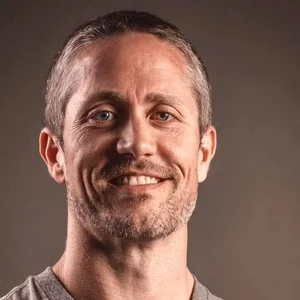
Why You're Exhausted After 8 Hours of Sleep, Even If You Don't Snore (Dr. Shereen Lim) | Ep 484
Doing the right workouts, eating well, and still waking up exhausted? What if your “good” sleep score is missing the real problem?
I talk with Dr. Shereen Lim, dentist, dental sleep medicine expert, and author of Breathe, Sleep, Thrive, about sleep-disordered breathing, airway health, and why women over 40 are so often missed.
You’ll learn why snoring, teeth grinding, mouth breathing, nocturia, and unrefreshed sleep can point to airway issues even when you’re lean, fit, and doing “everything right.”
We cover sleep apnea, upper airway resistance, CPAP, dental devices, palate expansion, mouth taping, and why nasal breathing matters for hormone health, metabolism, longevity, and evidence-based fitness.
Join Eat More Lift Heavy to build strength, lose fat, and learn what works for your body, 1 week at a time. Learn to eat more and lift heavy with confidence.
Timestamps:
0:00 – Why sleep still feels broken
2:27 – Sleep disordered breathing explained
4:52 – Jaw structure and airway collapse
7:43 – Midlife changes and women’s risk
9:36 – Sleep trackers versus real testing
11:40 – Grinding, nocturia, and red flags
15:19 – When mouth guards make breathing worse
16:35 – CPAP and dental device tradeoffs
21:46 – Mouth taping and tongue posture
Episode resources:
Dr. Lim’s book – Breathe, Sleep, Thrive
Website: drshereenlim.com.au
Facebook: @drshereenlim
Instagram: @dr.shereenlim
-
Why sleep still feels broken
Philip Pape 0:00
Are you doing all the right things for sleep and yet you're still waking up feeling tired? Maybe you get enough hours, maybe you've cut caffeine, you're taking magnesium, you have a cool bedroom, and yet something is off, even if you're lean and fit, and especially if you're over 40. Now, the problem might not be in your bedtime routine. It might have to do with your airway and not the loud gasping kind of sleep apnea that we're familiar with, but something a little bit behind the scenes that you can't necessarily see and you might not see in a sleep test either. My guest today is Dr. Shireen Lim, one of Australia's first dentists with a postgraduate qualification in dental sleep medicine. She's going to explain why your body changes as we age in ways that mess with your breathing at night. What signs to look for, what to do about it that may not be CPAP or another supplement. Welcome to Wits and Weights, where in every episode we put a popular piece of fitness advice under the microscope, find the hidden reason it doesn't work, and give you the deceptively simple fix that does. I'm your host, Philip Pape, and this episode today is about a sleep problem that many of you, even if you're relatively lean and healthy, and particularly if you're a woman over 40, might not realize you have. It's the reason you can potentially do everything right with your routine and your sleep hygiene and still wake up feeling like you didn't sleep. My guest today is Dr. Shireen Lim. She practices dental sleep medicine in Perth, Australia, and is one of the first dentists in the country to obtain a postgraduate qualification in the field. She's also the author of the book Breathe, Sleep, Thrive. Her broader work does cover airway development across the lifespan, but today we're going to focus on what happens in adults and especially adult women in midlife when it comes to sleep and often undiagnosed issues. You'll learn how to recognize these signs of sleep disordered breathing, while your sleep tracker or ring can show you a great score, even while your sleep is fragmented, and a range of interventions available to you so you can take proactive steps starting this week. Shireen, welcome to Wits and Weights.
Dr. Shereen Lim 2:07
Yeah, thanks very much for having me and for accommodating my time zone.
Philip Pape 2:11
No, absolutely. It's a lot of fun talking to folks from the other side of the world. And I've been listening to a lot of your work. I've read your book, and I'll say a lot of misunderstandings potentially about sleep issues and sleep apnea. And in my field, in our field, nutrition coaching, we often go right to bedtime routine and hygiene
Sleep disordered breathing explained
Philip Pape 2:27
and maybe sleep apnea and testing. And when a lot of people think about apnea, right, they're thinking about snoring, right, is the big one, being overweight, or maybe too much fat or even muscle around the neck. I know folks who are lifters who have an issue, they get, you know, big necks, things like that. What is the real picture on just sleep disordered breathing in general? Maybe start with a symptom. So if someone listening is experiencing them, they might recognize it. And then we can start to dig in on some specifics.
Dr. Shereen Lim 2:54
Yeah, so sleep disturbed breathing is really a spectrum of conditions that are related to a structurally narrow airway and increased collapsibility. So we have these interruptions to our sleep. And on the more severe end, we have obstructive sleep apnea where we have more prolonged pauses in breathing, and that can be linked to oxygen deprivation. But really, problems begin when mouth breathing starts. So even mouth breathing. And we have snoring, which is one of the first signs, as well as upper airway resistance syndrome. So we when we have not quite sleep apnea, but interruptions in our breathing. And rather than having the prolonged obstructions, there's an increased stress response, which helps to open up the airway with increased work of breathing, but it is very disruptive, even though we don't get the oxygen deprivations. So there's this continuum of problems, but they can all have the same symptoms. So that could be mouth breathing, teeth grinding, just like unexplained awakenings during sleep, people waking up and going to the toilet in the middle of the night, or feeling unrefreshed on waking. They're quite common symptoms that people with these problems may experience. And then in turn, there's going to be often problems with mood, daytime energy, and virtually every chronic health condition, there's an increased risk because we're not getting good quality restorative sleep.
Philip Pape 4:18
Yeah, and it's interesting because we don't often communicate about sleep from that physical perspective of the airway. And it's funny you mentioned some things that I've heard just about everybody experience to some extent teeth grinding myself. I wear a mouth guard, I have for years. So maybe I have an undiagnosed issue. But even like waking up throughout the night, sometimes unexplained, it comes out of nowhere. So I mean, you know, when you talk about like upper airway, I think you call it upper airway resistance syndrome, right? There's one of the things you mentioned as a risk factor is a small mouth. And I want to kind of separate like physical, genetic, structural limitations from maybe, you
Jaw structure and airway collapse
Philip Pape 4:52
know, behavioral, I guess it would be a good dichotomy to talk about. So, you know, you talk about stuff that happens in childhood, which we're our audience is past that point, right? But like extracting molars and crowding from braces and orthodontics. And a lot of our audiences had braces as kids, probably had teeth pulled, myself included. So, how does all that play in now that we're 45 years old or whatever, when it comes to upper airway and mouth size, let's say?
Dr. Shereen Lim 5:17
Yeah. Well, obstructive sleep apnea really is a developmental problem that begins from infancy. And a lot of it is related to how well our jaws are growing as well as how well the mouth of our muscles are working, including the tongue. And so, in terms of the jaw, the jaws really, the upper jaw or our palate is really the floor of our nose. So the more developed that upper jaw is, the better our breathing passages. It's also our tongue space, so we have more room for the tongue. But we really want the jaws to grow forward and wide because really they are the rigid support for our collapsible upper airway or throat. And so the more forward and wide they are, the less collapsible the airway will be. And so when we have problems like the extractions that you were talking about or crooked teeth, they're really indications that the jaws aren't growing properly. And, you know, a lot of the time when we think about airway, we think what is inside the nose and what is inside the throat. But really, it is those jaws that are really playing a very important structural contribution and very overlooked contribution to how well we're breathing. And so that's why we'll find that many dental type of interventions can work quite successfully, whether it is nighttime guards that reposition the lower jaw forward, palate expansion to widen the upper jaw, or double jaw surgery to bring the jaws forward. These are all interventions that can actually address the root cause or that poor airway development.
Philip Pape 6:58
Yeah, that's good to know that you touched on also can what we can do about it now. And I I did, I think it's chapter 11 of your book, and you guys should definitely pick it up if you're interested. If you have kids, I want to know kind of what to think about now and going forward, because my daughter just had braces as well. So I understand it, but also what can you do now? And and I would say that there are some interventions, like you mentioned, the surgery where you know we don't like to think about having surgery, but I think a lot of people aren't considering. So that's the mouth. You also talk about like the muscles of the throat. And I know there's a specific mention you make to how progesterone, for example, in in perimenopause, the decline in that per changes the dilator muscles or something of the throat, right? And so, like, even things like that, we're not thinking how our bodies change over time. And that and that affects how open
Midlife changes and women’s risk
Philip Pape 7:43
the throat is. So, does this explain a lot of why people, when they age, you know, start to experience issues independent of sleep apnea, or is it also part of the sleep apnea discussion?
Dr. Shereen Lim 7:52
Yeah. So as we age, we're going to have reduced tone of our muscles. And even for women where we have progesterone, it actually is an upper airway dilator muscle. So that helps to keep our throat or our collapsible airway open. So as we have less of that around perimenopause, menopause, we're going to have more sleep disruption because we're not as effective at keeping our throat open.
Philip Pape 8:17
So that's interesting that progesterone, you know, causes that to change. And, you know, I wonder what else with age affects what happens with our sleep. But let's get practical, right? Because people are listening or using sleep trackers, right? I have an aura ring, right? People have the watch and the whoop and all that. And I think we're relying a lot on the score. But is there a gap between like what that says or the fragmentation of your sleep, like REM and deep and all that, and reality? That's kind of one part of my question. And then also, does it miss out on measuring something altogether, if that makes sense?
Dr. Shereen Lim 8:49
Yeah, I think the sleep trackers are good to get a general indication of the sleep quality, especially if there's symptoms and trying, and really good for people that want some validation that there's something going on to get further sleep testing for this. But I think that they're more likely to pick up more significant or severe breathing problems, and less so the more subtle disturbances. They don't really tell us exactly how much the airflow is being limited or how hard we're having to work. It's really made me picking up the more prolonged obstructions where we might get the oxygen deprivation, where we can measure, you know, the oxygen saturation, but not necessarily the more subtle disturbances, which can also fragment or lead
Sleep trackers versus real testing
Dr. Shereen Lim 9:36
to very unrestorative sleep.
Philip Pape 9:37
Okay. And would that then show up at least in the sleep stages? Or is that even potentially like you can have an issue with your airway or airflow speed or some of the things you mentioned, but you're not really going to see that symptomatically in like how the stages are measured, like RAM and deep and such?
Dr. Shereen Lim 9:53
Yeah, I think when you have a sleep study in a lab, there's sensors and it can really measure all your brainwave activity. It's just a little bit more accurate, and that will give us more information than a sleep tracker. Generally speaking, I think the sleep trackers are really effective more at picking up when there's more serious problems, but when there's more subtle disturbances, we often need to get more detailed sensors and information.
Philip Pape 10:20
So tell us about the testing then, you know, because the people are confused about that as well. Like what how do they even get it? What is it? What kind of sleep testing is it? Is it for, you know, am I getting tested specifically for like a CPAP machine, or is it a broader test? What are you referring to there?
Dr. Shereen Lim 10:34
I think if people are having sleep concerns, like they're having unexplained fatigue or different things, whether it be heart disease and we want to work out what is the extent of breathing conditions, the gold standard really is going into a sleep lab, and they have a lot of sensors that measure brainwave activity, how much the airflow is limited, the snoring, the sounds, the movement, and we can get the most accurate information. Whereas we can also do things like here, we can get a test at a pharmacy and do it at home, and it may not have any as many sensors and leads. So it might give more obvious data, like when there's big drops in oxygenation, but we don't really know exactly what's happening in terms of how aroused we're sleeping or just those subtle restrictions in airflow where we're not getting those desaturations, but we're working so hard to breathe.
Philip Pape 11:30
Yeah. Yeah. Yeah, in like so a lot of my audiences in the US, you're in Australia, we have people all over the world. Like, is how would you what's the first step you would take to get a sleep test, a good
Grinding, nocturia, and red flags
Philip Pape 11:40
one at a lab?
Dr. Shereen Lim 11:40
Oh, I mean, I'm sure it's really different in different countries. Okay. But for us, usually like we have to get a GP referral, which is from a general medical doctor, to get a Medicare rebate where we'll get it reimbursed. Yeah, so it's a bit of a process. Yeah, so go through your doctor. Yes, yeah.
Philip Pape 12:00
All right. Then, you know, I know you listed some things that I have never heard before in your book, or maybe I've heard, but you know, they're good ideas. You talk about stomach sleeping as a red flag, having like vivid dreams that you actually remember, or maybe not remembering your dreams. You talk about cold hands and feet, low blood pressure. Like, walk us through which of these red flags might be the strongest self-screening clues if you're you know you're not having having gone to a lab yet, but physiologically, like what how should we rank these things or tell us the the big ones?
Dr. Shereen Lim 12:29
Yeah, I think unexplained awakenings, waking up, you know, often going to the toilet at night because we're awake, so not having a reason because that could be an interruption from breathing that's leading to an arousal and teeth grinding. Teeth grinding is a really strong red flag. So teeth grinding uh is thought to be a stress response when there is an obstruction, so our airflow airway is collapsing, and there's that interruption to our airflow. Teeth grinding can be quite protective against sleep apnea where there's a complete obstruction of the airway. Yeah.
Philip Pape 13:00
I see disruption. Okay.
Dr. Shereen Lim 13:02
What happens is it's fight or flight response. Grind the teeth, recruit the muscles, opens it up. And so, therefore, we don't actually have that prolonged obstruction. But every time that's happening, there is an arousal from sleep. So it's getting from deep to light sleep, and in terms of sleep staging, it's going back into the lighter ends and having to start again. So never entering those deep sleep phases, which are quite restorative. And that's why a lot of people that have that teeth grinding, they're probably more likely to have upper airway resistance syndrome than obstructive sleep apnea. Obstructive sleep apnea, you might feel more sleepy, whereas that teeth grinding the upper airway resistance might be more fatigued, you know, just feeling that unrefreshed, tired, unexplained tiredness.
Philip Pape 13:50
Yeah, that's interesting. And and just listeners notice Dr. Lim is talking about, you know, sleep apnea as one thing and then the upper airway syndrome as as another. And so it's important to try to figure out which one of these it might be. I was actually, I know you talk about a lot about the jaw, but like what if someone has an unexplained clicking in their jaw that starts to present that wasn't there before? Is that related to something we should be concerned about related to sleep, or is that more of a separate dental issue?
Dr. Shereen Lim 14:15
Yes, I I think they can be somewhat linked if they have a clicking. For me, that usually indicates there's a mismatch between our structure and our function, where our jaw structures and our muscles aren't quite in harmony. And that usually tells me that there's probably some underdevelopment of the jaws, which is undevelopment, underdevelopment of our airway structures and some degree of limited airflow. So really understanding that when the jaws are not properly developed or when we have orthodontic problems or we're needing to extract teeth to alleviate dental crowding, really that is a structural limitation of our airway.
Philip Pape 14:54
Got it. Does the have actually having a guard help is it a good helpful first step, or is it making it worse in some way?
Dr. Shereen Lim 15:00
Yeah. So if we have grinding, we should try to investigate are there any other symptoms of disturbed sleep, the mouth breathing, the snoring, the choking or the gasping for breathing, all those symptoms, the restlessness, tossing, turning, nocturia, going to the toilet,
When mouth guards make breathing worse
Dr. Shereen Lim 15:19
those type of symptoms, we may be better off looking at is there an underlying sleep disturbance? Because there has been some research to suggest that when we put a guard, the typical guards that protect the teeth from grinding, it can actually aggravate breathing problems. Because what happens when we put a piece of plastic in between the teeth, it actually swings the lower jaw backwards. And so as we swing that lower jaw backwards, it pinches into the airway, and that tongue is more likely to be pushed back, which can actually create more problems as well. So some people will not be able to tolerate it. They won't be able to sleep well, they'll find it out by the side of their bed. So I think your question was about the sleep grinding appliances. Yeah, yeah.
Philip Pape 16:05
If it could make it worse, and you said it could, and yeah, could help, could make it worse. Okay. Yeah. Yeah. So now let's get to CPAP, right? And like I think mandibular advancement. I have that in my notes. As are the, you know, are these like are these band-aids? Are these helpful? Like again, are they should should we skip them and go straight to like, okay, if you at that point you need something more severe done, or where does it fit in the toolbox?
Dr. Shereen Lim 16:26
Yeah. So I mean, one of the challenges in sleep medicine is that everyone's so focused on this end stage problem, which is obstructive sleep apnea. And it's really
CPAP and dental device tradeoffs
Dr. Shereen Lim 16:35
very arbitrary. Like to get this diagnosis, you need to stop breathing for 10 seconds or more on average, five or more times per hour of sleep. So if that number is less than five, you won't get that diagnosis. But you could still have very similar problems where there's this collapsibility and really disturbed breathing. So a lot of the times when you have obstructive sleep apnea, the gold standard of treatment is going to be CPAP. So with CPAP, really it is high pressure airflow. It's essentially like a reverse vacuum cleaner. It blows air through often through the nose and it just spints or keeps the airway open. So that is quite effective. It's the gold standard. We know that it works. It keeps all the parts of the airway open and prevents it from collapsing. So that's usually this what people are offered. Even though it's quite effective, many people can't tolerate it. So even if they use it, many people will only use it half the night. Or even if they use it, many people will not be able to continue it all the time. Yeah, this is what a lot of places are offering as a treatment. We have the mandibular advancement devices, which are dental appliances. They're worn inside the mouth only during sleep. And what these do is they help position the lower jaw forward. So you advance the lower jaw forward, as the lower jaw comes forward, it actually stretches open the walls of the throat to keep that open, and it helps pull the tongue forward as well. So what it does, it helps to keep the throat open during sleep. The problem with these solutions is that they're nighttime band-aids. So they really address the symptom, which is that collapse of the airway during sleep. But what we really should be more focused on is restoring airway health. So when I talk about airway health, I'm really talking about nasal breathing. Nasal breathing is really the foundation for good breathing, good sleep, and good health. And we also need to pay attention to good jaw development or that structural framework for the airway, that rigid structure, and how well the muscles of our throat and our tongue are working, or how well our lips are closing so that we're breathing really well. Because if we pay attention to airway health, that is 24-7. It's not just alleviating the nighttime problem. Nasal breathing, like a lot of people don't even recognize that's how we're supposed to breathe. When we breathe through our nose, it's just warms, filters, humidifies the air, prepares it before it enters our body. We get nitric oxide, which is produced in the paranasal sinuses. So it's antimicrobial and it's a vasodilator, which promotes good oxygen exchange. And it's just really, if we close our mouth and we breathe through our nose, it promotes good muscle tone. Because if we have our mouth open and we snore and we close our mouth and we snore, we're gonna find that everything is more floppy and relaxed when we have our open mouth. Yeah. So the future really is looking at how we can promote health and 24-7 better breathing and going for more targeted options to address the structures as well as the muscles.
Philip Pape 19:55
Okay, and I'm sure that's a very long list. So just just in terms of the nasal breathing, and I know you you refer to myofunctional therapy, which is like working on your tongues and lips and parts of your face. Like, what are some very practical things people listening right now, you know, today, they could do an exercise, for example, maybe incorporate it as a five-minute part of their daily routine?
Dr. Shereen Lim 20:15
First of all, I'd really want everyone to understand nasal breathing is so important. And a lot of people would go to an ear, nose, and throat doctor, and they're looking at is there anything deviated or is there anything that we can take out of the nose, like turbinates, adenoids, and things like that. So I'd really want people to understand because often people will have nasal surgery and it might not work out. There's still persistent nasal obstruction. I see this a lot of the time where people go for the nasal surgery, it doesn't work so well, and they still can't breathe well. I want people to recognize that the palate or the upper jaw has a very important structural role in nasal breathing. So if we have a narrow palate, we're going to have increased resistance to nasal airflow. And if we understand that air nasal airflow or nasal breathing is really important, then palate expansion is a really good targeted option to address that palate. Yeah. So I think I want people to understand that we need to pay attention to the jaws and nasal breathing is so important, but the palate is really critical for our nasal breathing. But in terms of what is a simple thing that people can do, like in terms of nighttime band-aids, really a lot of people will put mouth tape, a little bit of porous tape, just across their lips to help their lips close together. And oftentimes people will find that their sleep is
Mouth taping and tongue posture
Dr. Shereen Lim 21:46
more solid. They'll wake up and they'll feel fresher, less mouth dried, their mouth is less dried, and people will have less headaches. So I hear that a lot as well. And it is a band aid, but we can do my Functional therapy as well, which is really retraining the muscles, retraining how to close the lips or being more aware of it or where to put our tongue. Like the roof, the tongue really belongs in the roof of the mouth. So we want to be aware when we say and we lift our tongue, that is where the tip of the tongue should rest normally. Yeah. But if it rests on the teeth, that's a low tongue posture, that is not going to be as good as for our breathing. If we have it up, we're less likely to breathe through our mouth. So that's just something to be aware of. Myofunctional therapy can retrain those habits. But you know, you know, obviously we need to look for anything that is obstructing or allergies, making sure that we have nasal sprays to clear our nose and free up the nasal passages. And again, the palate expansion.
Philip Pape 22:52
Okay, those are really helpful. Give me some ideas to look into the mouth tape, but definitely, you know, thinking about tongue posture and how do you promote nasal breathing? We'll include, you know, some good resources to connect with you at the end to kind of look into some of this and what you can do about it. Yeah, fascinating. So, should when should a listener then hearing all this actually then pursue like a formal sleep study? And is there something they should include or ask about? You know how like when we go get blood labs, it's like you sometimes have to be very specific about what you're looking for, else the normal test isn't going to look at it. Do you have any advice on that front?
Dr. Shereen Lim 23:27
Yeah, I think when should we go for a sleep study? Whenever there's any snoring or gasping or sudden awakenings from sleep, if there's any heart conditions, because we know that these disturbed breathing conditions are linked to increased risk of heart disease, their chronic stresses. Yeah, anytime there is a concern where people don't feel their sleep is refreshing, it's quite fragmented. The sleep study can be very useful. And here I think if you go to the doctor, they should be able to have various criteria. If it is a more obvious high suspicion of severe sleep apnea or that severe end problem, you can get a more basic test. But if it's more subtle and we're unsure, maybe you have to have a more comprehensive lab test with more information.
Philip Pape 24:17
Okay, so is there anything about like women in perimenopause that we didn't cover earlier? I know we mentioned the progesterone, but I'm I know you again talk about different segments of the population in your book. Is there anything else we should bring up for our listeners?
Dr. Shereen Lim 24:30
Yeah, I think women are so easily missed because the stereotype of obstructive sleep apnea is an overweight, obese male that falls asleep and has loud snoring. Uh, whereas females are more likely to be affected by upper airway resistance syndrome, the more subtle breathing responses, disturbances. And they may not even snore. It may be mouth breathing and some increased efforts to breathe. And then people think their unrefreshed sleep is related to menopause or being really busy working, having children, looking after family. And then they may be put on things like anti-anxiety medications or antidepressants without getting their sleep looked at. But really, when we have that very high sympathetic nervous system response chronically, because there is this collapsible upper airway, many women may be affected by things like functional somatic syndromes, where we there is just a heightened response to low stimulus, and it might look like irritable bowel syndrome or temporomandibular joint dysfunction, those type of conditions, or anxiety or insomnia, where sleep is not particularly restful, and then people find it difficult to get to sleep because it doesn't feel peaceful on a subconscious level. And if we can actually understand that there could be an underlying breathing disturbance before we medicate people, it may be worthwhile checking this out. And really for those people really understanding that it's not the obesity that's the problem, it's going to be their jaw structures. Who has that narrow palate, the recessed lower jaw, the history of orthodontic extractions? So there is a lot of women that are suffering with these problems that are undiagnosed. And even looking at tongue tie, where we have the connection between the undersurface of the tongue, that connective tissue connection, and the floor of the mouth is abnormally short or tight, and it doesn't allow the tongue to lift well and the tongue lies low. And when the tongue lies low, we're more prone to mouth breathing, and the base of the tongue is more likely to create obstruction of the airway. But when we're children as well, we really need that tongue elevation to help mold the palate. So these people are more likely to have the narrow palates as well. So all these risk factors there. So I think when we have women that have these problems, we're trying to get more people to understand that we need to pay attention to these more subtle breathing disturbances. But there's a the developmental origins of all these sleep diseases, really how the jaw structures are formed early on in childhood. And form follows function. And I really want people to not just be looking for these end stage problems and reacting whenever we have disease to promote healthy breathing around the clock and not undervaluing the contribution of the jaw structures. Otherwise, it's too easy to get people to go for CPAP and they're not offered other options. And a lot of women won't be able to tolerate that. And then they're at a dead end and they can't really get further treatment. But women may benefit particularly well from palate expansion, and it can actually help them as they get older. Well, help us as we get older when we're more affected by, you know, the low muscle tone and that reduced progesterone and that increased collapsibility, it can help protect us from more severe problems as we get older.
Philip Pape 28:07
Yeah, that's really fascinating. I think about how we do cover up a lot of symptoms with band-aids and pharmaceuticals and things like that. And you know, we talk a lot about things like gut health, for example, as you know, everything goes through your body from your mouth to the the other side, and how important it is. Well, I think of this as a comparable, right? The airway. I mean, you literally breathe every second of your entire life and you sleep a third of your life. So, folks listening, like think about this as one of those powerful areas of the toolbox where you could at least get things checked out, at least get things tested, learn about it, right? Revisit this show and take some notes. Is there anything you wish I had asked that we didn't cover today?
Dr. Shereen Lim 28:46
Yeah, I think, well, my passion is children's airway health. I really became involved in this area because of my husband's snoring and really wanting to get to the root cause. If if we can do dental devices that can reposition or expand the jaws, why don't we do this earlier in children when they're growing well? And so for your listeners that have children or even grandchildren, to recognize that one of the best things that we can do for children to help stave off this problem as people get older is to promote nasal breathing, healthy nasal breathing, especially when children growing in those first six years of life. Because when we mouth breathe and we have that open mouth posture, it promotes really low muscle tone. We're going to develop more narrow palates and more recessed jaws. And these are risk factors for poor airway in the future.
Philip Pape 29:38
Okay, so definitely it starts with childhood. And again, a lot of our listeners are moms. So let's send people to find you and reach out to you and definitely check out the book. I do think it's a good book, and you don't find a lot of these on the market on this topic. So besides the book, which we'll send folks to, Shireen, where would you like folks to reach out to you?
Dr. Shereen Lim 29:55
Yeah, I mean, I'm the most active on Facebook. I use that a lot as well as Instagram. You can just follow. I like I like to share cases and what I'm looking at. But I do have a website, Dr. Shereen Lim. You can find lots of information there too.
Philip Pape 30:06
All right. So your website, Facebook, Instagram, we'll send people there. Check out the book. Dr. Lim, it's been a pleasure talking about these. It's fascinating. And I hope people, you know, think about, you know, how to improve their nasal breathing and their jaw structure and get things checked out and sleep better. Sleep, sleep, higher quality sleep, and great for your health. Okay. Thanks so much for coming on Wits and Weights. Thank you for the opportunity, Philip.