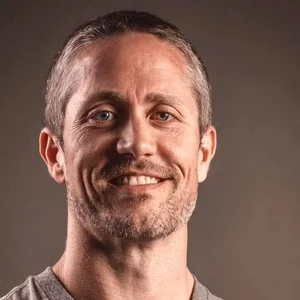
Why "Moderation" Fails and What Actually Stops Binge Eating (Dr. Glenn Livingston) | Ep 442
Why does “just eat in moderation” fail so often? Why do binge eating and emotional eating feel stronger than your willpower?
I’m joined by psychologist and former food industry insider Dr. Glenn Livingston to break down what’s actually happening in your brain.
We unpack the neuroscience of cravings and why a healthy brain can struggle in a hyperpalatable food environment. You’ll learn how food cues override hunger signals and quietly sabotage your nutrition and fitness goals.
If you want to build muscle, lose fat, or improve body recomp, you need to understand why rigid calorie cutting and relying on willpower almost always backfire. That’s why we talk about engineering your environment instead of fighting yourself.
We focus on structure, clear food rules, and reducing decision fatigue so you’re not negotiating with cravings all day. You’ll walk away with evidence-based strategies that make sustainable weight loss possible without constant mental friction.
Get Fitness Lab (20% off for listeners), the over 40 coaching app that adapts to YOUR recovery, YOUR schedule, and YOUR body. Build muscle, lose fat, and get stronger with daily personalized guidance.
Timestamps:
0:00 – What cravings really are
6:25 – What causes cravings
13:25 – Managing triggers and food cues
21:29 – Extinction bursts explained
30:45 – Rules vs willpower
39:48 – Identity and habit engineering
51:50 – Free resources to defeat cravings
Episode resources:
Free Book (and bonuses): Defeat Your Cravings - The Back Door to Weight Loss
LinkedIn: linkedin.com/in/drglennlivingston
YouTube: @DefeatYourCravings
-
Philip Pape: 0:01
If you struggle with food, you eat past fullness, you often give in to your cravings, or you find yourself reaching for foods that you told yourself you wouldn't eat, this episode is for you. Today we're going to uncover why the idea of eating in moderation doesn't work for most people. How to stop binge eating and emotional eating for good by understanding the science of your brain. My guest used to consult for the food industry and spent decades researching overeating with more than 40,000 participants. He knows exactly how cravings hijack your brain, and more importantly, how to take back control without relying on willpower. Maybe you don't, but that is binge eating, emotional eating, the cravings that seem to override even your best intentions. My guest today is Dr. Glenn Livingston, who is on the show in episode 30. We're talking way back in the archives, and we're having him back because he is a psychologist. He's former CEO of a consulting firm that worked with Fortune 500 food companies. So a little inside information and author of the best-selling book, Never Binge Again, and his latest book available for free called Defeat Your Cravings: The Backdoor to Weight Loss. Glenn spent years on the inside of the food industry learning exactly how companies engineer products to be irresistible. Then he turned that knowledge around and conducted research with over 40,000 participants to figure out what actually stops overeating. Today you're going to learn why the advice to just eat in moderation often backfires, how your brain creates false survival signals around food, and a framework for building rock-solid rules about food that don't require constant willpower. So whether you've struggled with binging, emotional eating, or feeling out of control around certain foods, Glenn's here to share some practical tools grounded in psychology and neuroscience. Welcome back to the show, Glenn.
Dr. Glenn Livingston: 2:15
Thank you so much. It's a delight to be here. And hey, let me just say that the book to read, if you want to, is the The Future Cravings book. The first book is more popular, but it's 10 years old and not really updated for the science and experience with 2,000 clients and whatnot. So just wanted to clarify that. And I'm happy to be here and talk about any and all of it.
Philip Pape: 2:35
Well, then I'm glad I mentioned it. So listeners have context in case they do go back to our old uh episode that maybe some of that is out of date. So let's move it forward, which I appreciate too, Glenn, because I'm always skeptical and wanting to question my own knowledge of things. And I'm glad you do the same. And we've discussed hunger a lot on this show, physical hunger, emotional hunger, uh, habit-based hunger, all of that. And I invited you on specifically to discuss cravings, which can be very, very intense for some people. I'm, you know, we have clients, we have people, of course, now taking GOP1s who talk about food noise and talk about just the incessant uh voice in their head. So let's start with definitions, right? What is a craving? What do we mean by that? And then we can go from there.
Dr. Glenn Livingston: 3:16
Well, a craving is an intense motivation to go get a particular food stuff. And it could be a real food stuff or it could be uh food stuff that's faking us out from some of the, you know, processed food engineering companies. And it's usually linked to a specific trigger, a specific cue in the environment. But if you just as on a very practical basis, it's important to recognize that cravings are actually a sign of a healthy brain doing its job in a sick food environment. A hundred thousand years ago, when we, you know, there were no chocolate bars and Doritos on the savannah, and food was probably a little bit scarce. It was the people who had the strongest cravings that were going to feel most motivated to do what it took to go out and get the food to survive. So a craving brain was a surviving brain. And this is why I tell people that your brain actually thinks it's keeping you alive by binge eating. And this is why it can be so pernicious and difficult to overcome. However, it's easier to overcome once you recognize that you are dealing with health and not disease, because there's a lot of misinformation in our culture that suggests that it's a disease brain that has these overwhelming cravings, but it's it's just not true. It's the same mechanisms that develop intense cravings in the brain, are the same structures that will kill the craving or label it dormant or extinguish the craving is the term we have in the behavioral literature. So got cravings, good. You have a healthy working brain. That's the first thing you you need to know. The second thing is that it's usually linked to a specific trigger. And the reason for that is our brain was set up to efficiently find food. So a caveman, let's call him Thag, T-H-A-G, because I like the name. And say Thag 100,000 years ago runs into a monkey, and he follows that monkey to a banana tree, gets a whole bunch of bananas, his family survives a little better, he's nice and full, gets all this nutrition. So Thag's brain says, that was a good deal. I think monkeys are a good thing. Let's look for monkeys, and when we see them, let's get all excited and let's go, you know, get motivated and go find another tree. Thag follows another monkey to a tree, thag follows another monkey to a tree, it's always leading to bananas. Now Thag has a cue. The monkey is a food cue and a reward, the banana, and it's reliable. So that that saves Thag uh time, energy, and resources. It takes time, energy, and resources. And so his brain looks to automate that. The brain doesn't want Thag to be thinking, gee, maybe I should follow the monkey, maybe I shouldn't. It wants to say, monkeys, go, you know, get excited, go get the bananas. So it dumps out a whole bunch of dopamine, uh, sometimes in serotonin also. And if Thag sees a monkey and he doesn't follow that monkey to the tree, Thag's reign punishes him by dipping the dopamine and making him very uncomfortable and miserable. So that's how cravings work. And the modern-day equivalent is you are driving home and you see the donuts for a sign, and you know that signals the availability of thousands of calories of donuts for not that much money right around the corner. And so you drive into the store and you almost automatically go into the store and pick out the donuts and pay the nice lady behind the counter and get into your car, drive from the back of the parking lot, and you know, it's it's almost like you're not even there. It feels like it's all automated. That's your brain doing its job. It's having a bad impact in our sick food environment, but that's your brain doing its job. Nothing wrong with your brain for doing that. And that's good news because it means that you can extinguish that craving. So that's what a craving is. Cravings could be linked to internal events like emotions. It might be that when you felt depressed, your mother noticed and gave you a chocolate bar like mine did, right? Or, you know, when you were agitated like the women in the Golden Girls would frequently get to say, okay, I'll go get the cheesecake. Well, your brain gets used to the fact that if you're agitated or depressed, that these rewards are available, and people say, Well, they're emotionally eating. The stronger force there, there is an anesthetic force, an anesthetic impact of overloading your digestive system, it makes it difficult for the nervous system to conduct emotions. But the stronger effect, by my estimates and what I've seen, is that you've taught your body that cheesecake is available when you get agitated, and you're actually teaching your body to get more agitated so you can get more cheesecake. People think that it's a one-way relationship, but actually emotional leading goes both ways. Um, if you get really anxious and then you get sugar, then your body's going to learn to produce more anxiety to get more sugar. This kind of blows people's mind sometimes, but it's part of what's happening that goes, it gets covered over by the idea of emotional leading or eating to numb out or eating for comfort. Where that's what I tell people, we're not really eating for comfort, we're eating to get high with food.
Philip Pape: 8:37
I am processing. I'm listening carefully because I want the listener to take it all in. Let me just recap real quick before I get the thoughts out. It's a healthy brain doing its job. So that's what you said. It's a healthy brain doing its job in a sick food environment. And that's important, right? Because a lot of folks struggling with the food noise that again, I constantly bring up these medications today because that's where a lot of the uh marketing is around today. It is marketed as a disease, and it you're saying that's not the case, and that the same mechanism that causes that can extinguish the craving. So that's one thing. The other that it is linked to triggers and cues uh because it's more efficient for us to do so, given our the way our brain evolved, and it's an automated thing, but it's bi-directional, and it's not necessarily okay, this emotion causes this, it could go both ways. So that's a really good thing to understand. My question is like, if I go to get some gas and I walk into Cumberland Form farms, I see the bakery uh rack with the beautiful glazed donuts and the muffins, right? I have certain responses, but I see different responses in different people, kind of like a spectrum. And I see these responses change over time. And I'm sure we're gonna get into what we can do about this. What I've seen is like the response, like you said, you're literally on autopilot and you just get the thing and you can't help yourself. There's the opposite extreme of that's feels like you can't. Or feels like that. Okay, yeah, yeah. The perception of it or the expression of it, right? And then the other side is that's gross. I don't even feel like it. I have no appetite for it, whatever. And then kind of in between, you know, and I've always considered myself personally in between, where depending on how hungry I am and depending on the situation in my life, I might go for it and I might not. And there's an element of we a lot of us think willpower, right, which we want to address. So given that spectrum, I don't know if you were gonna go to a next thought before I uh stopped you here, but practical terms, right, Nat, we want to understand the actions or the interrupt, I guess we can take, given that psychology. I assume that's the next step.
Dr. Glenn Livingston: 10:29
Yeah, it would be a little more helpful if I helped if people understood how the cravings are extinguished. Great so that because most people make mistakes and they just try to go code turkey or um they they don't really understand what they're getting into when they do that. And or they'll try to moderate when they're not really able to moderate. So, but yes, I'm going to tell you how to eliminate that. And I'll I'll I'll keep an eye on the time also so that we have time to do all of the things.
Philip Pape: 10:53
Oh, we'll get there. No worries.
Dr. Glenn Livingston: 10:54
Um and okay. So the important thing I want people to understand is you're not powerless, it's not a disease. If you think that you are powerless and diseased, then it makes you much more prone to saying, Oh, I'll just I just give up. I just might as well be a happy fat person because there's no way to beat this, right? So there is a way to beat this, and there's a difference between something being impossible to resist and something being very difficult to resist. Like if there are there are well-worn paths up this mountain, and you still have to hike up the mountain. It's not a cakewalk to use all puns intended, but you there are well-worn paths and easy ways to get up the mountain. You just have to keep putting one foot in front of the other until you until you get there. So there's a difference between feeling impossible and something being impossible. And that's why I interrupted in the way that I did. Okay. So what's important from the food stimulus conversation is to understand that the cravings are specific to food stimuli. So if you're struggling with donuts, it's not just the donut store that's a problem. It could be that maybe you played poker with the guys and your friend's wife brought donuts over. And so you associate the poker chips and hanging out with the guys at the table with any donuts. Or it's the you know, visit to your mom's house on Saturday mornings and she was always and that's important because when you go to extinguish a craving, people will often extinguish it in the situations where the trigger occurs frequently and they forget about those other infrequent triggers. So if I decide I'm not going to stop at the donut store, whatever it takes, I'm not going to stop, I'm going to extinguish that. And I do that for 30 or 45 days, and then my brain labels it dormant, so it's not bothering me anymore. And all of a sudden, my mom invites me over and it's Saturday morning, and there are donuts on the table. Why do I have this horrendous donut craving on Saturday morning? I must have failed. This is too hard. I just give up, right? That's what happens to a lot of people. But you didn't fail. You succeeded at extinguishing the donut store sign as a stimulus for donuts. You did not extinguish your mother's house as a stimulus for donuts. You kind of have to make a list of where you're going to encounter this. And then it's a matter of having enough exposures, you know, day by day, week by week, to those stimuli and not rewarding it so that you can extinguish the problem.
Philip Pape: 13:29
I want to connect this to something we do talk about on the show a lot, which is having if-then strategies and knowing that everybody everyone's life has a unique set of circumstances, but those circumstances tend to be repeatable or patterns, or you do things a lot over and over again. And if you just take the mindfulness to sit down and say, what where are these situations that usually do a roadblock or friction? I can inventory them and cover 80, 90% of my life that way. That's what comes to mind for me. Yep.
Dr. Glenn Livingston: 13:55
Right. And what that might look like is okay, I know that I go into my mom's house at the end of the month on Saturday, and that's a trouble spot for me. So I'm going to send a reminder to myself. One of my favorite things to do is set a Gmail to send me an email three weeks down the road. Right. Snooze it.
Philip Pape: 14:14
Yeah. Schedule it. Yeah.
Dr. Glenn Livingston: 14:16
I just send a reminder to myself and I say, it's going to be tempting at mom's house for breakfast. Make sure you eat something substantial beforehand. And I might actually even plan out what I'm going to eat. And maybe even the day before that, I'll say you have to go shopping for this and make sure you have inventory on hand. Let today's Glenn take care of tomorrow's Glen.
Philip Pape: 14:35
Hold on, I have to laugh about that because if people saw the reminders in my phones, I've got a reminder every day for fiber and berries. You know what I mean? Like I want to be eating more berries now.
Dr. Glenn Livingston: 14:43
So these help. These help. Well, no, and this is part of what's newer in my thinking, because originally I was all about fighting it out at the moment of temptation. You know, it was me versus my inner, you called out my inner pig. It's kind of embarrassing, but that's what I called it. And I would figure out what it was saying, and then I would take a deep breath and I would say, why is that wrong? Uh, you know, my pig would say, you can just start tomorrow, have the silly chocolate today. You worked out hard enough, you're not going to gain any weight. And I'd say, wait a minute, I can't start tomorrow because the way neuroplasticity works. If I have a craving for chocolate and I eat it today, and I say I'm just going to start tomorrow, then I reinforce the craving and I reinforce the thought. So I'm more likely to say, start tomorrow, tomorrow, and I'm going to have a deeper craving tomorrow. I can only ever use the present moment to be healthy. I call that fixing your thinking or a cognitive refutation. That's what my early work was about. That's how I originally recovered and got from 300 pounds down to about 220, which is somewhere around where I hover. However, over the next 10 years working with 2,000 people, I saw that that wasn't enough for a lot of people because we got really good. We had an agency, we had 10 coaches working with us, and you know, we work with thousands of people. And within a month, we would get them down in their binge eating by about 89%, 89%, 90%. But at six months or a year, there were two groups. There was a group that'd go all the way back up and just forgot about it. And then there was another group that was down at like 70 to 80% of you know of the success that they had. And when I investigated that, what I found out was that it was because they eventually said, oh well, what the hell? I just really want to screw it, just do it. I don't have any excuses. You eliminated all my excuses, but I just really want that cheesecake. And it turned out when I investigated that, that that phenomenon seems to be driven by what I would call a fancy word is organismic dysregulation. Another word for it is stress, where you don't get enough nutrition regularly, reliably, where you don't get enough sleep, where you don't have enough social contact, where you are making too many decisions over the course of the day and wearing down your willpower. You're allowing yourself to become organismically distressed. And then this brings us back to the original conversation, which is that more and more I'm finding that the problem starts upstream. Uh Publius Cyrus said that rivers are easier to cross at their source when they're a trickle rather than a roaring stream. When you find that you can't resist having a bag of potato chips or five, probably you got dysregulated somewhere upstream. And so if you have reminders to have berries and fiber, if you develop structure and systems that make you do your food prep and food shopping on Sundays and Wednesdays, if you, you know, have a little email to yourself that says, hey, it's nine o'clock, you ought to get to bed soon, you know, and you put these structures in your life that keep you more regulated, not that it's possible to be totally regulated, but if you do that, you'll find that your brain allows you to be rational about food and stick to your best-late plans much more frequently. Our brains are also set up to seize what it believes are very scarce resources or to deal with false emergencies, what it perceives to be an emergency. And when you get dysregulated, when you don't have enough nutrition or sleep or whatever or social contact, you start to feel like you're in an emergency situation. And you know, that chocolate bar in the counter looks better and better no matter what your rules were for how and when you wanted to have chocolate. So, which is all to say that's a really big part of eliminating cravings, is developing systems and structures to keep yourself regulated and to understand that an extinction event, when you're deciding that you want to quit going to the donut store as you pass it on the way home from work, because you're developing a punch would be the word. If when you decide that you want to do that, that's actually going to put some stress on your body. You're going to have really intense cravings. The only way out is through. So look to support yourself in every other way. It takes 30 to 45 days to extinguish a regular daily habit. And during that time, you're going to feel stressed otherwise. So get some more sleep. Look at your nutrition. Don't try to lose weight during that period of time. It might happen anyway, but don't try to lose weight during that period of time. Look at your sleep, look at everything else you can do. Baby yourself by 30 to 45 days saying, look, this habit is killing me, right? This is the most important health thing that I need to change about myself. This is the most important habit that I need to engineer your habit. And so I'm going to do everything, whatever it takes, to get through that.
Philip Pape: 19:42
I would say, in the time since you and I last spoke, you know, my thinking has coalesced around systems and engineering. I mean, in fact, it's in my tagline for the show of having structure. And it's funny you mention all of this because we talk about avoiding calorie deficits as much as you can until you set up, you know, your strength training and your sleep and your other lifestyle habits to give you the best metabolism, firing on all fronts, but also the best mental state and also the extreme of what happens to physique competitors and how negative, you know, all the negative aspects of that on the other end of dieting. So we focus on that a lot. And also talking about upstream root causes having more costly outcomes downstream is a great concept as well, because it definitely takes a lot less friction and effort. And it's that one step at a time mentality now in small ways that pay off in big ways down the road. I was talking to somebody yesterday, he's Chinese and he loosely translated a Chinese proverb. It said something like, beware the cost of standing still or accept the cost of moving forward and beware the cost of standing still. Something like that. It's like taking one step forward. I butchered that. I butchered that. But no, no, no, but but but if you're going to be serious about it, be serious about it.
Dr. Glenn Livingston: 20:57
It requires some time and effort to build the structure to change.
Philip Pape: 21:00
So we love all of this. And and I'll be honest, you know, the philosophy, like you said, your your own thinking has evolved along the way, was probably a little more obtuse to get someone's head around. I don't know if you found that to be the case, or the fact that people, the recurrence rate of the binge eating, you know, increased and came back and gave you the information to say maybe this isn't the approach. What we really need is structure. I just kind of wanted to close the loop on on you. And then using the word engineer your habit, thank you for doing that. That's exactly what we want to do here. Yeah.
Dr. Glenn Livingston: 21:29
Yeah. Well, I mean, like in retrospect, if you get to the moment of temptation and you're thinking effort, then you failed before. You failed way way something failed way before then. And so all the effort at the moment of temptation, as useful as those tools can be, um, because emergencies do occur no matter how much structure you put into place, but as useful as that is, it's much more useful to put systems in place that prevent you from experiencing that in the first place.
Philip Pape: 21:57
So that your brain has fewer of these, what you call False emergencies.
Dr. Glenn Livingston: 22:01
Yes, exactly.
Philip Pape: 22:02
Exactly. Which then also makes me think of when people are wondering when they hear this, then do my cravings, by putting all this structure in place, are my cravings diminishing over time, going away? What's the risk of them coming back? What's the risk of one of my old triggers retriggering? You know, those kinds of thoughts, I'm sure, are fears that people have.
Dr. Glenn Livingston: 22:22
Your brain doesn't want to waste energy. So if you do this right and you, for example, I recently discovered that my blood pressure was going up despite eating really healthy. And I had to give up getting soup at the hot bars. It was just too salty, even though it was lenthal soup and good ingredients and vegetables and everything. I had to give that up. And man, did I have cravings. And I had a really strong habit established. I would stop at Whole Foods and I would, you know, I go in and I say, I'm, I don't think I'm going to get the soup today because it's going to be too salty. And then before I knew it, I had a not just a small container, but a big container of soup to go out in the parking lot and have it. And um, you know, and then I decided that I needed to extinguish that. And so I made myself a rule that says I never buy soup from hot bars. I just never do that. And, you know, it after just a couple of months of not doing it, it was really torture for a little while. But after a couple of months, my brain said, we are wasting our energy trying to get Glenn to go get the soup because he's obviously resolved he's not going to do it. Let's figure out how to find other caloric resources. Let's find nutrition elsewhere. You know, it's kind of like if you were to put a prisoner in jail with a life sentence, they don't really want hope after a while because they feel like hope makes them waste energy. It's just very disappointing and torturous. And your brain is like that. We don't crave things that we never do. There's one more thing that's really important about this, and then we can talk about all the practicalities that you that you want to. There's an extinction mechanism, but it doesn't fire in a straight line. So when I stop having the donuts as I'm passing the donut store, this is not what happens to my cravings. Most people think that's what it should be. The worst should be on the day that you quit, and then it should get better and better every day. But that's not what happened.
Philip Pape: 24:18
You're showing a straight line with your finger for listeners. Yeah.
Dr. Glenn Livingston: 24:21
Yeah, I'm showing a straight line going from the top left to the bottom right, like a mountain would go. Like a mountain, like a very geometrically appropriate mountain. Um what actually happens is there's a little bit of a honeymoon period where it seems like it's easier than you thought it was going to be. And then somewhere for a daily habit, somewhere around the four to 10 day mark, there's a bigger spike in cravings than you ever had before. If you get through that and you don't reward that, then it goes down. And then somewhere around the 21 to 30 day mark, there are a couple of little more, we call them extinction bursts. So why does the brain do that? This is really, really important. The first and primary reason that the brain does that is because it doesn't want to give up the food cue. Remember, food was scarce, it took an awful lot of energy to find food on the savannah. So when Thag found the monkey that brought him to a banana tree, just because one time a monkey doesn't lead him to a tree that has bananas, maybe it's later in the season, maybe there are other monkeys around taking the bananas, Thag's brain doesn't want to give that up. It's saying, okay, maybe the reward has become available at random. Maybe it's intermittently available at random. So I'm going to try even harder to get it because maybe we have to work a little harder. But you know what? If we could find a monkey that led us to a banana tree 40% of the time, that would be better than having no monkey at all. As a matter of fact, if we could find a monkey that led us to a banana tree 20% of the time, that would be better than just wandering around the savannah. Do bananas grow in the savannah? I always wonder if I have this metaphor wrong.
Philip Pape: 26:04
Uh in a jungle, I have no idea.
Dr. Glenn Livingston: 26:06
Okay. Well, well, you you you got the job.
Philip Pape: 26:07
I love bananas, so now you're making me hungry. That's what my cue. Sorry. Sorry, man. No, it's all good. It's all good.
Dr. Glenn Livingston: 26:12
Um and so I call this the WTF reaction or the extinction verse, like where the F are my bananas, where the F is my donut. Excuse me for being a little bit crude, but people remember it that way. And the reason that's important is that what usually happens when you get to the extinction verse, somewhere in the four to 10 day range, and you feel a worse craving than you ever had before, you think, oh, I can't, I can't deal with this. I can't deal with this. This is going to be torturous forever. And I can't go, I can't go through that. Therefore, what do you do? You give in, you have the donut. Now what have you done? You've told your brain that it's right, that when you try to extinguish something, that it only has to try harder and make you crave more, and you're going to reinforce that. So now your brain is going to have an even worse addictive response. So, what you want to remember is somewhere in the four to ten days for a daily habit, and the reason I keep qualifying that is because it's really exposures, it's not days, but most people have daily habits that are a struggle for them. All you need to do is get through. Tell yourself, this is not forever. These few weeks of pain are worth an eternity of freedom. I'm willing to go through. The only way out is through. And then what happens is when it when it goes all the way down and the brain is about to label it dormant, people think to themselves, I got this. I got this. I this is not a problem anymore. I don't know why I thought this was such a problem. I'm going to try to have one donut. I could probably just have one donut, right? And then they go back in and they reset the extinction curve and they're going through the problem all over again. So you want to make an intellectual decision. You want to kind of ignore your feelings for all this, make an intellectual decision that for the next 45 days, I am not going to stop at the donut store on the way home from work. Period. End of story. I'm going to extinguish the donut store cue from my life. And do everything that you can to support yourself through that period. And once people start doing this, they're really amazed. They, because those two little mistakes can keep you stuck forever. The third problem that people have with cravings is that they think that rules are evil. Like hard and they're very frightened of hard and fast rules. Like when I wanted to extinguish the donut store habit, I made made a rule for myself that says I will never stop at a donut store on the way home again. I have come to learn that I present things to my food monster as if it was a little kid and I present it as if it's set in stone. I could easily change that rule later on if I want to, but I tell my food monster it's forever because it's not mature enough to deal with the idea that maybe someday we're going to have more control and be able to do it. And because people are frightened of these hard and fast rules, they'll say things like, I'm just going to try to avoid the donut store on the way home. I'm going to avoid it 90% of the time. Okay, but you can do that. You can moderate in two out of three situations. Sometimes the craving is just too strong and you have to give it up. But if you're going to moderate, it has to be specifically bound in context or time, because otherwise, you have to make donut decisions all day long. Willpower is the ability to make good decisions. If every time you're passing the donut store or you're at or at the coffee cooler and there are donuts there, you have to make another donut decision, you're wearing down your willpower, wearing down your willpower, wearing down your willpower. Whereas if you were to say, I only have donuts on Saturday mornings after a good workout and no more than two, then you've context and time bound it so that your brain can interpret this is the only time that it's available. I'm not going to generate the cravings at any other time, right? Think of a casino. You all think of all the little old ladies pulling the handle, pulling the handle, pulling the handle because they gotta be there. You never know when it's gonna pay off. That's what you're doing to yourself when you say, I'm just gonna try to have less donuts, right? Because your brain says, well, I'm gonna keep pulling the handle because I don't know when it's going to be available. And if you look up in the literature, in the behavior literature, what's the most potent reinforcement schedule is something called variable ratio reinforcement. It's like a slot machine. You don't know when it's gonna pay off, so you just keep pulling the lever, pulling the lever. But if I set that slot machine to only pay off on Saturday mornings at 10 o'clock, you can bet that next month those ladies are not gonna be there on a Wednesday afternoon. Because our brains know when we interpret those contexts.
Philip Pape: 30:46
No, this is a very, very important point for the listener that decision fatigue and willpower is avoided when you take this intentional step to make the rule. Because I was gonna ask that. You already answered. I was gonna say, well, what are those who think, okay, go to the hot bar, but choose to replace it with a salad? And what you're telling us is the cue is still there, right? To potentially trigger you to have the lentil soup or whatever the salty soup was for you. And it's a much easier to just create a rule, an abstinence rule or an avoidance rule, than to constantly have to make the decision when you haven't created that rule, right? And that's that's a key distinction I want people to understand when we talk about that. And the the idea that the brain is seeking safety, let's just simp oversimplify a lot of what you said, makes me think of all the other ways that our brain seeks safety in our lifestyle, like eating at the same time, sleeping this, waking up at the same time every day, you know, our circadian rhythm. Like you even said the five days and the 30 days made me think of moon cycles. I'm like, I wonder how much of this evolution is deeply embedded in our the earth rotating around the sun. But that's just my nerdy brain. And so it's the same concept. So I like that. Context and time bound, very specific. Have a certain rule that takes away the trigger for at least 45 days. Okay, I think that recapped what you just said. Yeah.
Dr. Glenn Livingston: 32:05
Yeah. So then you want to evaluate you want to make a list of your cravings. Which ones are worse, which are making the most trouble for you. And after you look at all of your cravings, what you don't want to do is dive in and fix them all all at once. Like unless there's a real emergency and your doctor says you're going to die next week if you're, you know, you don't lose 20 pounds or something. I mean, I I can't override what your what your doctor tells you because I'm not a medical doctor, but what I've seen is that people do better starting with one simple rule. But like it could be um, and it doesn't have to be something that restricts your food. It could be that I never go into a restaurant without writing down what I'm going to have first, right? Or I always put my fork down between bites, or I take three deep breaths before a meal, right? Or I knew this truck driver who lost 150 pounds starting with one simple rule. He says, I tell you what, I'm not going to give up fast food. I got to eat it at fast food places three times a day, but I won't go back for seconds. And when you set the bar low like that, what happens is you start to observe yourself jumping over the bar every day. When you read a diet book and you get all motivated and you set up a whole diet for Monday morning that's, you know, so much different than what you're doing every day. That's great when you have your mojo. But I guarantee you within a week or two, you're going to wake up one day without your mojo, you're not going to want to do it. So you start with really low bars that you can execute every day. You know, I always put my gym clothes out before I go to bed. Well, you have a little, it's like a little identity function in your brain that's observing what you do and looking for shortcuts. I seem to put my gym clothes out every day before I go to bed. I must be someone who wants to go to the gym. I wonder what else people who want to go to the gym do. Maybe they drink a big glass of water before they go. Maybe they just drive to the gym and look at it before they go to work, right? And you can kind of start the behavior chain and build things on that. And it becomes automatic. It becomes not something that you're doing because there's a Nazi food policeman in your head, you know, looking over you. It becomes something that you do because it's who you are. When I ask people, could you give up chocolate forever? They go, uh, I could never do that. I say, could you become someone who doesn't eat chocolate? They go, well, maybe I could do that. Maybe I could. Because we were accustomed to having these shortcuts that, you know, relate to who we are as a matter of character. And really, all the character is, is what we habitually do at the moment of temptation. So come up with one simple rule. That's the best way to get started with all this.
Philip Pape: 34:50
Yeah, a simple rule and set the bar low. And the identity-based behavior change is also an important thing that I've seen in the world of psychology lately, kind of moving away. Well, James Clear in Atomic Habits, a lot of people misinterpret his system, you know, his thoughts about habits. And I think rightly so, people recognize there's actually an identity-based behavior change aspect to it, versus where a lot of people say, hey, a habit is just, you know, do this thing intentionally for X number of days and it becomes a habit. But habits, habits are like the little automated things. What you're saying are the bigger things of you are the type of person that trains every day, and therefore you eat this way, and then therefore you eat protein, and therefore you do all these things because it supports who you are. I don't know if I'm stating it the right way, but it's it's identity-based rather than forcing a habit that isn't you.
Dr. Glenn Livingston: 35:34
A good example I could give of is people are frightened of making rules because they they think they're going to break them and then feel too guilty. We'll talk about that in a second. But, you know, most people, if I ask them what would happen if they walked into a diner and there was a $10 bill on the table that the waitress didn't see. She says, I'll be right back. I just have to get your menu. And there are no customers up front, there are no video cameras, and nobody would see you take it. Would you take that $10 bill? Nine out of 100 people would say, No, I wouldn't. And tell me why you wouldn't take that $10 bill, Philip.
Philip Pape: 36:09
Because I'm an honest person.
Dr. Glenn Livingston: 36:11
Yeah, you're not a thief. Right. Right? You have an unwritten code of conduct that says, I never steal. Right? I will never take money that doesn't belong to me. It's the same thing. I will never have chocolate on a weekday again. It's the same thing. I'm I'm a person who doesn't have chocolate during the week.
Philip Pape: 36:28
Yeah.
Dr. Glenn Livingston: 36:28
And it becomes a part of you over time, and it's just so much easier to do that.
Philip Pape: 36:32
It does. It does to the point where not doing those things now is the part that feels unnatural and a source of friction, which is what you want, right? You want the things that you don't want to do to be things you naturally don't get pulled to do. So you you said we're going to come to this. So when someone does break a rule and then feels guilty, I that was actually going to be my next question. They've set all this up, they've gone through the 45 days and such, or are you talking about during that 45 days?
Dr. Glenn Livingston: 36:56
Well, either during or after. Okay. Most people make mistakes along the way. The confusion that people have is they're frightened of any type of perfectionism. And there's a useful energy in perfectionism, and there's a pernicious energy in perfectionism. And you want to be able to ferret them out. And here's how you do it. I call it committing with perfection, but forgiving yourself with dignity. And if you think of an Olympic archer aiming at the bullseye, maybe the bullseye is, I will never eat chocolate on a weekday again. It's useful that that bullseye has a boundary around it, because then if the Olympic archer misses the bullseye, he knows by how much, in what direction, and how does he adjust his stance. And we are really learning organisms. So if you can make use of that feedback, then, and you keep on taking shots and standing up and taking shots and standing up and taking shots, you're going to get better and better and better. And this is why, by the way, the research shows that people who lose weight and keep it off permanently have more failed attempts behind them. Most people will say, I failed so many times. How could I possibly do this? But I'll actually say, good, good, you're more likely to be able to do this because you failed so many times. When you're aiming at the target, it's useful to be able to aim with perfection and purge your mind of doubt and insecurity. Because otherwise, if you're thinking, I'll just do the best I can, maybe I'll hit it, maybe I won't. That's not really the psychology of winners. That doubt gives you a, it takes energy away from focusing on the goal. And so you ask an Olympic archer, who hits the bullseye about 40% of the time, by the way. You ask an Olympic archer what they're thinking when they let go of the arrow. It's called loosing the arrow. They'll say, Well, I can actually see the arrow going into the target before we let go of it. I'm not thinking maybe I'll hit it, maybe I won't. When they do miss, they're also not saying, I'm a pathetic archer. Uh, what's wrong with me? How come I can't hit the bullseye? I might as well shoot all the rest of the arrows up into the air and off the target. There's no point, right? Or like when you accidentally touch a hot stove, you don't say, oh my God, I'm a pathetic hot stove toucher. You know, I might as well just put my whole hand down on it. You say, Oh my goodness, that was a painful mistake. How did that happen? How do I learn to make adjustments for my next shot? And the whole reason people don't learn, the whole reason people keep repeating the same mistake is because they're scared of rules, they're scared of drawing a really clear bullseye, and they don't take the time to ask themselves, what did I do right when I missed? Like, look at what you did right, how did you hit the target? How did you have five cupcakes instead of 15? How did you eat the whole pizza but not the box? And I'm only half kidding, if you ruthlessly collect evidence of success, you will tell your brain to look for evidence of success, and then you will gather that evidence and you'll get better and better and better. And so commit with perfection, but forgive yourself with dignity is the only way that I see people get better. And there are otherwise these systems out there, which are they'll say that rules are really bad. Like, you know, rules make you binge. Rules don't make you binge. They rules make you feel rebellious. The moment you say you're not going to have chocolate during the week, there's a part of you that says, you know, the heck with that. We're sure as sure as heck are going to have chocolate during the week. Where can we get get us some chocolate right away? But rebellion is just a feeling. It doesn't have to control you. Just like depression doesn't have to control you, or anxiety doesn't have to control you, or rage doesn't have to control you. It's just a feeling. You can say feelings aren't facts. And from this point forward, I am choosing to make intellectual decisions about the important food decisions in my life, the places where I've gotten in trouble before. It's like installing a stoplight or a stop sign at a dangerous intersection. You've chosen to heighten your awareness and regulate that danger with some safe behavior.
Philip Pape: 41:01
Yeah. I think you're making some really clear, if if subtle to some people, I don't think it's subtle myself, but it's subtle distinctions between restriction and deprivation that sometimes people associate with structure and flex and rigidity or rules, right? And there's there's got to be a clear line there because I take strength training, for example. Nobody complains or nobody says it's rigid or inflexible, or rules that I don't I'm gonna break when I'm gonna go to the gym three days a week and do my program. Like that's a very structured approach that has rules. I mean, we're trying to hit reps and sets and do these exercises. Why do we not see that as structural rules? But then telling ourselves what we want to eat. I think where the problem is, is you're telling letting other people tell you what you should eat and not eat oftentimes, or you're restricting, you know, the energy coming into your body, which then makes you stressful and all this other stuff, which may not be the solution. But the rules and the structure I think are great. I also like the, I don't know if it's optimism bias or whatever that I'm drawn to, the idea of aiming for perfection but forgiving yourself, where, you know, be positive about the future, go after it, make the attempt, and all you can, the worst that's gonna happen is you're gonna learn from it, right? That's the worst that's gonna happen. It's like when someone goes to a job interview, the worst that's gonna happen is you're gonna be where you started, not without that job. Like that's the worst that's gonna happen. Right. So I think that I think it's super empowering to say this. And I hope the listeners are really taking a lot out of it. What I think they might be interested, though, also is how do you deal with nutritional periodization strategies, which we talk about a lot here, where you're intentionally going through bulking and cutting phases, for example. You know, I don't know how if you ever work with physique competitors, athletes, or whatever, what differences might present in those situations?
Dr. Glenn Livingston: 42:41
If you are really a binge eater, I usually ask people not to compete for six months. I dread when someone says, I'm just finishing up a competition and I need to get back to eating regularly without gaining weight. And you know what people do after a competition, right? And I believe that the binge eating mechanism is an evolutionary survival mechanism that says if we go through periods of famine where enough nutrition and calories are not available, then when they are available, we have to hoard them. And so to break the binge eating habit, I tell people to go to flood their body with nutrition at a slight caloric deficit if they want to lose weight. Three meals a day, day in and day out for four to six months until you get a lot of the crap out of your system and you get a lot of the extinction curves, you know, calm down. And then we can start to introduce, you know, nutritional periodization. Is that the word for it? Yeah. We can start to introduce your bodybuilding protocols if you really want to. But that that's a serious stressor on the body with regards to binge eating urges, and um probably have about half to one quarter of the success rate. When people insist on doing that right away. So it's not the answer that most people want to hear. But if you have a long history of, you know, getting to 10% body fat and then bulking up to 25% body fat, and, you know, and you're you're really struggling to stop binging in between competitions, then maybe it would be worth a while to take six months off and really beat the binging habit and learn a lot of these tools for dealing with those intense cravings. Because if you're going to do something that's going to generate intense cravings, then you have to expect intense cravings and do the things you need that you know how to do to deal with the intense cravings. Being very specific about what your food rules are after the dining competition, for example, I don't believe in cheat days or free days. I believe you could give your pig a longer leash, but you got to keep it on the leash, right? So what that might look like is if you're eating 2,000 calories a day, you know, while you're competing, maybe afterwards you're going to have, you know, three days where you can have up to 3,000 calories, but it's got to include at least X amount of disnutrition and Y amount of that nutrition. It's very bounded. You have to be the master of your impulses. You can't just let it loose. And people think, well, you know, you need to let loose, otherwise, you're you're never giving yourself a chance to do that. But as a practical matter, I find most people, there's nothing they can't eat if they really want to, but you got to do it in a controlled and bounded way.
Philip Pape: 45:30
Yeah. So you're saying you have to have even more intention, most likely, and you have to go through a some sort of prep to be in the right mental state and habitual state to tackle it. I think people should really take heart of that because you do have a lot of desperation that the marketing industry feeds off of of wanting to lose weight. And the more extreme you push it, like many physique competitors who, by the way, I've met a lot of them, and I'll say anecdotally, the vast majority of them probably shouldn't have done what they're doing, right? They're not in that state to do it. And so, you know, it catches up to them, and there's the rebound binge and everything you were just alluding to. The idea of no more cheat days, too, I think that's a great tip. We did an episode a long time ago called The Freedom of No More Cheat Meals, with the philosophy that there's always structure. Even if you have refeeds, you could use fancy terms for it. We use refeed days or carb-ups or whatever. It's still structure. You're still hitting your protein, you're still getting your nutrition and fiber, but you are just change switching out the uh the balance of your foods. So, all of that said, this is really good stuff. I know you worked on the inside of the food industry for a bit. And one last thing that I guess comes up for folks is the sick food environment you alluded to at the very beginning, the hyperpalatable foods, the ultra-processed foods. Is there something you know about how products are designed that maybe consumers would benefit from or something to deal with that environment beyond everything you've talked about?
Dr. Glenn Livingston: 46:51
Well, watch out for plausible deniability. What that is is something like these potato chips are made with avocado oil. That's the rationalization your brain wants to eat the potato chips. Less bad for you does not mean that they're good for you. But your your brain will take it as an opportunity to just go to town because wow, these are made with avocado oil, right? So health food stores are cauldrons of plausible deniability. We're going to eliminate, you know, one ingredient. So we're not going to have, you know, uh super fried oil, but we're going to ignore the fact that all the studies done on the what's what heterocyclic amines when you heat carbohydrates to that level, they produce something that's carcinogenic. And every study done on heated oil, every heated oil, suggests that they cause problems down the road, even if it's olive oil or avocado oil or something like that. So watch out for plausible deniability. Watch out for packaging that fakes you out. So for example, I don't, I think I might have talked about this in the first episode. I I apologize if I did. But I remember this food bar manufacturer who the vice president was a friend of mine, and he kind of walked over me and he said, You know what, Glenn? I'm a little embarrassed, but the most profitable thing we ever did was to take the vitamins out of the bars and make the packages shiny and diverse in colors instead. Because the shiny diverse colors in nature signal a diversity of micronutrients that are available. But this is actually a predatory thing to do because, you know, there is no nutrition in the packaging. But your brain doesn't know that. They also do things like when they're manufacturing a bag full of chips, they're usually not manufactured on a unitary assembly line, but on a multitude of assembly lines, because if they have very slight variations in flavor, your brain thinks it must have found a field of vegetables or something like that with very slight variations in micronutrients. And it keeps you eating. There are often chemicals in the packaging, which can make it harder for you to know when you're hungry and full. So a lot of people come to me and say, I want to learn how to eat when I'm hungry and then stop when I'm full. And I'll say, So do I. But we live in an environment which breaks our hungry and full meters. You do kind of learn to sense that over time, learn to sense it over time. But for the first four to six months, put objective measures on, accept that your hungry and full meter is broken. I mean, you can't you can't expect to eat these super concentrated forms of calories and excitotoxins and you know neurochemical. You just can't expect to eat that and rely on your intuition. Like we we were we did not evolve, we did not evolve to know when to stop eating potato chips. We we just didn't. Yeah. It's a super superhuman ability, and some people can do it, but um, you need to go through these extinctions first, is what I wave it to say.
Philip Pape: 49:58
That makes sense. That makes sense. And you're gonna love eating real food at the out of the other end, I promise you. Because I used to be a huge junk food eater myself, and you know, I just love eating whole foods.
Dr. Glenn Livingston: 50:10
There are these studies where they ask people what they think about their diet. And no matter what diet people go on, if they stick to it for two years, they love it. And why is that? We had to want what we had. We had to want what was available to us. So if we lived in a you know, fruit and vegetable-rich environment, we had to really survive on fruit and vegetables. Um, later on, when the ice ages came and we couldn't get all this fruit and vegetables, we had to learn how to fish and you know, really crave, you know, fish and meat and the things that were available. And so our brains are set up to love what's available, to provide pleasure response to what's actually available. So by continuing to have all the processed food, you're telling your brain, this is what's available, this is what you should crave. But if you take yourself off of it, your taste buds will upregulate, your neurotransmitters will upregulate, you'll get more dopamine from having an apple or having a sweet potato or having a really big salad with nice spices on it. Um I love what I eat. I'm not unhappy at all about it. I love it.
Philip Pape: 51:15
Agree. And if you have a really good wife who is married to you and you're a very picky husband like I was, maybe she can help you uh eat those veggies because that's that's the process I had to go through by hiding them in your food and then gradually making them bigger. Anyway, as we wrap up, I mean, this is this is a ton of great stuff, Glenn. I've really enjoyed the conversation, a lot of great techniques and understanding the reason why and how our brain works is is really, really powerful because a lot of these principles can apply to many other aspects of our behavior. Is there anything we didn't cover that you think is super crucial that that you should bring up before we uh conclude?
Dr. Glenn Livingston: 51:47
We just ask people to read the free book. Also, I'm in the market for a good wife to help me to cook cook my vegetables if you're out there. Um, no, no, read the book. It's it's freely available. It's available for free on defeatyourcravings.com in electronic format. The traditional paperback in hardcover and audible have a traditional charge, but you can get it for Kindle Nook or PDF absolutely for free at defeatyourcravings.com. Click the big blue button. And you will also get um a set of full-length recordings of coaching demonstrations so you know how this really works in practice. That way I can focus a little more on the theory here when I talk to Philip. And a set of food plans, starter templates. This is a diet agnostic program. I will not tell you how to eat, even though I'm a whole foods plant-based person. You don't have to eat this way to extinguish your cravings. I do ask people to try to eat less processed food. It's just a whole lot easier when you do that. But um, you don't have to eat like I do. It's all at defeatyourcravings.com.
Philip Pape: 52:44
There we go. Defeatyourcravings.com, diet agnostic, the book, recordings, coaching demonstrations, and uh a lot of great tools and tips to be successful. So if you're struggling with binge eating cravings, any of the stuff we talked about, that's what you want to check out. And Glenn, thank you so much again for reaching out for coming on the show. I'm glad to see you know your thinking involved with the science, and that's what we're trying to do here as well, and spread the message. So thank you so much for coming on.
Dr. Glenn Livingston: 53:07
Lovely. Thank you so much for having me.