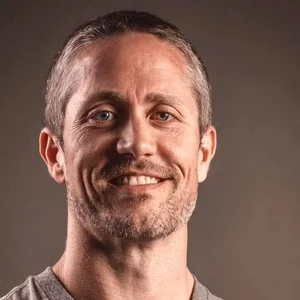
Training Through Injury and Adversity Without Losing Progress (Anthony Bryan) | Ep 415
Get Fitness Lab (20% off through January 2), the #1 fitness app that adapts to YOUR recovery, YOUR schedule, and YOUR body. Now available for iPhone (with Apple Health integration!) and Android. Build muscle, lose fat, and get stronger with daily personalized guidance.
—
Are injuries holding back your body recomp goals? How do you keep lifting weights when strength training never feels perfect?
I sat down with Anthony Bryan, a Guinness World Record holder and double world champion in para athletics, to unpack what nutrition and fitness look like when you are never at 100%.
Anthony trained his entire life with left-side paralysis after a childhood stroke, and his approach to strength training, recovery, and mindset applies to anyone dealing with injury, aging, fatigue, or stalled weight loss.
We discussed auto-regulation, unilateral training, and why evidence-based fitness matters more than chasing perfect workouts. Anthony shares how to adapt lifting weights, manage recovery, and stay consistent when motivation dips. This conversation connects strength training, metabolism, and long-term muscle building in a way that supports longevity and sustainable progress.
This is Wits and Weights at its core. Evidence-based training that works in the real world. Tune in to learn more.
Today, you’ll learn all about:
0:00 – Training when not at 100%
2:46 – Do limitations build resilience?
3:51 – Proving doctors wrong
10:46 – Support systems and belief
12:39 – Reframing no pain, no gain
20:22 – Adapting lifts with injuries
27:36 – Unilateral training benefits
33:37 – Auto-regulation and recovery
39:31 – Sleep, hydration, performance
Episode resources:
Anthony Bryan on Instagram: @thenolimitsathlete
YouTube: @antbryanfitness
Training when you’re not at 100 percent is not a detour from progress; it’s the road itself. Most of us cycle through soreness, work stress, family demands, minor injuries, and the creeping doubt that we’ve lost the thread. The conversation with world champion paraathlete Anthony Bryan shows how limits can become leverage. Diagnosed with a childhood brain tumor leading to left-side paralysis, he built a career by reframing constraints into strategy. The shift began with role models who challenged “can’t,” then accelerated when competition exposed both weaknesses and opportunities. The big unlock was identity: he stopped hiding difference and used it to drive consistency. When your story changes from “I can’t” to “how can I,” every session has a purpose, even when conditions are messy.
Practical adaptation starts with curiosity. Anthony trains one side and one limb to unlock the cross-education effect, keeping the nervous system engaged while an injured side heals. He leans on unilateral patterns—split squats, single-leg leg press, one-arm presses, and strap-assisted deadlifts—to fight asymmetry and build sturdy joints. Creativity is the multiplier: narrow versus wide stances, tempo and range tweaks, fly-to-press supersets, machine eccentrics with partner resistance, and isometric holds that obliterate comfort zones while sparing joints. When you don’t have both limbs, you find angles; when you do, you still benefit from those same angles. The point is not novelty for its own sake, but designing the constraint into the plan so it becomes productive stress instead of random strain.
Auto-regulation ties the system together. Not every day calls for a PR; most days demand intelligent effort. Anthony rotates methods—supersets, trisets, isometrics, and density work—to progress even when load must stay flat. Ten rounds of wall sits alternated with leg extensions punish the quads without heavy axial loading. For pressing, light-to-moderate weights with longer time under tension grow muscle when joints are cranky. Range comes before weight, position before power. This approach doesn’t reject progressive overload; it refines it. You still chase progression, just across more dials: reps, sets, tempo, holds, positions, and technical precision. The win is momentum that survives fatigue, travel, and the unexpected.
Recovery is the quiet engine. Hydration gets more lip service than practice; checking urine color is a simple and effective habit that most ignore. Sleep drives performance, mood, and pain tolerance, and the pre-bed routine matters as much as total hours. Anthony reads physical books—often mindset and self-improvement—to prime a calmer nervous system and avoid the agitation of blue-light doomscrolling. He often trains fasted to make fuel during competition feel like a performance boost rather than a crutch. Cold exposure isn’t magic for hypertrophy, but before a race it can heighten alertness and sharpen the fight-or-flight response. Layer these with mindful deloads and you’ll arrive at sessions able to push hard when it counts and hold back when it’s wise.
Mindset turns the crank. The 40% rule—when you think you’re done, you’re often not even halfway—becomes real only when you test it. Competition can help. Anthony frames every event as a duel with his last personal best; podiums are a bonus, not the purpose. That outlook dissolves intimidation and builds focus. Community closes the loop: find a training group or local event where effort is normal and support is expected. The fastest way to change how you train is to change who you train with. If you’re sidelined by a shoulder or prepping for surgery, train the other side, hammer legs and core, and visualize lifts to keep neural pathways primed. The question is never “Can I train?” It’s “How can I train today?” Ask it often enough, and your limits will start working for you.
Have you followed the podcast?
Get notified of new episodes. Listen on Apple, Spotify, or all other platforms.
Then hit “Follow” and you’re good to go!


-
Philip Pape: 0:01
If you train consistently and push yourself hard, but injuries keep throwing you off, or you feel like you're always fighting your body instead of working with it, and you're wondering if there's a way to keep making gains even when you're not at 100%, this episode is for you. Today I'm talking to a Guinness world record holder and double world champion in paraathletics, who spent his entire life figuring out how to train with left side paralysis from a childhood stroke. What he's learned about training through limitations, managing recovery under extreme constraints, and building consistency when your body says no applies to any of us dealing with injury, aging, fatigue, or just the reality that training conditions are never perfect. Your biggest limitation might just be the key to your next breakthrough. Welcome to Wits and Weights, the show that helps you build a strong, healthy physique using evidence, engineering, and efficiency. I'm your host, Philip Pape, and today we're going to talk about something that most lifters face, but few know how to handle well. And that is training when you're not at 100%, which let's be honest, that's life. My guest is Anthony Bryan, who at age six was diagnosed with a brain tumor that led to a stroke, leaving him with paralysis on his left side. Doctors told his family he'd never run or live an active life. Instead, Anthony went on to set a Guinness World Record for the fastest marathon with hemoplegia, I think I said that right, at the 2024 TCS London Marathon, and he's a double world champion in the 800 and 1500 meters in paraathletics. Anthony has spent decades solving problems that everyone, everyone listening, eventually faces. How do you keep training when your body has real limitations? How do you manage recovery when fatigue is constant? How do you stay consistent when motivation disappears? And Anthony, I'm about to have rotator cuff surgery next week. So it's great timing for me to have this conversation with you as well. Uh, because these principles that you use to train with your limitations, which maybe you don't even call them that. We're gonna get into that. You're the no-limit athlete, right? And they're the same ones you need when dealing with any limitations, injuries, aging, work stress, poor sleep, any constraint that keeps you from doing things perfectly, which is honestly not even a real thing. Today we're gonna explore how limitations can make you stronger, how to auto-regulate what you're doing without losing momentum, and how to build the kind of mindset that keeps you showing up even when progress feels slow. Anthony, Anthony, so great to meet you. Welcome to the show.
Anthony Bryan: 2:37
Thank you. Thank you for having me on today. It's great.
Philip Pape: 2:40
So the question I I have right off the bat is do you think your paralysis has made you a better athlete?
Anthony Bryan: 2:46
It's it's made me more resilient, it's made me think outside the box because I've had to think outside the box. Because I was told you will never do this, you'll never do that, you'll never walk, you'll never run. And then I had to realise myself that actually I can do that. And I think what I learned was people in in life will always tell you what you can and can't do, but it's up to you to prove them wrong. In the end of the day, if you want to achieve something, it's always down to you. And everyone's gonna try and keep you in your box, but you gotta go out there and just see what you can really do.
Philip Pape: 3:21
Everyone's gonna keep you in your box, man. This is so relevant. Uh, this is relevant to me personally, even recently, because it was something related to the healthcare industry, kind of like you said, where a doctor will say, like, you're never gonna do this again, or you shouldn't do this. I've heard some ridiculous advice, even like stop taking the stairs because your knees hurt. You know, just silly stuff like that. But um, how did you do that? Like, people want to know, okay, people tell you you can't do this, can't do that. How do you even know you could do those things?
Anthony Bryan: 3:51
It is through trial and error. Because this, I I had a brain tumor when I was a child, and um straight away doctors tell my parents we'll never do this, we'll never do that. And it wasn't until I actually met this bodybuilder, and he was he was a guy in the gym, and he had a stroke himself in the age of 20. And when my parents spoke to him, he looked at me and goes, That's absolute nonsense. I'll show you how you can how can you can and can't train. And he showed me all these exercises, and he said to me, I want you to remember this phrase no pain, no gain. Whenever you feel the pain, you're always gaining something. And ever since then, I just always remembered that saying it's on my wall in my hallway as well. And ever since a child, I always threw myself into everything. And I think what one of the big mind-blowing kind of realizations for me was when I was at school, we had to do a fitness running test, and I was the only disabled child in the whole school, and I just remember thinking to myself, we had to do a 12-minute run, and it's how far can you get in 12 minutes? And I just remember thinking to myself, there's no way I could come last, not behind the overweight, lazy kids. That would just be too embarrassing for me. So I just went off as hard as I could, and I just kept going and kept going and kept going. At the end of the um this test, I ended up coming. I was I came 15th out of 30 kids, and I was the only one with disability. And my teacher came over to me and just said, How did you do that? I was like, I don't know, I just didn't want to come last, it's too embarrassing. And he said, Have you ever thought about going into the Paralympics? And I was like, No, what's the Paralympics? And he said, It's like the Olympics, but for people with disabilities, you would be amazing. And my reaction was no, that's something I definitely don't want to want to do. Why'd I want to do a sport that shows off my disability? I'd hate that. Um, so he called my parents into the school and he said, Get that boy in a running club, just get that boy in a running club. And this was the first time that actually someone has told my parents, get him to do this, instead of he can't do that, he can't do this. So they threw me into it and I gave it a go. And I went to my first um power race, and I I won a gold medal in the 100 metres and the 200 metres, and for once it's opened up my eyes to other athletes with disabilities achieving incredible achievements. They might be missing a leg, might be missing an arm, but they're going out there to do their absolute best. I was like, this is incredible. So I thought I want more of this. So I went and went away and joined a running club and I trained. And slow slowly and slowly, I started realizing that actually I could build more speed. I played for a um a football team, a soccer team, and one of the coaches said to me was instead of telling me I can't do something, I can't couldn't do this or that, he went to me, yeah, you might not be able to do this because you can't use your left side, but let's not focus on what on what you can't do, let's focus on what you can do. And that was from that moment, I just focused on everything that I could do, and I could use one side of my body more than anyone else. So I had a really strong right arm and a really strong right leg. So when I would kick a ball, I had the most powerful shot of anyone. So I started being a top goal scorer because I was shooting from left, right, and centre, scoring goals, and gradually I just became more confident in myself and finding that I could do things, and then I started doing competitions and winning more medals, and slowly by slowly I started realizing that I can push myself a bit further, I can push myself a bit further. Started going to the gym and doing weights. Then I got to the Paralympic trials for the 100 metres and the 200 metres, and unfortunately I finished fourth, so I just missed out being selected for the Paralympics. But I thought this was incredible. I want to be at the next one. So I went away to my coach, I was like, I want to train hard, I want to push myself more, I will be there next time. And she said to me, Okay, so you're slightly slow off the line because of your weaker side, but why don't we try something a little bit longer distance because you're really quick once you get going? And she said, Why don't we try 800 meters or 1500 metres? And my reaction was 1500 metres. That sounds like a million miles. I can't run that far. And she said to me, How'd you know you can't run that far if you've never tried? Give it a go. And if you still hate it, you can always go back to doing the sprinting. But she said, Give it a go because you never know what you could achieve. So I gave it a go and I hated it, it was really hard. I was out of breath, I wasn't used to endurance races, and I I joined this group of runners, and again, I was the only disabled runner in the whole group, and we were doing 400 meter reps, and all I remember was even the little girls that were like seven, eight year olds, were flying past me about half the size of me, and they're flying past me. I was at the back of the group, and I was like, This is so embarrassing. But I just kept doing the reps, kept going and going and going. And my coach said to me afterwards, So how did it go? And I said, Awful. Even the little ones were going past me. This is not for me. I'm used to being a sprinter and being fast and doing this and doing that. But she said to me something that I really kind of thought, yeah, you're right. She said to me, You can't go in there and expect to be the absolute best when you have even put the work in. They might be younger than you and half the size of you, but they've been training for the last few years. She said, Give it a go for the next few months, and if you still hate it, you can always go back to sprinting. So I gave it a go, and she was right. After the next few months, I started getting fitter, started getting stronger, started getting more used to it. I started going from the back of the group to the middle of the group and keeping up with the others. And I think what made me realize I could do this was just belief. Because I've been doing it over and over and over, I've realized that actually I can do this, gotta just push a little bit harder. And then when then voices come into your mind saying, give up, this is hard. You've got to override that and just keep pushing, keep going. And after doing that for just under a year, I got selected to represent Team England at the power world championships, and I ended up winning gold medal in the 800 and 1500 meters. So I'm gone from thinking it's impossible to run that far to now being a world champion.
Philip Pape: 10:46
Man, so that whole thing, I want to break this down from beginning to end because this is great. If you started at the end, people would say, okay, he's successful, must be really talented, born that way, genetics, this and that, right? But you gave us a breakdown. I got at least five lessons I want to break in for the listener here. All right. The first one that's a really recurring theme is you had support along the way and people to maybe help you reframe and motivate you. And I, right? I mean, and I think that's super important because I could imagine if you were alone that whole time, you never had these figures in your life, do you think it would have turned out the same?
Anthony Bryan: 11:18
No, you listen to those doctors and that told you you can't do this, you can't do that.
Philip Pape: 11:23
Yeah. So having somebody like the bodybuilder, I think is awesome, right? Who had a personal experience, just like you now telling our listeners about this experience that they might relate to, that hey, this is insane, this is nonsense. And honestly, I I've gone through a philosophy of life now that I say, if I'm weird, if I'm in the in the 1% of people who are thinking very differently than the other 99%, there's probably something to it. Kind of like the um, what's his name? Mark Twain, who by the way, uh lived here in Connecticut. Uh, and he had that famous quote, you know, when you're on the side of the majority, it's time to stop and reflect. And that's kind of like, you know, bodybuilders and and coaches who train elite athletes are probably in the tiny minority of people who really know what's capable, and you absorb that from what I can hear. So that's a good one. But I like something you said. You used the phrase no pain, no gain, which has become, I guess, a trope almost or like trite over the years, where it used to be a big thing as an inspirational mantra, and then it became something to reject, right? Like, well, no, you shouldn't train through pain. Don't do that. Like, you're training too hard. I like that you you framed it as a positive. Dig into that for us just a little bit so people understand like how to use that mantra in a healthy, you know, positive way for themselves.
Anthony Bryan: 12:39
So for me, it would be when I feel that burn and I'm running, don't stop and slow down because you're gaining experience, you're gaining something, you're gaining speed, you're gaining an achievement. Like, for example, I'll talk about this later. When I was in the marathon, I had cramp in both legs, and everything was telling me to stop. And I just thought, I need to keep going because if you're in your comfort zone all the time, you're never gonna achieve those great goals that you dream of. You have to go through those tough moments, and that and that's the pain. It's not exactly like metaphorically pain, but if you don't go through those tough times, you will never achieve those incredible things. You have to be outside of that comfort zone. If you're in your comfort zone, you're not gonna achieve those incredible goals.
Philip Pape: 13:33
Yeah.
Anthony Bryan: 13:34
Try something new, try something different. It might be challenging yourself to do something new, and it's uncomfortable, maybe not maybe more uncomfortable and painful. You'll push through that uncomfortableness and great things will happen.
Philip Pape: 13:47
Yeah, yeah, I was thinking the same thing, right? People get hung up on language and say, Well, you mean you mean discomfort, don't you? But there is an element of pain, man, like especially in physical pursuits sometimes. And it's it's not a you know, pain is a spectrum, it's not uh a sharp, like you're breaking something pain. It's a I'm doing my fifth squat at 90% RM and this shit sucks, and I need to stop right now because it's so hard, but I'm gonna do it anyway.
Anthony Bryan: 14:13
It's like if if I'm not aching the next day from a gym session, I'm really annoyed of myself.
Philip Pape: 14:18
Yeah, yeah, yeah.
Anthony Bryan: 14:18
If I'm absolutely aching like DOMs everywhere, I'm like, I'm gaining something right now.
Philip Pape: 14:24
Yeah, right. So everybody has their own version of that because you said metaph not metaphorical. I was gonna, I was only gonna challenge that in the sense that I know there's a lot of mental discomfort too. That that is, I guess, metaphorical in a sense, but I know what you mean. That it's the physically pushing your comfort zone or expanding it, and you're not gonna grow from that. And man, there are a lot of impatient people I see every day. I I actually feel really bad when somebody reaches out and says, What do what do I do here? And I'm, you know, I don't say like by my program. I say like here, try this thing out. And they want to give up in a day, you know, because oh, it's too hard or it's too much work. Um, and you're just sad for them because you're like, Man, you're just never gonna achieve anything with that attitude.
Anthony Bryan: 15:06
Yeah. It's it's about never giving up. It's yeah, it's a constant journey. Even when you achieve things, it's like, right, what's next? Grow again, grow again, go again.
Philip Pape: 15:17
Yeah.
Anthony Bryan: 15:18
Everything. So for me, it was once I went to the world championships and won the gold medals, that that was a massive light bulb moment for me. I thought, I was told I'd never run or be very active again. And I've just I'm now a world champion. So then I thought, how much further can I go? How much further can I prove them wrong?
Philip Pape: 15:37
Yeah, and I bet everyone has their own level of what world champion means to them, is what I would say. In that, I guess the lesson that I take from you there is you did something that was hard, pushed through that metaphorical pain, you got a result that gave you confidence you didn't have before, expanded that comfort zone now, and the identity of yourself grew effectively. Like the person you were at that point was different than what you were maybe six months or five years or 10 years before. And now you're like, oh, I'm gonna do this endurance thing where the little girls are passing me, but I know I did something before and I adapted and grew, and I'm gonna do it again. And like that, that's another really good lesson because people who've done, I mentioned the heavy squats, right? Like people who do physical pursuits that are hard and then get something, they tend to want to do more of it or they tend to have less friction to jump in to more of it. So that's confidence you talked about, right? That's that's the confidence. Yeah.
Anthony Bryan: 16:29
Self-belief. Yeah, over and over and over. I believe actually I can do this. I'm not gonna combust. I'm I can do this, yeah.
Philip Pape: 16:38
And so speaking of the can, because you said that as well, not what you can't, what you can. And people get annoyed with me, call me a positivity Nazi or whatever sometimes because I will I have an optimism bias, right? Like I think the good is gonna come no matter what. And when you say what can you do, to me, that's reframing, that's like a psychological technique. How much are you into psychology and mindset like academically, or is it all just from experience where you talk about this stuff?
Anthony Bryan: 17:05
Um, a big role model to me would be uh David Goggins.
Philip Pape: 17:09
Oh, I knew you were gonna say that, man. He he's he's controversial in in in a way, but yes, yes.
Anthony Bryan: 17:15
But and well, I I I read his book in lockdown, and that was another light bulb moment for me as well. Because there's two chapters that really kind of hit home with me. One was Be the Only. And that I read this chapter, and he told this story of how when he lined up on the on the start line of the um triathlon, he looked to his left and he looked to his right, he's like, Yeah, these guys, they all train hard, they're fit, they're in good shape, but no, not one of them really stands out to me. No one does what I do. And then he looked over the other side and then he saw this guy in a wheelchair, and he's just perched on the edge, ready to dive into the water, ready for the race. And he looked at him and went, There he is, that guy. That guy is the only. He's in the same league with me. And when I when I read that, I thought, yeah, that's me. Every single race, everything in my life I've ever done, I've always been the only disabled person doing it, but I've I've always shied away and been embarrassed with my disability. So I shouldn't shy away and I should go out there and own it. And I was like, and that's when I started kind of showing my training on social media, like my weightlifting, my running, and otherwise I would have just been embarrassed of it. So that was a big confidence moment for me. And the other chapter was the 40% rule, and that rule was he said in that chapter, when you think you're done and finished, you've got nothing left, and you've really hit that limit. He said, You're actually only 40% done. He said, if you keep pushing, you start to unlock a compartment of the brain that will be like, oh god, this guy's not gonna stop. We need to keep him alive by giving everything we can, and then it's only then that you start realizing you can push further and keep going.
Philip Pape: 19:07
I wonder how many people ever experienced that in their entire life. Like I've thought, I know I'm prone to want to things to be easy sometimes, right? Like many of us wanna take it easy, we want to relax. I used to do CrossFit, and I remember some of the wads were so grueling, but because you had this clock and competition, your brain was like, okay, I gotta keep going. I it feels like I'm done, but keep going. Not that I'm a huge fan of CrossFit for other reasons, but that's a different story altogether. I think it's worth anybody listening, and I've had guests on the show that talks about this, to have some goal, some challenge, some race, some competition, something like that. Like you sound like you did Hans constantly to push you to have to do that almost. Like otherwise you're gonna be disappointed in yourself, who is the only person who cares, really, right? Is yourself, let's be honest. And so the Goggins thing is really good. I know some people the controversy is like, you know, what when he's like bleeding and You know, stuff coming out of us. You know, but but the general principles are still good. So then like let's make it practical for somebody listening. You know, maybe they don't have a disability, but like we all get, let's say, disabled at times or have an injury or pain or something that just sets them back or stops them. Well, like, what's a good reframe? And I'm sure it happens to you too, right? You get injured or whatever. What's your reframe?
Anthony Bryan: 20:22
Yeah, so for example, I can only use one arm and one leg, but I train just as hard as anyone else, if not more. Um, I can do deadlifts, I can do as cane and press with one arm, I can do pull-ups. And people just look at me and go, how do you do that? And I just think I think outside the box, if I have an injury, how can I train my body best effectively? And then every single exercise you in the world is adaptive. You can do it just in a different way to make it work. So, say you've broken your arm on one side, how are you gonna work your biceps? So, how I would do it is I would get a strap around the part of the arm that's not broken, and I would cut. If I've broken an ankle, how would how would I do squats? I would put a box out and I would do single leg squats until my leg other leg is recovered. Everything you do, there's always an adaptable way to do it. For example, um, I went to the uh adaptive CrossFit Games last year, and I I came eighth in the world of the CrossFit Games, and in the finals I was up against guys using two two arms, and I can only use one arm, so when it came to the snatches and cleans, they're just like this, and I was struggling really hard, but I just didn't want to stop and give up because that's just demoralizing. So, my advice would be there's always a way, there's not one set way to do things. Find a way, find an adaption. Look on Instagram, there's I have so many friends. Um, one of my friends is everything he does is on crutches, so he can't use his legs very well, but he's done an Iron Man on his crutches, he's done a marathon on his crutches, and it's just the body is an incredible machine. If you push it outside of its comfort zone to do a new thing, it will find a way to do it.
Philip Pape: 22:24
Yeah, yeah, yeah. If you lose a sense, you lose a limb, you lose something. We had someone on a long time ago, Kevin McShann, in a wheelchair, um, I think in a form of like cerebral palsy, so he could only do limited upper body stuff. Man, he was so passionate about what he could do and like what he did every day and just came right through. Uh, and by the way, I the reason I uh for the listener kind of tiptoed around CrossFit is because of what because of what Ezy just said. He's an athlete and a competitor in that space, which is, in my opinion, a different world than just the everyday goers who go to CrossFit. But uh let's let's dig in on that. You know, it's funny because I'm having surgery next week on my rotator cuff. Last time I did this, uh, I tried some things like a deadlift harness and I used a safety squat bar and things like that because I couldn't use an arm. And, you know, anybody listening, the surgery thing is definitely a big reason people often ask for help, right? Because they're like, here's how it's quite phrased. What do I do? I'm having surgery, the doctor's not gonna clear me for however much many number of weeks, which in some cases you can lift before that, but that's not for me to say. I'm no not a medical expert. And then what do I do because I'm not gonna be able to train for X? And it's like immediately the excuse of I'm not gonna be able to train, so what do I do? as opposed to how do I train? Yeah, which I I prefer that question. So maybe dig in a little bit more. Like, obviously, they can go check you out. They can go go on Instagram, chat GPT, heck. I mean, there's like so many ways now to look up. I don't have an arm for 12 weeks. What do I do? Maybe let's start here. What do you know about the benefits of let's say you only have one arm because of surgery, the crossover effect? Like, do you know much about the the cross? You know what I'm talking about? Cross-education effect where like training one side helps the other?
Anthony Bryan: 24:06
Yeah, it does because um it wires the brain. Um say you you've broken an arm, you have another arm, you have legs, you have core. Keep yourself fit, healthy, and strong, so that when your body your arm does recover, the the rest of the body's ready to go, and this one just will catch up.
Philip Pape: 24:27
Yeah. Um stay stay strong before the surgery or two if you can, if you know that's what it is.
Anthony Bryan: 24:33
Yeah. But the the whole body is wired together, so if you train one arm, it will still have an effect on the other arm. Um, I don't know if you have you heard that um where you can visualize training in the gym, and it uh you can increase muscle by by two to three percent if you just visualize working out in the gym.
Philip Pape: 24:54
Because your body's gonna adapt yourself physiologically to that desire.
Anthony Bryan: 24:59
Yeah, and your subconscious.
Philip Pape: 25:00
That's incredible. Yeah.
Anthony Bryan: 25:02
So I read this in the book the other day. If you just lie down, visualize, and think about training in the gym, your subconscious will believe that you are actually kind of working out, and it will it's not gonna have the same amount of games than when you are in the gym, but it will give you a small percentage of strength.
Philip Pape: 25:21
I wouldn't be surprised because I used to be I'm skeptical, right? But and not skeptical of that, I'm skeptical in general of life and everything. Uh I'm just that type of guy. But like simple things like not sitting all day has known to increase muscle protein synthesis by like 30%. So I could imagine something mental like that could have a similar or even not as much of an effect, but still an effect, right? So that's incredible. Let me ask you when you do something like, since you've got one side of your body to work with, when you do a deadlift with one arm, how does that change the mechanics? How does that change your approach? Is it are there a lot of resources about those kinds of things, or is this the kind of thing where you really have to experiment with it? I'm just curious, you know.
Anthony Bryan: 26:05
Um, so I would have a strap on um this side, which is like a harness, and I would attach it to the bar so it kind of evens me up a little bit. Because I'm lifting of one side, yes. It also all the weight and pressure comes down one side of my body. So obviously the muscles around the pelvis and the spine get really tight. So I then have to have sparse massages and see osteopaths and chiropractors weekly. But yeah, lift lifting deadlift, I'd have to lift from the center of the bar. Try it next time you're in the gym, just do a light deadlift one arm. You will feel all this pressure and weight just go through one side of the body.
Philip Pape: 26:49
And the balance is tough too.
Anthony Bryan: 26:50
Yeah, so try and even up. I use a harness around this shoulder and attach it to the bar. Gives me a little bit a little bit more even tea.
Philip Pape: 26:58
Okay, yeah, and I was just curious, uh, because I've done the harness with no arms, right? How you can do it like just with using your uh torso, and then the one arm definitely creates that asymmetry, which is interesting because yeah, now you're gonna have side effects you have to think about and kind of train around that. Really cool, man. So asymmetry now comes up as a topic. I'm this is great. Like I'm throwing away all my questions because we're just this is good stuff. Okay. I guess when you see people doing stuff in the gym, you know, do you have advice for people on like just training more efficiently given what you've learned that most people don't learn because they don't have to go through, you know what I'm saying? Does that make sense?
Anthony Bryan: 27:36
Yes. So what I've realized is when I see people training in a gym, that everyone's doing the basic things that they've seen online, and I'm like, let's break it down a bit. I'm really good at thinking outside the box, and I make up different exercises, and they're like, Whoa, I feel that way more. How did you learn that? It's just like just thinking about it differently. So I would say I see a lot of people bench press, but when you bench press, naturally everyone's a little bit stronger in one arm, so they're pushing slightly more with one arm. So to counteract that, a dumbbell dumbbell press is way better because then both arms doing doing their own work. Yeah, um, things like that. Um I see a lot of women, all they do is kind of leg kicks on on the cables and things like that. Or hip hip thrusts, that's that's all they do. And I'm I just I'd say say to women, Bulgarian split squats is so much better for you because it's single leg, you're single and doing it. And I say if you're doing a leg press, do a single leg leg press, because again, if you're doing leg press with both legs, only marginally, but one leg's gonna be pushing more than the other. So I'd say build each leg up separately, and then think about them separately, then you can bring together, you can be even stronger. So I'm always thinking single single, and a lot of time in the gym I see people doing double things, but then when I break it down for them, like whoa, I feel that way more. Yeah. But I find thinking outside the outside the box really kind of makes a difference because everyone thinks about training the same way.
Philip Pape: 29:14
Man, this is good stuff. The but two things there. You talk about unilateral training and being creative. So the unilateral thing, I think a lot of people just find it hard, right? And it's hard for a reason. And if it is hard, ask yourself whether that maybe is why it's worth doing. That's what I always tell myself when I'm doing a walking lunge and I haven't done those in a while. And I'm like, holy crap, after just like 18 of these in a row, I will feel like I want to fall over, you know, and I wanted to get 25 or whatever. It's super important. And the idea that it's it's weird how the physics works. When you do something bilaterally, you can generally handle more than twice the load as the two individual limbs, and you have to think about why that is. There's like systemic support you're getting, right, from other parts of the body, which sometimes you want that, like you're trying to do that to develop the movement patterns. But in your case, what you mentioned is hey, there are weak spots you're not getting because you're not loading the thing individually and hitting its weakness, like you said, because one is taking for the other.
Anthony Bryan: 30:10
And then what's doing individually, you bring it together, gives it even more strength.
Philip Pape: 30:14
Yeah, exactly. And then it pushes the overall side. I I agree. It's a great, great point. And then the creative side, you know, a lot of us don't figure that out for a while until think I'm raising my hand here because I used to be the guy who was like, hey, I don't know what to do, so I'm gonna do the basic pet movement patterns or the basic lifts that you tell me to do, which is a great foundation, right? If you don't even lift at all, but the idea that you can use infinite types of grips and widths and like range of motion and disadvantaged positions, everything, right? Yeah. Are there are there like a top three type of change someone should experiment with next time they go in the gym? Like just in general, if they're using a press, pressing movement or squatting, what kind of thing should they maybe experiment with?
Anthony Bryan: 31:01
Um, narrow squats versus wide squats. Feel the difference in that for the quality. Well, I like is um for the shoulders, I will always do a tricep and I'll do front raises, then I'll do lateral raises, and then I'll do front raises with thumb up, and then I'll do a shoulder press. So that hits the front side top. And you don't even need to go mad heavy. If you go maybe five kilograms, you do things in pounds, but uh uh kilograms over here. Um, you should go nice and light, you will feel the craziest burn in those shoulders instead of just going super heavy. Because I find when a lot of guys going super heavy, they're not getting that full range of moving, they're jerking it, they're kind of half-repping it, or just momentum lifting. Sometimes when you go lighter and get the movement patterns of each muscle, what I've learned is you've if you learn the movement patterns of the muscles and just really get them working, you don't need to go super heavy and you can strengthen them really, really, really well.
Philip Pape: 32:06
Again, some great points, right? Because uh my coach Andy Baker is always he he's this big, massive, strong guy, right? And he's always telling the guys in doing lateral raises, don't go so heavy, man, because he sees them coming up halfway and it's just like rounting, you know, right? And it's like just and you're right, and there's so many ways there's scaption raises, thumb up, thumb down, you know, like because of my shoulder issue, I've realized like palms up sometimes, you know, supinated, whatever you call that, helps. Uh, like if if your goal is hypertrophy, right? We've talked about this on the show before. If you're at least 30% of your max, as long as you train close to failure, you can grow muscle, right? Like that's the general numbers. Whereas if you're going for strength, it's 60%, or if you're going for like super heavy, you know, it's like 80, 90%. Yeah. So yeah, that's good stuff, man. Um, yeah, I love this. I love talking about training. So auto-regulation was the next one I wanted to ask you about because uh some of us are in the fixed mindset of like, I have to go up on the bar, I have to increase my weight, I have to increase my load, and we or my reps, and we do have to have progressive overload. Sometimes, though, people have a limitation again from fatigue. It could be, you know, it could be you're just not eating enough lately and you have a lot of stress from your kids and your family, right? It's the holidays, and you're just like wiped, even if maybe you are eating it, whatever, and all of a sudden you don't have the same capacity. How do you feel like you're still getting a good uh training session and you're still making progress? Like auto-regulation comes to mind, but what are your thoughts?
Anthony Bryan: 33:37
Yeah, mix it up, try new things. I love playing about with um supersets and tri sets and things like that, and just try different things. Um, don't always have to go super heavy max reps kind of thing. What's super effective is um what I love is isometric holds, and then um so for some of my people that I train, try this session one day. So you do a wall squat holding the wall squat for 20 seconds, then you do 10 leg extensions, then you go back to the wall squat, 10 leg extensions, 10 reps, 10 rounds, that's a hundred overall, and that is absolutely soul destroying.
Philip Pape: 34:28
Taking back a CrossFit, man. Nightmares, but yes, it's good stuff. 10 by 10 or 10 by 10, man, with the squat, 10x10 squat day was like brutal.
Anthony Bryan: 34:40
But massively strengthen you those legs.
Philip Pape: 34:42
I know, I know. It's incredible. Yeah, I love this stuff. Thinking differently, you know, it brings to mind concepts like mind muscle connection, which is is a completely valid thing that I think people aren't tuning into. I saw a good video years ago on YouTube. Oh, you would know the guy. Man, what was his name? He always has his shirt off, of course, like a lot of the bros, right? But he was talking about back training, and the back is so complicated, it's got so many muscles, so many muscle groups. It's a beautiful thing. And when you go for a massage, right, they take like, you know, 60% of the massage is on your back because of that. Uh deadlift, squats, everything hits it. But for me, as with the shoulder issue, I'm like trying to strengthen my back and scapula and rhomboids and traps and everything. And I, for some reason, my entire life, I never did standing, narrow grip cable poles, right? And it was just one of these things you stumble across because you're trying to be creative. And that's the thing. If you get in that mindset that Anthony's talking about of like, what else can I do to hit something just a bit different? And then all of a sudden you find something and you do it and you're like, Nirvana. I mean, it felt so good because you just felt this squeeze and like you can almost visualize the muscles rotating and squeezing, and you're like, okay, that's my lift. And for the next guy, maybe it's useless. Like, like it's it depends. What's what's like what's your favorite? Like, I don't know, two or three things like that that you're just maybe you discovered them by accident, or maybe whatever, you know, somebody told you about them.
Anthony Bryan: 36:06
So I'm always thinking about how can I put exercises together? What really burns. So I love super setting a chest, for example. I would I'll get um I'll go on a bench and I would fly, not too heavy, but heavy enough, then straight into chest press. That will get you on the sides and then straight into the middle afterwards and fatigue you beat time, things like that.
Philip Pape: 36:31
Uh one of the things is that is that a fly with dumbbells or like a machine fly?
Anthony Bryan: 36:35
Dumbbells, yeah. Yeah. And then if you wanted to try set, I would add another exercise in. Uh maybe cables and fly them in underneath the body, and that really gets you, or a pec fly machine, really good as well. I had this uh bigger guy, and he was doing I said to him, Do you ever like get DOMs the next day after doing flies? He's like, Nah, never. I was like, Alright, let me try this with you. Um, so have you heard of like net negative training?
Philip Pape: 37:03
Yeah, net the the negative, the eccentric. Yeah, where you all know.
Anthony Bryan: 37:06
So I got I got I got him to do 10 heavy pet flies, and then I said to him, Hold the the um the machine into the middle really, really hard, and I want you to keep it there for 10 seconds, and I'm gonna pull this machine out. He's like, Okay, go. So I'm pulling the machine out, and he's like holding it in. But then after that, he's like, mate, when you pull that machine out, feels like you're tearing the chest bit by bit. I was like, technically, that's what we're doing, and it it's gonna give you that massive extra bit of strength. He's like, Oh, amazing!
Philip Pape: 37:39
Awesome, man.
Anthony Bryan: 37:40
Yeah, so if you can um bring negatives into some of the exercises, well, that's it, it burns and it's hard, but wicked effect.
Philip Pape: 37:48
Yeah, yeah, that that's one of those things you have to think about. You have to sit down like the day before, right? And really look up on YouTube and figure out how do I make that happen? Because most machines or setups are not designed for negatives, right? Like a bench would be super dangerous for a negative if you don't, you know, like a bet like a barbell, you know.
Anthony Bryan: 38:06
And there's one there's one that I made up. I made uh woman do leg extensions on the machine, and then on a tenth one, I said, hold your legs up there and keep them there. So she held them up, then I would come on top and I'll try and push the legs down so the quads are burning and holding. That's another one where you could do as well. So legs in the knob.
Philip Pape: 38:25
It makes total sense, man. It makes total sense. I mean, when you every time you do a deadlift really heavy, you're you're kind of doing an isometric hold in the middle, you know, you're you're for for a couple seconds, aren't you? Like with the the erectors, right?
Anthony Bryan: 38:37
Right with the sponda, yeah.
Philip Pape: 38:38
Yeah, yeah, yeah. Um, yeah, it's crazy to think about all this stuff. And and anyone listening, like if you're feeling overwhelmed, if you never lifted before, this is all new to you, you know, don't get overwhelmed. Just put it in your back pocket and just when the time comes, come back and listen to this episode. You have it. Just make sure you're trading. If you're not trading, you gotta be trading. All right. So another thing we talk about a lot on the show is we say listening to your body, but in an objective way, like in a data, a data-based way, not necessarily biohacking, but like, you know, paying attention to your recovery. I know you mentioned DOMs and soreness. You know, we kind of go back and forth on that. If we're talking about strength type movements where you're not necessarily chasing that versus more hypertrophy and supersetting and high rep stuff, but what kind of signals do you like to track, pay attention to for performance, for biofeedback, even nutrition? Like what are your what's your bag of tricks for data?
Anthony Bryan: 39:31
Um, hydration, um, watching, watch out for the color of your urine. That that's a big one, I think. It's a good one.
Philip Pape: 39:37
Yeah.
Anthony Bryan: 39:38
Yeah, because everyone kind of skips that and that gives you energy. Um, makes you feel awake. Um, sleep. Sleep's a good one. You have to get those hours in. Don't don't be staying up all hours and then having five hours of sleep and going getting up. Makes a massive difference. And you'll make a massive difference through a gym session, whether you're tired or not. Even pre-workout gels. I I try I try to stay away from pre-workout.
Philip Pape: 40:04
Like you mean actual pre-workout compact substances? Like but do you eat you do you feed do you eat do you uh train faster or fed?
Anthony Bryan: 40:13
If I've got a big competition I'll be I'll be fed. But I try and work out faster.
Philip Pape: 40:20
Oh interesting.
Anthony Bryan: 40:20
Alright. Because I want my muscles to push themselves without that energy source so that they're like working harder.
Philip Pape: 40:29
You know that that is that's like the only legitimate reason other than schedule that I've ever heard and I like it. I like it Anthony because you know there's a lot of claims about facet training that aren't true right but the idea that you are using it as a challenge as a deficit almost right as an eccentric training form let's say I want my body to train with that without that energy source. And then when I give it the energy source for the competition it's like oh I can do that now because it's got that makes sense man I'm feeding it yeah no no that makes a lot of sense it it's like when I've been in a fat loss phase for 16 weeks and then I have a huge buffet Sunday night before I train Monday all of a sudden my deadlift like you know goes up 20 pounds right uh it's like because I I stay away from caffeine yeah then when when I have like um a big race I might have an energy drink before and then I'll be like whoa during the race and I feel like get where what does energy come from? That's a really great point is the tolerance factor because a lot of us are hooked on caffeine myself included.
Anthony Bryan: 41:30
I mean I have coffee and pre-workouts and so you could have caffeine you could have the energy before and it worked no effect.
Philip Pape: 41:36
Yeah yeah yeah yeah it's it's it's you've got to make that trade off if you're gonna do it right like um you mentioned sleep of course we're always gonna hammer home on sleep I heard a podcast recently I think it was actually next level university uh who's um Kevin Palmer he's one of my podcast producers so I always like to give him a shout out him and his business partner Alan and they were talking about sleep uh they talked about a story this professor said about or not a professor but motivational speaker he said imagine going to a college campus and the big thing there is everyone smokes cigarettes right everyone's smoking cigarettes they love it it's like the big thing you've got to smoke cigarettes crazy idea right like crazy idea imagine you go to another one and everyone is just shooting up heroin like everybody in the campus that's the thing they do they all shoot up heroin we'd shut the campus down overnight right now go to another campus and every kid is falling asleep during the day taking Adderall or taking whatever and you're like wait a minute that is college campuses right and his point was they're all almost the same level of health detriment over the long term being sleep deprived smoking taking drugs they're all like let's say toxic to you I don't know if you agree with that I just want to share that because I recently heard it and I'm like it's a good way to frame how important but neglected and accepted poor sleep can be what are your thoughts on sleep man lay it on us like how do you get good sleep besides the number of hours it's tough one um I find what makes me sleep better is re reading a book before before I go to bed.
Anthony Bryan: 43:08
Love that because I I found I'm reading after about 20 pages I'm like oh my eyes are stinging now and then as soon as you close your eyes you're like don't sit on your phone before bed uh scrolling because that's gonna they've got I've read this it's got it's got that blue light or something that and that's designed to kind of keep you awake. Yeah so what helps me is reading and that that sends me off to sleep. Not in a bad way but a good way.
Philip Pape: 43:36
No I I actually it's funny you mentioned that we're we're kindred spirits my man because like I'm reading a post apocalyptic fiction novel right now and I read it every night in bed. Now I have a Kindle but what I do is I wear red I wear amber tinted blue blocking glasses and then the Kindle is on black mode so it's like only the text is white and I'm just sitting there uh with the lights off because my wife needs to sleep she goes to bed earlier than I do. And you're right after about 20 minutes if that you're just like you might even fall asleep with the book and you're good. Do you read like a physical book with a light or how do you read?
Anthony Bryan: 44:09
Yeah physical book yeah and I try and read self-help books and because okay because I I watched another thing that um anything that you kind of comes into your your process before you go to sleep kind of goes into a subconscious and you start thinking about it. So a lot of people before they go to bed they'll watch the news and it's all negative like war poverty and it's like doom and gloom doom and gloom so put a bit of positivity into your mind by reading it and I don't know if it's true or not but it kind of brings that into a subconscious kind of thing. So I kind of read positivity self-help books before I go to sleep.
Philip Pape: 44:49
So the listener needs to pay attention here because Anthony is full of like tons of wisdom. I get the sense man that you've just learned this through the school of hard knocks a lot of this stuff. Yes the way you talk is like supernatural it's just something I learned whereas a guy like me who are like studying this stuff and trying to make it for a podcast, you know, it's it's a little more like um kind of learned from a book, right? But what you just said again is something something I learned not long ago. Now you've you've known it just naturally to not stress yourself out with what you're reading and experiencing before bed. Like don't watch a highly stressful movie or TV show for example. Don't read terrible news. Now I told you I read post apocalyptic novel to me that's relaxing but I guess it's all it's kind of like for me playing a video game that's violent actually relaxes me but it's not necessarily the case for everyone right so I wouldn't do that before bed though. So yeah guys listen up this is this is really great wisdom. All right what else so sleep we covered sleep what about so that's that's a big part of recovery is there anything else any other recovery practices that you like so recently um one of my one of the guys I know actually um kind of helped me get into this um ice baths ice bath oof yeah okay horrible horrible thing but what what I found was um so I started having ice cold showers before my races and then I found that my my running was going really well and I kind of looked into it and basically instead of having a hot shower um so I would have a hot shower first and I'll have a cold shower after and what I was doing was um I was firing up my fight or flight system straight away in the morning so then it's basically turning on all my muscles and my fight or flight system getting ready to go to go fight or go to run that race and I found that my performance level just went up another level I hate it but now every time I compete I'll have a cold shower before I go and I just find I I'm more alert um I can I perform better my muscles are sharper and that's that's something I learned along the way. Yeah it's it's funny you mentioned the performance aspect because I did an episode not long ago about like all the things that are overrated and one of them on on the list was ice baths but I said in that episode except if you're using it on like a performance day or between you know your max lifts on a powerlifting meet or something because you're right that like that uh hormetic effect I guess is the word or that like acute effect is powerful but there's not really a long-term benefit if you're trying to get more jacked or something you know it doesn't necessarily help with that so I'm glad again you you've got natural wisdom my friend like this is good stuff and I I totally have heard that ice bass can be really powerful for competition right that's cool that's good yeah so speaking of competition man um a lot of people have no experience with the level of stage you've been on and I'm just curious like what that experience is like for you how especially your first maybe your first one I don't know maybe it just was a daze because I know you were younger but you know what is that like and and is there a lesson there for people who may be interested even a small like local powerlifting meet or something like that.
Anthony Bryan: 48:03
It's it's gonna be nerve wracking um you're gonna get those butterflies but give it a go and what I've what I've learned is you're gonna go into these competitions and you're gonna look at the the top people and think I'm awful I'm nothing like them but what I've learned is go to that competition and give your absolute best whatever you can do and that's that's a PB and then every time you go to a competition you set your benchmark as that now you gotta beat yourself if you against you beat yourself don't don't focus on how much they're lifting or what they're doing because the real the real achievement is you're getting better and better and better. Every competition you do write down your PB and be like right I'm coming for you you're my competition today and that's what I do every time I go for a race I don't focus on all the other people that flying past me. I'm going out there to beat me and that and that that's that's my main kind of mantra every time I go out there. I'm gonna go lift in CrossFit I'm gonna go out and beat me this weekend I'm I'm doing a high rox race so I'm I'm going out to try and beat myself this weekend.
Philip Pape: 49:15
Good luck or break a leg or whatever we're supposed to say beat yourself beat yourself um so is that is that 100% true my man or you gotta have some sense of competition right though oh a hundred percent yeah if um if if I'm if I'm near the front leader I'm I'm chasing them now I'm going for them but it's like those who are just getting started. Yeah yeah you everybody can't expect to be the winner uh especially right out of the gate yeah yeah yeah but if if I'm going in to be the best I'm I'm gonna guns blazing I'm going for it. Yeah I always wonder competition's interesting and I know there's a difference sometimes between the sexes men and women I'm just gonna say it I'm just gonna say it you can hate on me but like there you know from all the messages I have all the time it's my guy buddies who also lift weights and we we kind of push ourselves through metaphorical competition all the time from afar. And it's like you know we rag on each other for our numbers sometimes but we know hey you're a hundred pounds more you weigh a hundred pounds more than me dude so like of course you're gonna you know bench more than I do. So and we can joke about it like guys, you know, a good sign of friendship is that you could sarcastically make fun of each other, right? And like be cool with it. But I I think it's interesting with competition because you want to be pushed by things around you. And I think like the CrossFit world is a good place where that happens. I think community it happens but there's like a healthy level of that that pushes you to ultimately do what you're saying, which is beat yourself. What am I trying to get at here is like how can people find a community that can push them and help them because throughout this whole conversation it's been like you've had coaches and trainers and friends and people to learn from and lean on yeah how what if somebody feels alone out there and like trying to go alone but you don't really want to go to loan how how do they find that community you need to go out to to the the club the the training clubs need to get to go online look up CrossFit look up weightlifting get down there meet people find a circle of people that are doing the same thing as you because surround yourself by people that are doing the things you want to do and you'll learn from them and you'll grow together in everything with cycling groups running groups um I found massively um a lot of my friends a lot of pi you you find friends in these groups and then you'll find yourself grown because you that you're learning from them and doing new things and yeah just keep pushing yourself to try new things go online find a group and just join in. And what is the new thing you're trying now?
Anthony Bryan: 51:45
Pyrox uh okay that's your new thing all right yeah all right so that's your very first race ever right tomorrow or this weekend this is my second yeah and so so um when I for when I did my first one I came uh I ranked second in the world so now this weekend I'm trying to chase that guy in the first in the world oh my god okay I didn't I didn't realize that I I did a lot of research on you but I couldn't get all the accolades because there's so many this is all new this happened last month and the last one okay now wait is that what like what's the what's the like what does what's the class or the group you're in I'm just curious I don't know how it's organized. Um so it's it's neurological so anyone has had um like a stroke or a brain injury um so it's a bit like separal pausy separate is a brain injury and um what I've found is like I've found this whole new community of people it's athletes that just want to push themselves and I put a video of me doing burpees of one arm and one leg and on Instagram it blew up to like 3000 hits.
Philip Pape: 52:43
I was like whoa and I'm finding this new community of people that are like you're smashing it man keep pushing and I think high rocks it's it's a it's a competition of people they just want to push themselves from elite athletes to your everyday athlete and it kind of brings them all together and crossfits a bit more for your elites right yeah yeah yeah that's awesome man that's awesome no we're root we're rooting for you um and I want people to go check out all your content and check out you because if nothing else they could be inspired but if more than that it take action based on what you've shared with us today.
Anthony Bryan: 53:22
This has been truly a pleasurable and and enlightening conversation for sure and I mean that in all the honest ways that I try so where can people reach out to you Anthony so they can check out you your content connect with you find some community um so you can find me on Instagram at the no limits athlete um or just type in my name Anthony Bryan I also have a YouTube channel where I do exercise classes for people with disabilities or mobility issues and that's called Ant Brian Fitness.
Philip Pape: 53:50
All right so just to clarify we'll put those in the show notes for everyone the no limits athlete is Instagram and on YouTube it is at Ant BrianFitness. So that's Ant Shore for Anthony BrianFitness those will be in the show notes everyone don't worry about it if you can't find it and man thank you for coming on Wits and Weights it's been a pleasure meeting you talking with you I feel pumped myself like I gotta go do something now and not sit on my ass when we're done yeah man thanks for coming on thanks for having me great great to see ya