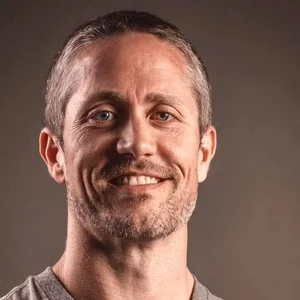
Brain Fitness, Micro-Habits, and Your Health (Thoryn Stephens) | Ep 472
Why is it so hard to stay consistent with nutrition and fitness, even when you know what to do? What if the answer is not more discipline, but better systems?
Thoryn Stephens joins me to talk about why adherence is the real bottleneck in behavior change. We cover how to build simple health protocols around nutrition, exercise, sleep, stress, connection, and metabolic health without getting buried in data or overwhelmed by tracking.
You’ll learn why friction matters, how wearables like Oura and Garmin can help when used correctly, and why recovery, HRV, resting heart rate, and even unitasking can support better performance. We also discuss longevity, dementia prevention, brain training, and how small daily actions can influence long-term health.
Join Eat More Lift Heavy to build muscle, lose 10-20 lbs of fat, and learn what works for your body, 1 week at a time. Eat more and lift heavy with confidence:
https://eatmoreliftheavy.com
Timestamps:
0:00 - Why consistency breaks down
2:40 - Six pillars of health protocols
5:46 - Connection and longevity benefits
11:58 - Micro habits and adherence
17:11 - Choosing daily non-negotiables
20:48 - Tracking without overwhelm
28:41 - Dementia prevention through lifestyle
33:30 - Brain training and neuroplasticity
40:48 - Unitasking and cognitive performance
Episode resources:
-
Why consistency breaks down
Philip Pape 0:00
You've heard of lifespan, you've heard of health span. There's a third one most people aren't aware of called mind span. It's the longevity and performance of your brain. And it might explain why you keep falling off your nutrition and training plan every few weeks, even when you know exactly what to do. Usually when that happens, your first thought might be, I need to track more closely, get more accountability, plan ahead better, follow a stricter schedule. Any very smart, capable person who is building a career or business, maybe raising a family, that advice seems like it should work. And yet this often works for only a few weeks before you're back at square one. My guest today has a background in molecular biology and knows a lot about the human brain. He's going to tell us what mindspand actually is, how microhabits and cognitive capacity connect to your training and nutrition, and the surprising and counterintuitive fix for inconsistency. Welcome to Wits and Weights, where in every episode we put a popular piece of fitness advice under the microscope, find the hidden reason it doesn't work, and give you the deceptively simple fix that does. I'm your host, Philip Pape. And if you've ever fallen off your training or nutrition plan and tried to fix it by adding more, adding more structure, more tracking, more accountability, more planning, today's episode is going to challenge that thinking because we're going to talk about something called mind span. The idea that your brain's performance and longevity is an important variable in and of itself, because in fact your brain and your cognitive capacity might be the real bottleneck in your ability to be consistent. My guest today is Thorin Stevens. Thorin started in molecular biology, spent over a decade in data science and analytics. He now runs Brain One, a platform focused on brain fitness and behavioral protocols. He's all about neural performance and how to optimize human health to increase things like focus, energy, resilience. Today we're discussing mind span and why it matters for your physical health and fitness, how things like microhabits and cognitive capacity connect to your ability to accomplish your goals and strategies to make your routine even more sticky and sustainable. Thorin, welcome to Wits and Waits.
Thoryn Stephens 2:15
Thank you so much. Glad to be here.
Philip Pape 2:17
So we often describe consistency as a behavior problem, right? And I think what I've learned from your work is that you might say it's more of a brain-related or cognitive problem in terms of your ability to even execute those behaviors. Is that a fair way to characterize it?
Thoryn Stephens 2:31
I think humans are immensely complicated. And getting a human to do one small thing routinely is very challenging in itself. So I
Six pillars of health protocols
Thoryn Stephens 2:40
believe there's rigor you can put behind how people learn new habits fundamentally. So I think there's definitely opportunity there.
Philip Pape 2:47
So let's let's go a little deeper on that then, because you're all about the brain and brain fitness, right? So when you talk about the rigor of setting up those behaviors, are we talking about a system, a structure? Is it more about I mean, what is it? Yeah.
Thoryn Stephens 3:00
Yeah. So just super briefly on my background, I'm a molecular biologist, went into data science, and then I started doing marathons and Ironman's and were using essentially health protocols to organize how I was training. And that really applies to other areas of my life as well, you know, relative to like my day-to-day health protocol. You know, when you get up in the morning, what do you do? And so when we talk about brain optimization, what we've seen through our own testing and research and also just looking at, you know, thousands of longevity papers and so forth, I mean, you have to really start with the basics. So ours are nutrition, exercise, sleep, stress, connection, some sort of metabolic, you know, just optimization as well. Those are kind of like the six pillars that we generally see. So if you're not sleeping, then you're not going to be neurologically active. It doesn't matter what nootropics you're taking or, you know, what magic pills. You really have to start with the foundation. And then from there, layering in a, you know, additional microhabits is what we call them, just small structured, you know, incremental things that you do that then have, you know, bigger sustained game over time.
Philip Pape 4:03
Okay. So I got three things out of that I want to dig in. One is the longevity connection. The two is the sixth or the fifth and sixth piece of those pillars, which you imagine connection and metabolic optimization. And then three is this layering on. So starting with longevity, why is longevity important in and of itself? Because I know there are short and long-term goals. And sometimes, you know, I know when I went through my nutrition coaching, right, you learn that there's these trade-offs between physique and athleticism and longevity. And so why is that important?
Thoryn Stephens 4:34
I think it depends on the human, right? I look at things such as this as a spectrum. And like over here, you have Brian Johnson, who is doing everything he can to optimize his biology to live longer. You know, most humans are kind of over here. You know, they know they want to live for a long time, but you know, maybe aren't making changes. You know, I don't know, maybe we're maybe over here a bit, following some sort of a structured plan. I think it depends on on the human and ultimately their own motivations. Not everyone wants to live forever. And, you know, as you look at these protocols for this, you know, supposedly to add, you know, additional years on that health span, those remaining years of your life, does that impact your quality of life, you know, and the things that you love to do? So it's in my mind, it's always a balance in these these things.
Philip Pape 5:14
And is the balance between health and lifespan or is this extra mind span variable layered in there now?
Thoryn Stephens 5:18
I mean, I think it's kind of all of the above, you know, like again, doing the things that you love, anything that you love that's done in excess generally is you know negative relative to your mind span, health span, all the above. So I think you know, the balance of it is really important.
Philip Pape 5:34
That's a good way to put it, right? Anything in excess, because that's often what we talk about is doing too much handing that back. Putting extra weight, yeah, exactly.
Thoryn Stephens 5:41
Everything of course. So, but yeah, those are some of the principles that
Connection and longevity benefits
Thoryn Stephens 5:46
we really try to, you know, round around, basically.
Philip Pape 5:48
Okay. Yeah. Well, I I like principles. So when you meant you said you start with the pillars and then you lay around microhabits, and we talk ad nauseum on this podcast about nutrition and training and sleep and stress. You did mention though, connection, which I assume you mean like human connection, community, things like that. Is that what you're talking about?
Thoryn Stephens 6:05
Yeah, I mean, I would expand it a bit. You know, so I'm a molecular biologist turned data scientist. So, you know, my life has revolved around data, but you know, I'm not obsessive about these things. And I went and met with the Center for Brain Health out of UT Dallas a couple years ago. I was just starting Brain One and you know, had this vision. And I met with uh one of the founders, Dr. Sandra Chapman, and I was like, you know, Dr. Sandra, we have all this amazing data sets, and I'm looking at my bar markers and my, you know, my my wearable data, and then we're amalgamating it and I'm seeing all these patterns. And she's like, Yeah, Thorin, that's really cool. You know what's really cooler? Connection. And humans that have connection, whether it's to themselves, it's to the higher power, it's to their family, you know, it's to their community, live longer. Like, period. I mean, the data absolutely suggests, you know, how much longer? I don't know, 10 to 15%, depending on the study, you know, but a number of years. And so people ask, like, what is the secret of life? I think it's fundamentally simple. It's waking up and doing what you love. And if you are doing something you don't love, you'll wake up and then you'll be disgruntled and so many impacts there. So as we think about those things, you know, waking up with, you know, a an inspiration or just a desire to do something, you know, whether whatever that is, again, spending time with your family. And community is an integral part of that, you know, quite literally. And then there's other small things. It can be a book club, it could be chess club, it could be, you know, playing soccer with the friends, whatever it is. But there's absolutely a connection both to longevity, but also just neurological optimization relative to community and connection.
Philip Pape 7:35
I think it's underrated. Uh I definitely, you know, because we don't we don't measure it, right? So like you kind of assume there's this black box or this myopic kind of view of wearables and measurement and everything. And it's like, who I mean, I do know people in different spaces who have that as a thing that they track, right? Which some would say, Oh, that's crazy. Why would you track these squishy things like relationships or how often you talk to your wife? But you know, I mean, it's sometimes you have to have targets and goals, right?
Thoryn Stephens 8:00
Uh I think that's very, very interesting. How are they tracking those relationships? Just curious.
Philip Pape 8:04
I mean, there's different approaches. There's, you know, uh a rate yourself on one to ten in a context of like 10 things you care about, those kinds of things, right?
Thoryn Stephens 8:12
Yeah, yeah. Awesome. Yeah, that's really interesting. I mean, there's also the social side of all of this, which I think can be a bit nefarious, how you think about your social circles, connect things. But yeah, so I would say the measurement behind this is what's been the most interesting to me throughout my career when I was in biotech initially, and then I went into user behavior research and you know, so forth. That's really been the thread line, is the measurement of these different attributes.
Philip Pape 8:34
So I'm curious what the on the connection side, because I have a small background in applied psychology, Martin Seligman Seligman, right? And then the follow-on work where they talked about flourishing and happiness and how connection was like the number one related variable to happiness.
Thoryn Stephens 8:47
Yeah.
Philip Pape 8:48
When we think about connection, you mentioned a bunch of different examples, but like when someone is trying to improve themselves, today we have, and you said nefarious, and I don't know if you're talking about like social media and and some of that when you said nefarious, but how does self-motivation theory, I think SMT, right? Which has relatedness as one of its factors, how does that factor into this?
Thoryn Stephens 9:09
Yeah, that's not my area of research, just to be honest, but I can tell you what I've seen anecdotally. Again, you know, people who wake up and have that connection and that spark are more emphatic and generally feel and live longer, ultimately. So what is that based on? I mean, I think that's a great academic uh question. I would also say, you know, going to the prior point, yeah. I mean, we generally think about you know the world in microhabits, small incremental changes, protocols, and then programs that you can build, you know, to reach that desired objective, you know, such as connection. So that's why I appreciate your thoughts around, you know, how to measure that. I do believe on the other side of the coin, when you talk about things like social media, I think that's personally entirely negative. As a data scientist, when I was looking at this user level data, this is back in like, you know, 2012 through 14, 15, back when like Facebook had an open API, Twitter had an open API. And, you know, we could see in the data, you know, which was guised as connection, you know, you're connecting to children from your childhood and you know, people from your past and so forth, but not really the case, you know, and how that data can be used very nefariously to optimize your behavior through an algorithm, you know, which is what we're seeing now. And so all the recent, you know, press around meta being find with you know young adults, you know, this was all known a decade ago. This was not new. I mean, again, the data was already there. It's unfortunate, it's taken this long, an entire generation of humans, you know, to have been so susceptible to this because it's really preying on some of the negative sides of that connection and game theory, and you know, you get like the number of likes and all those pieces.
Philip Pape 10:45
And the dopamine, yeah, yeah.
Thoryn Stephens 10:48
Yeah.
Philip Pape 10:48
Yeah, a friend of mine, you know, was telling me about where he's sending his kid to school. So we homeschool our kids, they used to, but now they're in public school. But it's, you know, he he went out of his way to find a school that didn't use technology because you're seeing that pushback as well among public schools. And one of the anecdotes was that the Chromebooks led to more cyberbullying just because of the easy access to emailing each other and stuff like you're just like, man, the world has changed, and yeah, that stuff is not almost never positive.
Thoryn Stephens 11:15
Yeah. Yeah, but again, it's a balance. You know, we can't expect our children, you know, or community to like live out in the forest be a Luddite. Yeah. Quite literally. So, you know, my feeling I get it asked is constantly, you know, it's like my my feelings on AI, and I feel like you actually need to truly understand it and you need to learn these tools. You need to see what's happening with Claude because it's moving so fast. And otherwise, you know, then you're going to be making your decisions, maybe not based on the most empirical data. So I think it's great to know these things and you know, expose, but again, you know, always in moderation.
Philip Pape 11:48
Yeah. So before I lose the audience with some of the some of these tangents, which I I enjoy academically, but going back to the microhabits, let's get into that because we've had a
Micro habits and adherence
Philip Pape 11:58
lot of guests on here that talked about habit theory. We've gotten in atomic habits and and you know, the how long it takes to build a habit and having either, you know, very hard and fast rules to take you out of temptation from coming off a habit and lots of different approaches. Just what lane are you in that's supported academically by the research you've seen?
Thoryn Stephens 12:16
I mean, we follow a general CBT, so cognitive behavioral therapy type of framework, right? You know, where it's Q reward fundamentally, which is in line with like James Clear and the atomic habits of framing. You know, what I've found in this research is again, it's really about motivation. You know, we have a platform called Brain One. We work with clinicians, we work with individuals, and one of the metrics we track is adherence. You know, you ask a human to do a thing to improve sleep, weight, you know, metabolic health, whatever it might be. Do they do the things that you ask them to do? And I'm sure you've seen this in your training. It's incredible, like so the technology here I find very easy. You know, we can build easy, accessible technology to help support this. The challenge is the human behavior. Like that is the crux of all of this. And getting one human to do one thing regularly as a new, you know, again, microhabit, you know, part of their day is just incredibly challenging. So what I've seen again, it's that cue reward, those are rewards and ultimately those motivations.
Philip Pape 13:12
So let's get into that. Somebody I heard maybe a year or two ago, Dr. Karen Norden. I don't know if you're familiar with her. She's a bit in behavior change, and she was the first one to say, and maybe this is just a contrarian way to present it, you know, when it comes to nutrition or training, let's talk about training and exercise. You know, the act, that whole systemic act of having your exercise routine itself is not a habit because it's at two too large a level, it's too macro. And the habits are the automated things that go down all the way to what you said, the Q reward system. So how do we find that level? If you agree with that, you know, tell how do we find that level that truly is a habit that becomes automatic versus this systemic combination of habits? Yeah.
Thoryn Stephens 13:55
Yeah, that's interesting. I'll definitely check out her research. What we've seen empirically, again, I think humans are more successful if they have a structure behind it, period. So my personal example, I was athletic as a youth. I went to a high school for snowboarding and US ski team, Olympians, and so forth. But then when I went to college, I studied biotechnology. And then after college, you know, I was kind of just debating on what to do next. And long story short, I started running. And it started off with Susan G. Comb and 10K, and then a half marathon, marathon, and then I went to triathlons and Ironmans and so forth. And it was through that experience I began to use what we call a health protocol. And so we'll break down the protocol, which again are just the things that you do, you train, take case of triathlon, swim, bike, run, weights, but then your nutrition. And nutrition is such an integral part of these types of races because you're in real time optimizing your health, you know, using things like heart rate. That's really where I started back when we had these giant chunky garments that were like, you know, the size of your. So generally that's how we think about the world. Again, microhabits, you know, things that you do, nutrition, the building blocks, a measurement, which could be wearables, it could be other different types of measure, you know. And so I think it's really critical to understand in each of these areas, you know, what is your baseline, and then how are you going to improve, and then how are you going to measure that? And, you know, to that regard, like I've been, you know, I came out of biotech and I've been using protocols to synthesize DNA. I've been using protocols to, you know, do these like long distance, you know, triathlons and so forth. Fundamentally, your protocol is just your daily routine. It's the things that you do, you know, when you get up in the morning. And so what we found is putting that into a system can be helpful and it drives adherence. Some people come every day and track, some people don't, and that's okay. Just getting it on paper is the first step, you know, really beginning to understand where you can improve, and then you're layering the data on top of that, and then you can work towards a plan. But, you know, some people will never look at an app, you know, period. So you really have to meet them where they're at.
Philip Pape 16:29
Yeah, and and I'm people know I'm a huge data nerd. I do love tracking, and I do find that on day zero, if you can track the challenge I found for folks is what to track, how to measure it, which you've kind of implied so that you have something to baseline and actually improve. And where my mind goes with that is the body is complex and there are direct things we can measure and there are proxies for things, and then there's things we may not even know quite how to measure. So, for example, nobody's gonna do doubly labeled water tests to measure their caloric expenditure, but we know that you eat food and you gain or lose weight, and therefore your body as a black box burns calories. And then we say, okay, well, now the composition of what you eat is important. So we're gonna measure protein
Choosing daily non-negotiables
Philip Pape 17:11
and on and on, right? So, like, just how do you think about that to not overwhelm somebody who like should they even get to that step before they're doing some of these pillars at a rough level? Or do you need this at the beginning at a very light level to do the pillars, if you know what I'm saying?
Thoryn Stephens 17:28
Yeah, I think it's probably the latter is you know what I've seen in our own research anyway. I think it's really good to, again, starting with the goal of what they're trying to achieve, but what are the non-negotiables? You know, like what are the things that pretty much all of us should be doing every day? An example could be circadian regulation, you know. So we all generally have challenges with sleep. You know, we hear sleep, anxiety, and gut are the three nonstop, right? And so they're all related, of course, but you know, when you talk about sleep, it's not necessarily all your preparation at night, it could be your preparation in the morning. And so, how much direct sunlight do you get? You know, what does that do to cortisol? And then ultimately, you know, really just the your hormone, you know, throughout the morning and then the rest of your day, it's so critical. So that would be like a non-negotiable. And that's hard for some people. I mean, I'm you know, myself included, I live in the mountains in Colorado. We don't even actually get direct sunlight until about nine, obviously up at six, but you do the best you can, you know, and that would be an example is getting as much direct sunlight as you know early in the morning as possible. Another could be a hydration, another could be, you know, prayer gratitude, you know, depending on the human. So we have a set of non-negotiables we try to try to follow, but they also are completely in line with the core pillars of you know, nutrition, exercise, sleep, stress, community, metabolic health, and those pieces. So all related.
Philip Pape 18:44
Yeah, they're all related. So you said it starts with a goal, and even that could lead to not an argument, but a discussion I've had with people about, you know, do we even set a goal before we set a timeline? Maybe we have a timeline, then a goal, whatever. I don't want to go down that rabbit hole. Actually, you start with a goal. So let's say your goal is just you want to feel and look better, right? Like you're the average person who is generally dissatisfied with the habits they've developed over many years. They're probably in their 30s or 40s at this point because that's when things start to catch up physically and energy-wise, and of course the hormonal decline and all that fun stuff. People listening to this podcast and they're like, hey, Thorne, I just want to look a little better, feel a little better, lose that belly fat, and just kind of maybe live a little longer and be healthy. Like a lot of people just state that as their general goal. Do you work on them to hone that further first?
Thoryn Stephens 19:32
You certainly do. I mean, we have a system that helps support them. Yeah. I mean, that's, you know, we try to be as specific as possible, I guess I would say. You know, are you really like relative to neurological optimization? Is it, you know, your decisioning? Is it your executive function? Is it just memory? You know, what's specifically there? Or, you know, relative to other indications, sleep as an example. And then what's the baseline? How do we measure it? How do we build a plan around it?
Philip Pape 19:57
Okay.
Thoryn Stephens 19:57
Yeah.
Philip Pape 19:58
So then where does the mindspan concept come into this? I didn't have a lot of time to research this, but I understand it's related to cognitive capacity and brain health overall. Like where does that fit in?
Thoryn Stephens 20:09
I mean, it's not so personally, I would say an example of my pursuit of mind span will be three through, like microhabits like consciousness. You know, how are you thinking about consciousness, consciousness expansion? I've spent a lot of time with plant medicines and psychedelics over the years. So that is one of the tools that I personally use, which I don't necessarily advocate. But, you know, if someone's curious, happy to have a conversation.
Philip Pape 20:33
Okay, and that's it. Okay. I was hoping for a little more, right? Like with the whole mind span thing, just because it seemed to be a key piece here with as like a holdup or root cause behind why some people might have trouble executing on these microhabits.
Thoryn Stephens 20:47
Okay.
Tracking without overwhelm
Thoryn Stephens 20:48
Not something in our research, to be honest. That's not something very focused on. But yeah.
Philip Pape 20:52
All right. So yeah, yeah. No, no, for sure. So then we get into the intersection of okay, so you're trying to develop these microhabits. You identified what you want to measure and improve. Now, how do you do it? Like, how do you make it stick? You mentioned Q reward, like what are the practical ways to do that?
Thoryn Stephens 21:05
Yeah. So we have again a structured framework that we follow and that we've developed. Really, at the end of the day, it's a tracker. And it is, again, understanding the high-level goal that you're working towards, and then what are these small microhabits, these incremental changes that you're doing to actually get you to that goal without overwhelming the human? I mean, that's the number one thing that we hear. And that's why so many of these plans, I think, fail, is because people get overwhelmed and there's too many things to do. And just getting one human to do one thing regularly is a massive accomplishment, let alone, you know, a select category. But it also depends on, you know, the types of people out there. Like if you've ever done any competitive, you know, athleticism marathons as an example, then you've probably followed some sort of a training plan. But that type of discipline, and that's another really integral, I don't even call it a microhabit. It's almost like a non negotiable, but you know, following these types of plans that are outlined that have some level of reward. And then I'm also a big believer in In the data without having the person be overwhelmed, or you know, you can also have like analysis paralysis where people get so obsessed with the data that's actually negative. You know, when you wake up in the morning, you look at your phone, you're like, oh my gosh, my readiness score from aura is like it's only a 45, I'm gonna have a horrible day. But you actually could have had a great day if you just took a minute to really, you know, connect yourself and see how you feel.
Philip Pape 22:23
So yeah, those are some of the small things that I'm laughing because I have an aura ring and some days I'm like, I can predict what it's going to say. And I'm like, I don't know how it's helping me. I just you know, I drank I drank last night, I haven't drunk in two months. I know it's gonna be well, but it helps.
Thoryn Stephens 22:36
So you know, I hear that a lot too, and it's interesting, right? Because some people then stop using the wearables because they're like, oh, I already know what it's gonna say, which is true. But even just having that baseline data, I think is absolutely critical because it's something you can measure against. And the old quote, you cannot manage, cannot manage what you can't measure. I mean, I agree with that, you know, and so having at least some understanding, but you know, it also should be intuitive. It's like, how do you feel? You know, you know when you wake up in the morning, the data helps support it. You know, I look at certain metrics regularly, like resting heart rate and HRV. You know, those are kind of my go-to relative to my recovery, my parasympathetic nervous system, and just, you know, all the things going on in my life. I definitely see a direct connection, you know, both on the behavioral side as well as, you know, if I just have a glass of wine, how does that impact, you know, literally?
Philip Pape 23:24
For sure. Yeah, we talk about those all the time. Those are really even just resting heart rate because it's so easy to measure and changes so quickly within days based on your activity. So and there's another one I've been talking to people about. It's just a simple heart rate recovery, like in real time, like an acute heart rate recovery, right? Like if you're if you're exercising, for example, how fast does your heart rate recover? And I don't know if what does your anything you do measure that? No, I'm actually not familiar with that matter. Yeah, yeah. Yeah, where you could you could shorten that time over time and as as a measure of cardiovascular fitness. But anyway, yeah, that makes sense. So you mentioned rewards, and and that's another thing that comes to mind is are we talking intrinsic, it's extrinsic, or it kind of depends? I think it depends.
Thoryn Stephens 24:04
Yeah. Depends on the human, depends on ultimately what they're trying to you know achieve. Yeah.
Philip Pape 24:08
Okay. Yeah. Cause the habit thing with the data, you mentioned an so we talk about an aura ring, and I think, okay, what I like about something like an aura ring or step track or whatever is it's automatic. It like zero friction, it's capturing the data for you. How much is friction as a variable to be considered when you're setting up these systems?
Thoryn Stephens 24:27
Oh, I think it's everything ultimately. And again, it really that's where you have to hone in on the persona, age is a big factor. We work with certain clinicians that have an older population. You can build the best app tracker in the world. It doesn't matter, they're not going to use it. So we've looked at other mechanisms, even like just having notebooks and you know, paper trackers people can follow. I think that's interesting. SMS, you know, how do you but truly meet the person where they're at? So that's a really kind of integral part in all of the.
Philip Pape 24:55
Yeah, man. I could I I could relate. I I love spreadsheets, and a lot of people don't. Here, use this spreadsheet. Even like the best.
Thoryn Stephens 25:04
But you know, for a normal human, it actually might not be, you know, ultimately. Yeah, we we've been testing adherence with just a single text message. You know, you get one in the morning, like, hey, these are your three microhabits for the day. If you want more, you can click on it, it takes you to the platform or not, you know, and at least you know, at least you have a framework, you know, and I think there's just there's so much value in that getting it on paper. And again, even if you don't do it every day, and you shouldn't be too hard on yourself, but you know, do the best you can and ultimately have the measurement to try to reach whatever you're trying to achieve.
Philip Pape 25:32
So you just said something interesting there every day. And that that's another argument I've had with folks because let's say you want to lift weights, right? And we know you could train as little as one or two days a week, all the way up to six, or if you're crazy, seven days a week, lifting weights. And and there's like a school of thought that says, well, even if you're gonna lift three days a week, the other four days you have something in that block or something to kind of check off as part of your fitness routine, like a walk or something. What are your thoughts on that theory of like seven days a week theory versus these less frequent things?
Thoryn Stephens 26:05
Yeah, I would say I I now that said I'm a highly aggressive human relative to my exercise. Yeah, I live here in Colorado, try to ski snowboard almost every day, you know, during the winter, in the summertimes, it's trail runnings, it's cycling, it's mountain biking. So I am out all the time. My core routine, I do hot Pilates. So I get the sweat plus weights and then, you know, some cardio and so forth. And that's at least three to four days a week. So personally, I mean, I would say I always listen to my body first and foremost. I mean, I try to do Pilates every single day, but if I wake up and my HRV is dipped because I hit it too hard the day before, I'll listen to my body and just not go to that class, you know, fundamentally. But I think in all things, I mean, again, going back to you know the brain and neuroplasticity, you know, you want to have periods of recovery. I mean, that's absolutely as critical as actually doing the exercise yourself yourself. And as you know, that's literally when you know the muscles actually rebuild is during that recovery period.
Philip Pape 27:00
So absolutely Yeah, true. I agree. Sometimes we talk about recovery as like the overriding variable for all of this, and then it you back into. But kind of what I was really asking very poorly was with brain science and stickiness and discipline, is having the daily habit, whether even if it changes. So like I have a daily movement habit, and it might be training this day, it might be hot yoga this day, it might be walking slowly this day. Does that lead to more success or stickiness with your habit than not?
Thoryn Stephens 27:30
I think we've seen both in our data. Again, I think it depends on the human. I mean, some people do really well with like strong structure, six days on, one day off, you know, whatever it might be. But I I feel that it really does vary. And again, I go back to the motivation of the human, what they're trying to achieve. But yeah, I mean, that's the that's the hardest part in all of this, Philip, is that behavioral piece like period. Again, the rest of this, the plans, the technology, you know, we're in biometrics, biomarkers, we just added face scans. So we get 40 biomark or 30 biomarkers off of a face scan as an example. Interesting, you know, what we can now do with that data to look at the time series. But if the human's not doing the thing that they want to do or whatever their objectives, their goals are, then you know, ultimately we're failing.
Philip Pape 28:12
So yeah, just always curious about this stuff because there's, you know, if if you cherry pick any particular study, then you you go down a rabbit hole where things conflict. Like I remember learning about a study maybe two years ago that looked compared five days to seven days of weigh-ins. So it wasn't even looking at like frequent weigh-ins versus infrequent, it was looking at five versus seven, and it found better, you know, sustaining of weight loss results when it was seven versus five.
Thoryn Stephens 28:37
That's interesting.
Philip Pape 28:37
Right. You see those little things, and I'm like, well, that's an interesting, right?
Dementia prevention through lifestyle
Philip Pape 28:41
The variable changed just a little bit.
Thoryn Stephens 28:43
Exactly.
Philip Pape 28:43
Yeah. So, and I know there's some folks that that subscribe to that, but but maybe it is individualistic, just like study data is based on a population and you can be an outlier or whatever.
Thoryn Stephens 28:51
Yeah.
Philip Pape 28:52
What was the other thing you mentioned about? I'm totally off track of all the original stuff I was going to talk about because it's very interesting.
Thoryn Stephens 28:58
I mean, if you think we dive into a little bit more is again around the concept of these microhabits and behavior change, and that I always come back to so my background's in molecular biology, but gene expression, in that I think this is a really important point people don't necessarily understand, like dementia prevention, right? Everyone listening to this is terrified, maybe for themselves, maybe for their parents, their grandparents. And so there are, there's a paper, uh, it's a Lancet 2024. I might include it or share it with you, but it outlines essentially 14 different behavioral modifications. These are things that you can do, we can do, our grandparents can do to help prevent dementia. And again, there's no silver bullet here. It's not like this is going to help prevent dementia for every single human. I think the statistic was roughly about half of global cases. There's about 55 million globally. So it's a significant amount. And the the thinking behind this is again, you can have a genetic predisposition for something like Alzheimer's. Now, if that's the case, you know, you're not going to, through lifestyle, prevent the onset of the disease. But what you could do is start to stave off some of the impacts relative to the progression, basically. And we've seen this in the data, and I think that's pretty tried and true. But the the overarching point, then something like dementia, where you know, you do have an opportunity to help, you know, really again support, you know, the onset of the disease through some of these microhabits. And like a couple examples. So one, connection, actually, is on the list. You know, that's a very prominent one. You know, it could be things like hearing loss in your old age, it can be education, but all of these things essentially that we have the opportunity to improve. And so from a gene expression perspective, you have your genetic blueprint, you have what's called your proteione. So you have your DNA, and then in between you have RNA, which I think more and more people know about now. And then you have things like methylation or genomics, epigenetics. You know, essentially that's the regulation of your DNA, RNA, and ultimately to proteins. And we are an expression of our proteins or proteome. And so it's just interesting to think that we have the opportunity to optimize, you know, essentially a good chunk of our DNA. What's the number? It depends on the tissue, depends on a number of factors, but maybe 30 to 50 percent-ish, you know, of your DNA, you actually can impact based on your lifestyle and based on microhabits, all the things that we've been talking about. And so, you know, I'd like to think that's a bit empowering. You know, people feel like, you know, this is my DNA. I'm stuck, you know, and this is my life. I can't make changes when, you know, there is a level of optimism and that we can positively change these things.
Philip Pape 31:32
Yeah, I totally agree. I mean, epigenetics is fascinating. I I feel like we didn't know. I mean, I was born in 1980. I I know it it wasn't something we talked about growing up. It wasn't until the last like couple decades that the general public became aware of it, but it gives you more power, like you said. The Lancet thing, is that the one that they added like three more items to last year? Yeah, yeah, yeah. Yeah. That's a good one. I should do an episode on that because you're right. There are a lot of factors in there. It reminds me almost of there's like 13 cancers that are related to lifestyle as well.
Thoryn Stephens 32:02
100%. Yeah. Yeah, I'd be happy to give you a protocol you can give away to the audience, you know, for these things.
Philip Pape 32:06
Uh, yeah, for sure. We'll throw that in.
Thoryn Stephens 32:09
What these microhabits are, and then the impacts on, in that case, dementia, or you know, in other case it could be cancers.
Philip Pape 32:15
The evidence that would be awesome, actually. Yeah, and I might even rip up an episode kind of going over that for folks. That would be cool. Oh, we could totally do that.
Thoryn Stephens 32:22
Yeah, I'd love to love to partner or support in any way possible.
Philip Pape 32:25
Because again, yeah, go ahead. No, that's fine. You go.
Thoryn Stephens 32:29
No, I it's just, you know, we're an artifact of our behaviors, the people we surround ourselves with, the conversations that we have, you know, and so much that you know, our environment, literally, where do we live? You know, I've lived in big cities, I'm much more happy out in the country. Everyone's different, you know. But whatever that is, and you know, really listening to that, getting a tune, I think is really important.
Philip Pape 32:49
I think you'd you'd like it out here too. We're in Connecticut, like five acres, got the woods in the back. It's really nice. Quiet.
Thoryn Stephens 32:55
Yes, I appreciate the quiet.
Philip Pape 32:57
I remember the first night we moved out here and there was there were no street lights or sound. It was just it was amazing, but it was also a little bit eerie, you know. You could get used to that. And I like reading dystopian fiction too, which has that too, but not in a good way. Yeah. We're in it's like the mass border, so Connecticut Mass border. Yeah. And you're in Connecticut, or you're in Colorado.
Thoryn Stephens 33:15
Colorado, yeah. Cool. Out in the mountains. Got another couple weeks of snow, and then it's officially spring.
Philip Pape 33:20
Are you at risk of wildfires where you are or no? Oh, yeah.
Thoryn Stephens 33:23
Yeah, pretty much.
Philip Pape 33:24
I hear that a lot from friends out there.
Thoryn Stephens 33:26
So California, not good.
Philip Pape 33:27
And yeah, yeah, yeah. And very volatile
Brain training and neuroplasticity
Philip Pape 33:30
politics too, but we won't get into that. We're not so all right. So, you know, we mentioned the Alzheimer's thing, and I think you and I were talking about like brain training. That might have been even before we recorded. And like how much value do you place in some of those? Because I've heard mixed results.
Thoryn Stephens 33:44
Yeah, I think some of them are great. I think some of them are scandalous, you know, which has also been proven out in the data. I don't know if I'll name any companies offhand, but you can probably do the research. I think brain HQ does a great job. I sat down with a founder not too long ago. Again, we would think of brain training as a microhabit as part of your overall protocol. So it's great. I mean, I think everyone really should be doing these types of exercises, especially in your older ages. And they had some great recent paper, I believe it was the neurotransmitter was acetylcholine. They were seeing like a, you know, positive results and a very specific neurotransmitter based on these brain training games. I mean, that's awesome, especially as people are getting older. So I think those, yeah, I think brain training is great as part of an overarching lifestyle and you know behavioral uh protocol.
Philip Pape 34:28
Yeah, and I think that the result you're talking about was a very specific subset of the training. So it's like you really have to know what you're looking at and looking for to potentially get the benefit, I would imagine.
Thoryn Stephens 34:37
I think they hopefully they've made it, they've productized it and made it easy. You know, so you don't even need to think about it. You go, you do, but yeah. I mean, again, even the concept of brain training, and to your point, epigenetics. I mean, these things, brain training's been around for quite a while. Epigenetics has only been around, or at least really studied the last couple decades. So a lot of this stuff is, I would say, generally new. And you know, humans don't think about neuroplasticity or the fact that their brain is an organ just like your bicep. You know, just like your bicep, you need to regularly exercise it, you need to allow it to rest and recover, all of those pieces.
Philip Pape 35:09
So I'm laughing because there was just today. Speaking of social media, Dr. Mike Isertil posted what seemed like a very serious question. He's like, I have a very serious question for you guys. Do you want bigger biceps or bigger triceps? So I'm like, Do you want a bigger brain or bigger? I'm just thinking about that.
Thoryn Stephens 35:24
Yeah, you should add that in there. I mean, exactly. You know, I mean, I guess it's all of the above, but yeah, people generally don't think about their brain as something that they exercise. And I think that's something we're hopefully trying to start to shift.
Philip Pape 35:38
Good, good. Yeah, hopefully we some of the our our podcasts helped do that too, just by making you think differently. So, okay, one question I did have that came back to me was so if somebody's somebody has a specific goal, like, okay, I want to start lifting weights. I know it's good for me. I know I want to lift at least three or four days a week, but I don't do it right now and I never have. Like, where would you start from that point to break down to the microhabits?
Thoryn Stephens 35:58
So they want to work out, I guess, what is their, you know, what are they trying to achieve? I mean, specifically.
Philip Pape 36:02
Let's say they're trying to just get stronger.
Thoryn Stephens 36:05
Yeah. I mean, what we could literally do is we could essentially take their information, run it through our AI, and come up with a protocol and see how it compares, you know, cool. Something we, you know, we've been working on the last year, year and a half. And it's actually pretty shocking how accurate it gets. We had one woman recently who she, you know, created a protocol, re-ran it through it, and she's like, Oh my gosh, honey, look, it's the it's like 10 of the 12 microhabits I just listed on my like last night. And he's like, Oh my gosh, honey, you're correct. So side note, that's one of the mechanisms we can get there. Yeah, I think again, starting small is critical, you know, like they want to work every day, understanding their motivation. What is it about that human, you know, that you can help motivate them relative to the thing, the reward, you know, that they're working towards. Humans love instant gratification, of course, which is why in some of the tech that we're developing, we you know, this new facial scan that we've added, you can actually see changes in your HRV in, you know, like pre and post-breath work as an example. So that's cool. You know, you actually do breath work and you can see how your parasympathetic nervous system is is impacted. But those types of like small wins, you know, I think are are really important. How you look in the mirror. And again, I don't focus as much on the weight training side, but it's all related.
Philip Pape 37:19
So yeah, you know, the thing about the getting the immediate feedback is really helpful. I know that could go awry if it's not the right thing, right? If you're not measuring the right thing, but we hear a lot about gamification and streaks and stuff. And I I just recently dived into that for an episode. And it was interesting how much of how things are gamified isn't effective, right? For changing your behavior. But something like that where there's actual progress seems to be effective. So again, the listener should, you know, should look into this stuff and become curious. I like the idea of starting with a goal and working back not only to what the protocol could be, but what is your motivation and then tying that together. Full disclosure, I have an app, I have a it's called Fitness Lab. And one of the things you do in week one is a future, a future vision exercise. Awesome. Because that's so powerful, right? Because we've seen that so powerful. So I love that you're saying that. When you said that 12 microhabits in the example, would your would the app or protocol then decide what the best three are, or two or one to start with?
Thoryn Stephens 38:20
Yeah, we can. Again, it depends if the human's working with a clinician, they're working with a practitioner, you know, a coach, whatever it is, and then just meeting them really where they're at. You know, most part of that again is like their experience level. So novices, we would never give 12, you know, maybe three to start, maybe even one, just depending on the human, or upwards of you know, a dozen, depending. And that could include things, you know, like peptides, you know, potentially, or people use this as a peptide tracker. We have another use case with like even stem cells. So we're really focused on the measurement, whatever it is. We don't really care the intervention, any of those that I just mentioned. But but ultimately having that baseline and then understanding the you know time series improvement.
Philip Pape 39:01
Okay.
Thoryn Stephens 39:01
Yeah.
Philip Pape 39:02
Yeah. No, that makes sense. And peptides and stem cells, two very controversial areas that have like very polarizing people out there because there's some great stuff, but it gets so muddled by so much junk and slop in in the wellness space. But I love that you mention it because there are some bright spots in there. What was I gonna ask about that? Oh yeah, yeah, go ahead.
Thoryn Stephens 39:23
No, no, go ahead.
Philip Pape 39:24
Totally interrelated. But as you were talking about the microhabits and doing like one or two or whatever, is it do we know for sure it takes a certain amount of time to make a habit sticky? Because it I used to think 21, and I I feel like James Clear mentions that, but then recent research I've seen is 45 because there seems to be two tripping points to the human brain's need to get back to like what it used to do. And like the first one's almost a false success point, and then you could revert easily until you get past the second point. Uh, is that BS what I'm saying, or is there something to that?
Thoryn Stephens 39:56
I think there's something to that. I think we've seen that in some of the data for sure. Yeah.
Philip Pape 40:00
Okay. So is it like six weeks? I mean, is there a number?
Thoryn Stephens 40:03
I don't know if I have a number. Uh we can definitely look at that. I mean, I would say four to six weeks is kind of anecdotally what I've heard, but and it also depends on the microhabit. And then it really depends on the human, you know, like what are you actually asking them truly to do? So I think there's a number of variables there.
Philip Pape 40:17
All right. And then you just a couple of personal questions, like besides mind altering stuff, what's another microhabit that you do like every day?
Thoryn Stephens 40:25
Yeah, I'm again pretty rigorous. So a really big proponent of the sweat. And so whether that's a sauna, you know, we have one here, or I do the hot Pilates where I guess I get both well sweat, I get some cardio and I get weights. So I do heavy weights, like 50 pounders. So that's one of my like non-negotiables. Try to go three or four days a week. And then other microhabits.
Philip Pape 40:46
Do you measure sweat? Do you measure like how much you sweat,
Unitasking and cognitive performance
Philip Pape 40:48
or what do you measure?
Thoryn Stephens 40:49
Well, I measure I actually have water bottles that do have measurement on them. So like per class, I average about two liters of water, you know, at least. So, but again, I'm not that obsessive about it. Like I just always go with how I feel, you know, fundamentally. Another microhabit that we don't talk about a lot, but also is is related to cognition is the concept of unitasking versus multitasking. And again, this kind of goes in that non-negotiable category because it's not something you're like doing every day, but it's one of those things you can kind of put into your protocol that you can just try to adhere to. And so, you know, we're very much caught, you know, like you're you're constantly, you know, in the hustle and you have your, you know, your phone and your laptop and the TV and the kids running around. But when you're trying to focus on very specific, you know, tasks at hand, if you're trying to do four things at once, you're because of cognitive drag, you're actually going to be less neurologically optimized and probably get them done, you know, not only well, less efficiently, we could say. Um, so that idea of again, unitasking versus multitasking, I think is another really interesting one. Is that related to like the Pomodoro technique where you focus on one thing at a time or I don't know the pomodoro technique specifically, but it's probably it's that idea that again, when you're focusing on something and then you shift to another, even if it's small, just like looking at your phone and then going back, you have cognitive drag. And it takes milliseconds, you know, to then reorient yourself on the conversation, whatever it might be.
Philip Pape 42:12
So that is so true, man.
Thoryn Stephens 42:14
That is so true. Well, and you know, where it's like it's kind of the antithesis of what we're taught, you know, in the grind. You know, gotta hustle and like not really. If you just are more efficient with your time, then you actually will be, you know, higher efficiency longer term.
Philip Pape 42:27
Yeah, it makes sense. Okay, so even though you don't obsess about this stuff, you definitely are I know into wearables. And you mentioned the aura ring. Is there another wearable you use that maybe is unique that we we can learn about? Not unique.
Thoryn Stephens 42:37
So I use my favorite actually is aura for sleep and then Garmin for activity, just relative to resolution. I like Aura because it's you know very small. I've been training with Whoop. I don't love it personally, but we and we have integrations with over 300, so we're kind of agnostic. I mean, at some point it doesn't really matter what you use as long as consistently and you're looking at the trends. You know, your HRV in Aura is absolutely going to be different than in your Apple Watch, which is okay. But again, as long as you're looking at the trends, it doesn't really matter. But yeah, those are kind of my my go-tos, you know, on the day-to-days, Aura and Garmin. And then, like I said, we've been doing some interesting testing with facial scanning and then also voice, so voice biometrics, and then looking at your voice. And we've seen high and medium correlations to HRV through your voice, basically. So if you're stressed, you're gonna hear in the voice because it might be a little bit higher pitched and you know, da-da-da. It's all this stuff we kind of inherently know, but now we're actually able to start to see it in the data. And the reason why these metrics are or these you know, outcome measures are important again, whether it's a face scan or a voice, is because if a human doesn't have a wearable, then they could just use the system and then get a biometric from it immediately. So that's really cool too. So those are some of the newer modalities that we've been been testing.
Philip Pape 43:46
I love that stuff, man. And combined with machine learning and AI and everything, it's just insane. Like we had the founder of Spranton, and and they do like, you know, just a quick visual of your body composition, your anode gyneod ratio, all that stuff, literally just. From a photo, right? And none of these suits anymore and special measurements you had to do in the past. It's crazy.
Thoryn Stephens 44:06
Well, I mean, in the inferences as well. I mean, that you can now learn from this data. Like on the face scan, it's measuring the microcapillary fluctuations of your face. And you know, it's just it's pretty crazy. And in what we've seen is it's very, you know, very highly correlative to both like HRV and even blood pressure. So that technology is only going to get better and better. I think where a lot of these companies though fail, and this is something that we're really razor focused on, is what do you do with that data? It's like, okay, your HRV is, you know, whoop, I think is like one of the worst. It's like, oh, your HRV is down 35%. You know, take it easy out there. And you're like, okay, but like really, is there nothing more I can be doing to help support my parasympathetic? Like maybe, you know, a cold plunge, you know, another microhabit that I do, or breath work, you know, another great microhabit that you can do anywhere for free. So yeah.
Philip Pape 44:54
That is a very fair critique. That that's probably where my brain was going when I thought, what am I gonna do? Because it the advice really isn't that high quality there. But it's like, okay, take the data and put it into this other system over here to figure out what to do. Now that's friction, you know. So I know.
Thoryn Stephens 45:09
And that's this is when we're trying to solve the same problems. Yeah. It's and and so to your point, again, it's making it as frictionless as possible. And that's where I think it's also in part meeting people with where they're at. You know, how do you collect the data? That's why we like, you know, some of these scans where if someone doesn't have a wearable, and then ultimately what do you do with it? And how do you drive action from it? You know, that's the most important.
Philip Pape 45:29
How do you drive action? The friction part's interesting with apps because so like my favorite food tracker is macrofactor, and people have heard me mention a billion times because I'm an affiliate and like I use it, my clients use it. But they actually, one of the things they tout as a differentiator is their speed on certain actions, and they've done the testing, and it's like getting everything down to as few taps as possible and as fast as possible. And then when you look at like your time screen time for the day, it's like two minutes, you know, for logging your food, whereas in some other app it might be 10. And that alone could be the difference.
Thoryn Stephens 46:00
Everything 100%. Yeah, no, we we very much agree with that type of optimization methodology. It's nice. What we talk about is actually time to protocol. Like how long does it take for a clinician, practitioner, or just a human to create a protocol, literally? And what does that look like? It could be a list of microhabits, it could be, you know, Taylor Swift's protocol they found online that they want to upload. I mean, whatever it is, and then literally, how do they then have a tracker that they can follow? So make less, especially in this day and age with you know the declining attention deficits, you know.
Philip Pape 46:31
Oh, I know it because people are they can't wait, and it's like, I'm just gonna go to AI and get the answer. It's not always the best answer, depending on how you ask it.
Thoryn Stephens 46:38
Yeah, which is terrifying in itself. That's a whole other episode. Exactly.
Philip Pape 46:42
All right, man. Well, we we've covered a lot of really cool things. You know, I didn't know where this would go, but I definitely think there's a lot of practical lessons, I guess to tie it up in a bow before we tell people where to find you and all that is like given all the data you've analyzed for both issues that people have, you know, the challenges that people have, like sleep you mentioned versus the microhabits, is there a couple that just float to the top all the time with people you see when it comes to like challenges that they're trying to fix and then microhabits they tend to have to use.
Thoryn Stephens 47:12
Oh, yeah. I mean, again, like sleep, you know, gut, which related to nutrition, depending, and then stress. I mean, those are like the three ultimately. I think every one of us, you know, to some degree could improve upon. So, and then from there, you know, getting into yeah, the specifics, you know, so things like again, stress, you know, exercise for me. I mean, that's one of my biggest, that's why I do the hot Pilates so frequently. And then the, you know, cathartic release physiologically that you're getting from the sweat specifically, but from the exercise. So when I come out of that Pilates class, I'm a different human, you know, side note. So again, it and I know these things sound fundamental. It's like, oh yeah, exercise, great. Another exercise recommendation. But how and where, and again, the plan that you follow, I think is also part of the difference. And then further, if you can start to measure it, that really shows the progress. So yeah, I think that's great.
Philip Pape 48:04
No, I you're right. There's like the principle of it and the benefit you get from it, but the how, where, and plan is the tailored to you. Here's your life, here's your schedule, here's you know, your body. I just had two an extra day off from training because of travel, and it wasn't worth like trying to fit in the hotel and all that. So when I worked out today, it was cathartic. Like you said, I just the body, my body was like, Thank you, you know, like thanks for doing this again because you get in that habit. And I think, you know, I was gonna ask you, like, does time of day matter that that? But we're gonna get into detail those are details. Like, I think it could maybe, but it depends on who you are and your schedule and all that.
Thoryn Stephens 48:38
Yeah, I mean 100%. Like, I mean, I get up at five and that's when I do my best thinking. You know, my wife is working until one in the morning, she's more of an artist and creative. So I think it it definitely depends. But, you know, to the prior point, you know, again with exercise, I feel personally I'm more neurologically optimized after the exercise, you know. So all these things are related, you know. And then of course you have like sleep as like the you know, longevity hack. Everyone's looking for like, oh, what can I take to you know live longer and be healthier and look younger? It's like sleep. That's it, like one thing, you know, let alone obviously the other pillars that we discussed. But starting with starting with the big picks.
Philip Pape 49:16
There was an analogy I heard someone you might have heard it. He was talking about like, what did he say? Something like if you went to a college and everybody was doing drugs, you'd be like, these people are insane. Like, but if you went and everybody was not getting sleep, you'd say, Oh, that's normal, but they have the same effect. Or you know what you know what I mean? Yeah, I think something like that. Or something, maybe it wasn't drugs, maybe it was alcohol. I don't know, but it had the same effect, right? Right. But we don't put it in the same category. Okay, man. So I know we're gonna share something that lets people identify some microhabits or a protocol you mentioned earlier.
Thoryn Stephens 49:46
Sure, I'd love to. Yeah, I mean, I have a dementia prevention uh protocol I can share with you that you can disseminate to the audience. That's great.
Philip Pape 49:52
And besides that, where do you want people to look you up?
Thoryn Stephens 49:54
Yeah, so they can check out brain.1. That is our neurological platform. And then we also have peptides.one with an S. And that's what we built around peptide measurement for all of our friends and family that are struggling with measuring if their peptides actually work.
Philip Pape 50:10
Got it. So brain.1, peptides.one, we'll get everybody the protocol. Look for those in the show notes. And this has been awesome. Thank you so much, Thorne, for coming on wits and weights and sharing your wisdom and your knowledge and your energy as well. So thank you so much.
Thoryn Stephens 50:22
Thank you, Philip. Really appreciate it.